








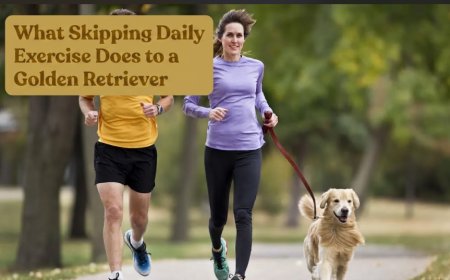





What Skipping Daily Exercise Does to a Golden Retriever

Ellie had three days without a proper walk last winter. I'm not proud of it. We had a stretch of genuinely awful weather, I had deadlines stacking up, and I kept telling myself that twenty minutes of backyard time was basically the same thing.
It is not the same thing.
She started pacing the hallway at 10 PM. She found a sock behind the dryer that I didn't know existed and destroyed it completely. She was impossible to settle, which is saying something for a dog who normally falls asleep before I even finish my cup of tea. Three days. And I could already see what was starting to happen.
Golden Retrievers aren't like some breeds that coast on moderate activity. This is a working dog in a house dog's body, and when they don't move enough, everything starts to shift. Physically. Mentally. Behaviorally. If you're skipping daily exercise regularly, whether it's because of weather or work or just life getting in the way, here's what's actually happening to your dog.
1. The Physical Costs Start Sooner Than You'd Expect
Golden Retrievers are prone to weight gain. It's honestly one of the more overlooked facts about the breed. They love food, they're highly food-motivated, and they have a body type that holds onto extra pounds easily. When you pull back on daily exercise, even for a week or two, the caloric balance shifts. A 65-pound Golden going from two 30-minute walks a day to essentially nothing is no longer burning the same energy, but she's still eating the same amount. The weight starts to creep.
But it's not just the scale. Muscle tone drops faster than most people realize. Goldens are naturally muscular dogs, and that muscle is what supports their joints, particularly the hips and elbows. These dogs are already predisposed to hip dysplasia and other orthopedic problems. A dog that's well-exercised and muscle-conditioned carries her joints differently than one who's been sedentary for a month. The difference isn't always visible at first, but a vet doing a hands-on physical can feel it.
Ellie is a senior now, and I notice this more sharply with her. If she misses a few days, she gets stiffer when she stands up from her bed. She shakes out her back legs more. It's not dramatic. But it's there.
For younger Goldens, the physical effects take longer to show up, but they're quietly building. Cardiovascular fitness declines faster than most owners expect. A dog who used to jog comfortably for 45 minutes will tire at 20 if she's been inactive for a while. That's not laziness. That's a body adjusting down to its new normal.
2. Behavior Shifts in Ways That Look Like Personality Problems
This is where a lot of owners get tripped up. She's not bored, they think. She's just going through a phase. She was always a little like this.
A Golden Retriever not getting adequate daily exercise doesn't just get restless. She gets creative about it. And not in ways you'll appreciate.
The classic signs: chewing things she ignored for months, barking at nothing in particular, pacing, jumping on furniture, getting into the trash, pulling harder on the leash when walks do happen because she's been cooped up. Some dogs turn inward and get clingy. Others get pushy. Some start resource-guarding objects they never cared about before, a blanket, a food bowl, a toy they barely touched last week. These behaviors are all expressions of the same underlying problem, too much energy, too little outlet, and a brain that was bred to be occupied.
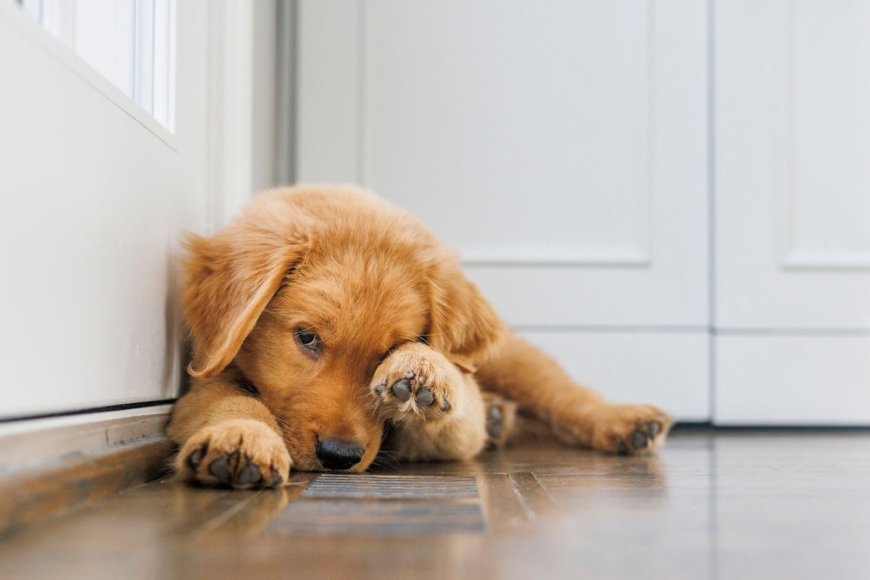
If your Golden has suddenly seemed more anxious or unsettled than usual, it's worth asking how consistent her exercise has been before assuming something else is going on. There's a real connection between physical activity and anxiety in this breed, and it's something I get into further in the Golden Retriever Info piece on separation anxiety and what actually helps. Some of what looks like a separation issue is simply under-exercise creating a baseline level of hyperarousal that never fully comes down.
The thing people miss, and this took me a while to fully understand with Ellie, is that Goldens weren't just bred to run. They were bred to work, to retrieve, to think, to problem-solve alongside a person. Exercise isn't only a physical outlet. It's mental engagement too. A walk through a new neighborhood where your dog can sniff, observe, and process different information does more for her nervous system than ten laps around a familiar backyard.
3. What Actually Happens Over Weeks and Months
One missed day doesn't spiral into disaster. Two isn't great, but it's fine. The problem is when skipping becomes a habit, because the cumulative effect on a Golden's body and behavior is significant. Here's a rough progression:
| Timeframe | Physical Changes | Behavioral Changes |
|---|---|---|
| 3 to 7 days | Slight energy surplus, mild restlessness | Increased pacing, attention-seeking, minor destructive behavior |
| 2 to 4 weeks | Energy dropping faster on walks, possible 1 to 2 lb weight gain | More pronounced restlessness, barking, chewing, difficulty settling |
| 1 to 3 months | Visible weight gain, reduced muscle tone, noticeable joint stiffness especially in seniors | Established bad habits, increased baseline anxiety, possible leash reactivity |
| 3+ months | Elevated health risks: obesity, joint stress, cardiovascular decline | Behavioral patterns that are difficult to reverse without structured reconditioning |
That last row is the one that matters most. This isn't about being perfect or never missing a day. It's about not letting a week turn into a month. The behavioral habits that develop from chronic under-exercise are real, and they don't automatically disappear when you start walking again. The dog has found other ways to spend that energy, and those other ways have become routine.
If you start noticing strange repetitive behaviors like obsessive paw licking or compulsive self-grooming, lack of movement can sometimes be a contributing factor worth ruling out. Golden Retriever Info has a helpful look at what paw licking actually signals and when it warrants a closer look.
4. The Backyard Myth That Keeps Catching People Out
The yard feels like exercise. The dog runs around, she chases birds, she comes inside panting. It seems like it should count.
The problem is that self-directed backyard activity is inconsistent and mostly short-burst. A Golden might sprint for thirty seconds, then stand at the fence sniffing for four minutes, then come inside. It doesn't replicate the sustained cardiovascular effort of a brisk walk. And it offers almost none of the mental stimulation that comes from being somewhere new.
I made this mistake myself. For a good stretch of time I was counting Ellie's yard time as part of her exercise quota. It is not. It's better than nothing, but it's not a substitute for intentional movement.
This is probably the most common mistake I see discussed in Golden owner communities, and honestly it makes sense that people assume it's enough. The yard is right there. The dog goes out freely. But a Golden standing in a familiar yard is not a Golden getting her needs met.
A healthy adult Golden Retriever needs somewhere between 60 and 120 minutes of intentional exercise daily depending on age and health. Puppies and adolescents need more. Seniors need less intensity but still need daily movement, and in my experience the consequences of stopping are actually more immediate for older dogs. If you have a younger dog who seems wired no matter what you do, there's a useful guide on whether a Golden Retriever puppy is too hyper or just normal that's worth reading, though the principle applies at any age. A dog with unmet exercise needs will find a way to express it.
5. Getting Back on Track Without Overdoing It
If your Golden has been under-exercised for a few weeks, you don't just jump back to full intensity on day one. Especially not if she's gained weight, even a couple of pounds. Sudden intense exercise on a deconditioned body puts real stress on joints that are already carrying extra load.
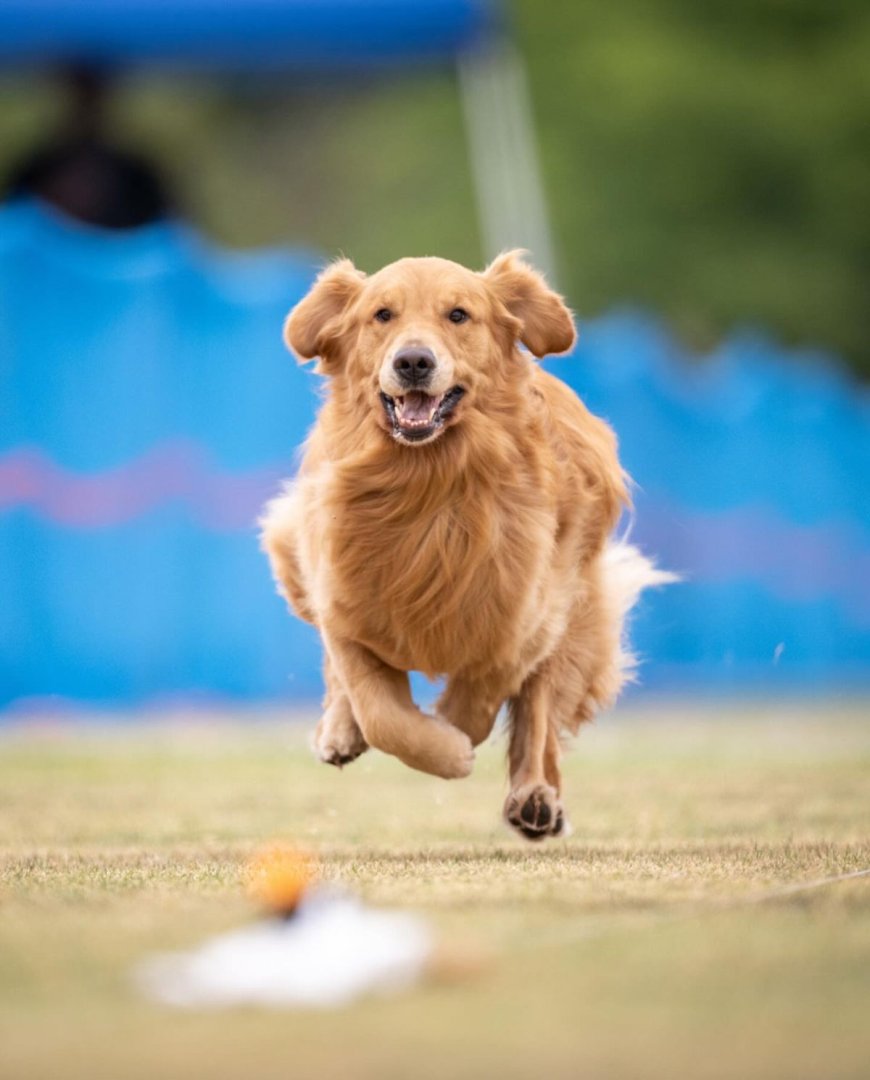
Start with 20 to 30 minutes of leash walking at a relaxed pace and build up over a week or two. Add sniff-heavy routes where your dog can slow down and take in the environment. This kind of walk is genuinely tiring for dogs because of the mental processing involved. You'll notice she settles more calmly at home afterward, sometimes more so than after a faster walk of the same length.
Pair the exercise resumption with a diet check. What a Golden needs nutritionally when she's less active differs from what she needs when she's fully exercised. If you're recalibrating her routine, Golden Retriever Info's breakdown of the best food options for Goldens is a good starting point.
And one thing to hold onto: you can't train out excess energy. Training matters enormously, but if the physical need isn't being met, behavioral issues will keep surfacing regardless of how consistent your commands are. The movement has to come first.
FAQs
Can a Golden Retriever skip a day of exercise without it becoming a problem? Yes, the occasional rest day isn't harmful and can actually be beneficial after a particularly active day or during recovery from minor physical strain. The concern isn't a single missed day. It's when one day becomes a regular pattern. Goldens need consistent activity more than they need any single hard session.
What are the long-term health risks for a Golden that chronically doesn't get enough exercise? Chronically under-exercised Goldens face a significantly higher risk of obesity, and with obesity comes increased pressure on the hips and elbows, joints this breed is already genetically vulnerable to. Beyond the joints, sustained inactivity contributes to cardiovascular decline, a compromised immune response, and a range of behavioral issues that become harder to address the longer they're left unmanaged. Lifespan and quality of life are both affected.
Does mental stimulation count as a substitute for physical exercise? Not entirely, though it's a genuinely valuable addition. Puzzle feeders, nose work, and structured training sessions are great for mental engagement, and they complement exercise well. But they don't replace it. A Golden who gets a great nose-work session and no walk still has excess physical energy that needs to go somewhere. Think of mental stimulation and physical exercise as two separate needs that both require daily attention.
My Golden is a senior dog. Does she still need to exercise every day? She absolutely does, and this is something a lot of people get wrong. Senior Goldens benefit from shorter, gentler, more frequent movement rather than long intense sessions. Daily gentle walks support joint mobility, help manage weight, and improve quality of life in older dogs in measurable ways. The mistake is cutting exercise out entirely because a dog is aging. Ellie is living proof that staying active makes a real difference.
What can I do on days when getting outside isn't possible? Indoor options aren't a perfect substitute, but they help. Stair repetitions, hide-and-seek games with treats, training sessions that run multiple commands in sequence, even a short tug session, these can take the edge off on days when a walk genuinely isn't happening. Just don't treat them as the equivalent of actual outdoor exercise. They're a bridge, not a replacement, and your dog will probably make that clear to you by the end of the evening.
What Ellie's rough three-day stretch last winter really drove home for me is that exercise for a Golden isn't a bonus. It's maintenance. The same way a garden goes to weeds when you stop tending it, a Golden's body and brain drift toward dysfunction when movement stops. It doesn't take long to start. And the fix, while simple enough, requires more time to undo the effects than it did to create them.
Start the walk. She'll be ready.
What's Your Reaction?
 Like
0
Like
0
 Dislike
0
Dislike
0
 Love
0
Love
0
 Funny
0
Funny
0
 Angry
0
Angry
0
 Sad
0
Sad
0
 Wow
0
Wow
0