



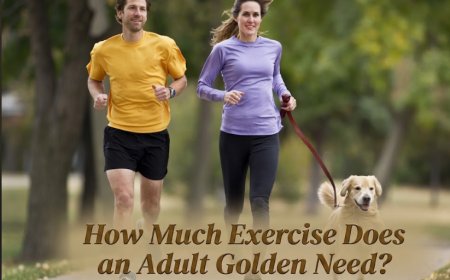










How Much Exercise Does an Adult Golden Need?
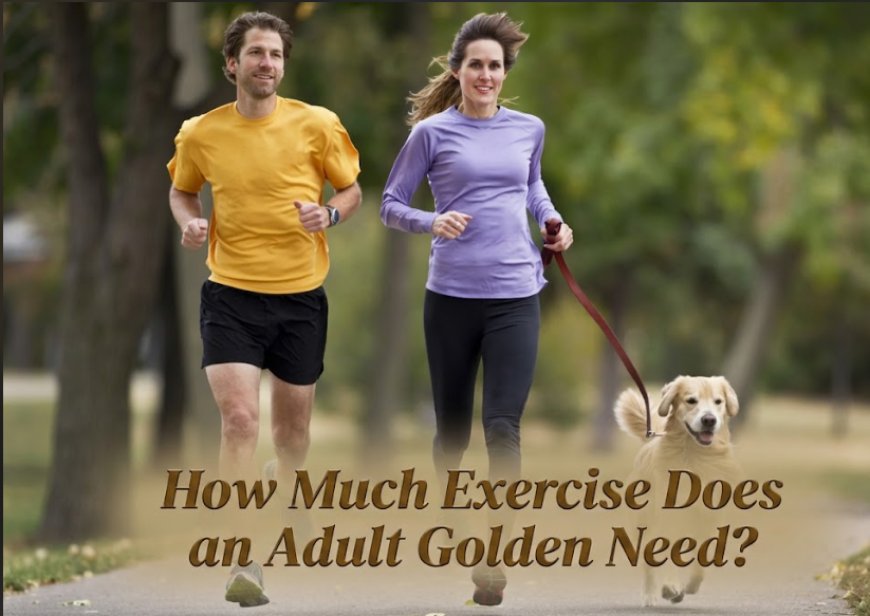
Almost every new owner asks some version of the same question within the first few weeks, whether a thirty-minute walk is enough. Thirty minutes is the number I hear constantly, and for an adult golden retriever in good health, it's not close. That gap between what people assume and what the breed actually needs is where a lot of the destructive chewing, the pacing at 9 PM, and the slow weight gain around year three quietly start.
Golden retrievers were built as working gun dogs, bred to retrieve game across long days in the field. An adult dog with no job and no outlet doesn't shut that drive off just because the title on the house is "family pet." The exercise requirement is real, it's specific to age and build, and it's higher than most owners expect.
1. The Backyard Doesn't Count the Way People Think It Does
A fenced yard gives a dog somewhere to relieve herself and sniff around for ten minutes. It does not give her purposeful, sustained movement, and those are different things physiologically. Dogs left to their own devices in a yard tend to wander, lie down, bark at something, and repeat, which burns almost no real energy compared to a brisk walk or a structured retrieving session.
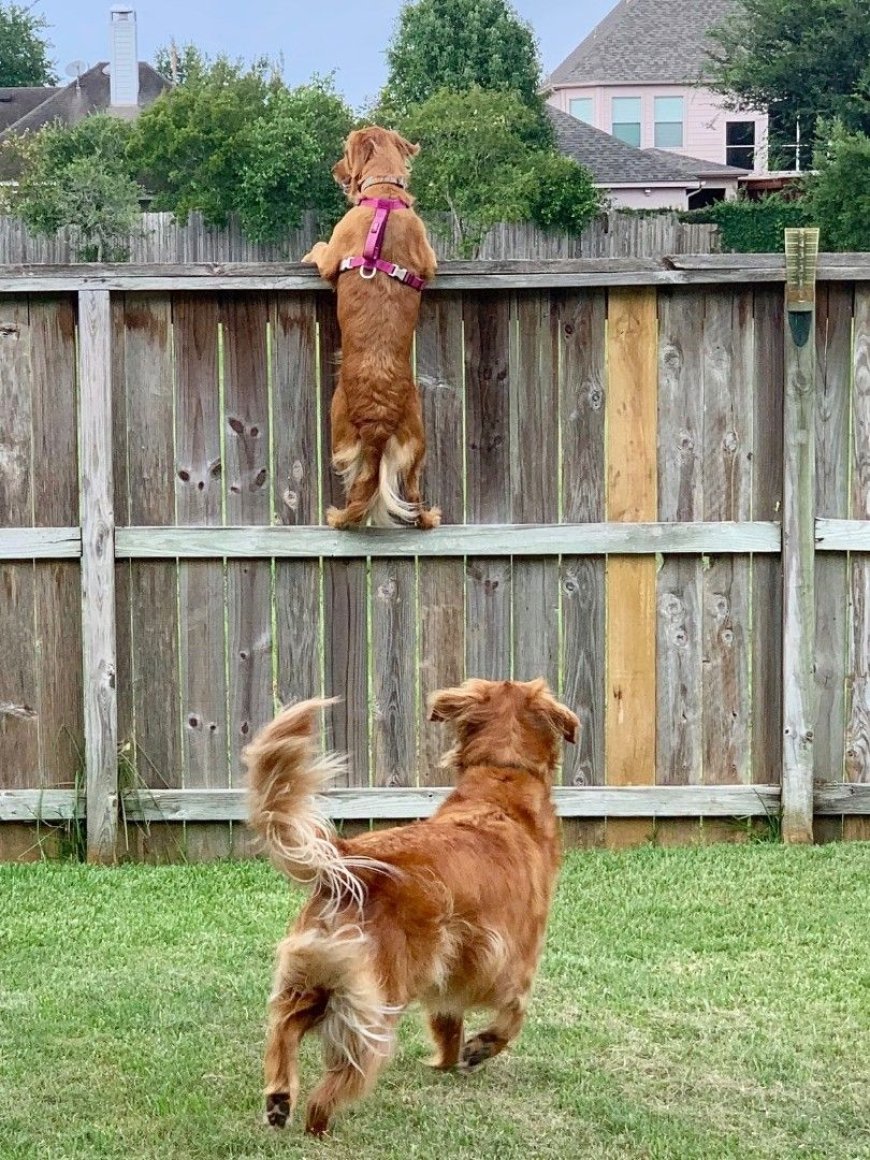
I made this mistake myself early on, assuming an afternoon in the yard was doing more than it actually was. Ellie's energy told a different story by evening, and once I swapped fifteen minutes of yard time for fifteen minutes of actual fetch, the difference in how she settled at night was obvious within days.
2. How Much an Adult Golden Actually Needs, by the Clock
For a healthy adult between roughly one and seven years old, plan on sixty to ninety minutes of real activity daily, split across two sessions rather than one long one. That total should combine aerobic movement, walking, swimming, fetch, with at least some mental engagement built in. A dog that gets ninety minutes of walking and nothing else still tends to act under-exercised, because the body is tired but the brain never clocked in.
Working-line and field-bred goldens, the ones built more for performance than the show ring, often sit at the higher end of that range or beyond it. A show-line golden from a calmer pedigree may do fine closer to sixty minutes. Genetics inside the same breed make a real difference here, and it's a distinction that comes up often in questions sent to Golden Retriever Info, so it's worth knowing which side your dog leans toward if the standard amount still isn't cutting it.
Exercise by Life Stage, Roughly
| Life Stage | Daily Exercise | Notes |
|---|---|---|
| Puppy (under 12 months) | 5 minutes per month of age, twice daily | Avoid forced repetitive impact, growth plates aren't closed |
| Adolescent (1 to 2 years) | 60 to 90+ minutes | Often the most underestimated stage |
| Adult (2 to 7 years) | 60 to 90 minutes | Split into two sessions, mix physical and mental |
| Senior (8+ years) | 30 to 60 minutes, lower impact | Swimming and shorter frequent walks over long runs |
3. Where Owners Get the Intensity Wrong
More exercise isn't automatically better, and this is the part that surprises people who assume goldens can handle anything thrown at them. Repetitive high-impact activity, hard ball throws on pavement, jumping for frisbees, long forced runs before the dog is conditioned for it, puts real strain on joints in a breed already prone to hip and elbow dysplasia. We've covered the early warning signs of hip dysplasia elsewhere on the site, and exercise choices made years earlier are part of that picture.
Goldens are also famously bad at telling you when to stop. The eagerness to please means a dog will keep retrieving a ball well past the point of being sore, overheated, or exhausted, especially in warm weather where that thick double coat works against her.
Tired is fine. Sore is not.
Watching the dog's behavior matters more than watching the clock. Heavy panting that doesn't slow down, lagging on the way back, or reluctance to jump into the car afterward are signs the previous session ran too hot, not signs to push through tomorrow.
4. The Mental Side Nobody Budgets For
Physical tiredness and mental tiredness are not the same currency, and this gets missed constantly. A fifteen-minute training session, a snuffle mat, or a real scent-based search game can tire a golden out in a way that a twenty-minute walk simply doesn't, because the breed was bred to use its nose and its problem-solving alongside its body.
This matters most for dogs that seem restless despite what looks like plenty of physical activity on paper. If walks alone aren't translating into a settled evening, the missing piece is usually mental work, not more miles. A dog that pulls hard on every walk also burns a lot of that walk fighting the leash instead of actually exercising productively, which is its own separate fix worth getting right.
5. When the Exercise Gap Shows Up as Something Else Entirely
Under-exercise rarely announces itself as under-exercise. It shows up as destructive chewing, as barking that wasn't there before, as a dog who suddenly can't settle during dinner, or as the kind of clinginess and anxiety that gets mistaken for a separate behavioral problem. We've written separately about working through that kind of anxiety, and exercise volume is one of the first things worth checking before assuming something more complicated is going on.
It also shows up on the scale. Weight creeps on slowly enough that owners often don't notice until a vet mentions it at a routine visit, and by then the joints are carrying more than they should be. If you're not sure where your dog actually stands, it's worth an honest look at whether she's carrying extra weight before adjusting either food or activity levels.
None of this means turning exercise into a rigid schedule that stresses you out more than the dog. Some days will be a real hike, some days will be fifteen minutes of tug and a short walk because that's what the day allowed, and a healthy adult golden handles that variation fine as long as the weekly average holds up.
FAQs
What's the minimum exercise an adult golden can get away with on a busy day? Thirty minutes of genuine activity is a reasonable floor for an otherwise healthy adult, ideally with some mental engagement mixed in rather than just a slow walk. It shouldn't become the daily norm, but one lighter day won't cause problems if the rest of the week is on track.
Does breed line or build change how much exercise is needed? Yes, to a meaningful degree. Field-bred and working-line goldens generally carry more drive and need more output than dogs from calmer show lines, even at the same age and weight.
Is swimming a good substitute for walking? Often a better one. Swimming is lower impact on joints while still being aerobically demanding, which makes it especially useful for adults with early joint sensitivity or for hot weather when a long walk risks overheating.
My golden seems tired after walks but still acts restless at home. What's going on? That's usually a mental stimulation gap rather than a physical one. Adding a short training session, a puzzle feeder, or a scent game alongside the walk tends to resolve it faster than simply walking longer.
Can an adult golden get too much exercise? Yes, particularly with repetitive high-impact activity like hard ball fetch on pavement or forced long-distance running. Watch for heavy panting that doesn't ease up, stiffness the next morning, or reluctance to engage in normal activity as signs that recent sessions were too much.
What's Your Reaction?
 Like
0
Like
0
 Dislike
0
Dislike
0
 Love
0
Love
0
 Funny
0
Funny
0
 Angry
0
Angry
0
 Sad
0
Sad
0
 Wow
0
Wow
0