







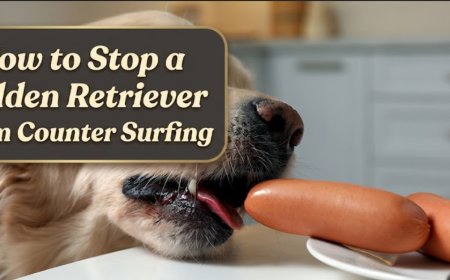









How to Stop a Golden Retriever From Counter Surfing
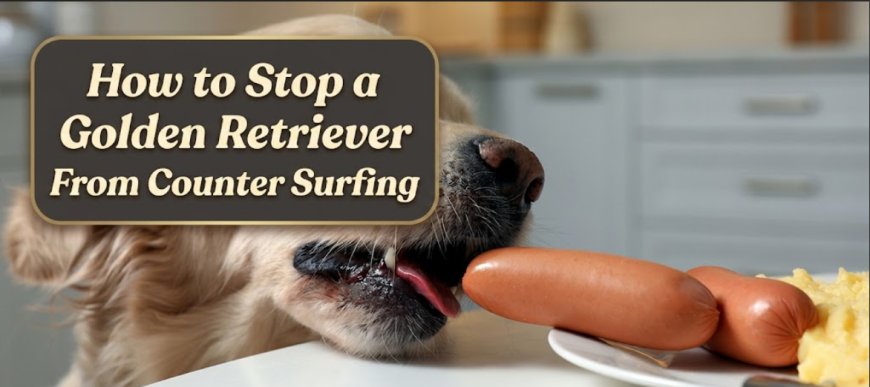
Ellie figured out the counter situation when she was about eight months old. I'd left a rotisserie chicken resting on a cutting board for exactly the amount of time it takes to walk to the mailbox and back, maybe ninety seconds, and came back to an empty board and a dog who would not make eye contact with me. No guilt, no anything. Just a very deliberate study of the ceiling fan. That was the moment I understood that golden retrievers don't counter surf because they're bad dogs. They do it because the math works out in their favor almost every single time.
If you're dealing with this right now, you're not dealing with a stubborn dog or a dog who "knows better." You're dealing with a really good nose attached to a body tall enough to reach a standard counter, and a behavior that's been rewarded so often it's basically self-sustaining at this point.
1. Why This Happens in the First Place
Golden retrievers were bred to carry things in their mouths and to work closely with people who are handling food, birds, and gear. That instinct didn't disappear just because the breed spends most of its life on a couch now. Add a strong scent drive and a height that puts their nose roughly level with most kitchen counters, and you've got a dog who is biologically set up to notice food up there and physically capable of doing something about it.
The bigger issue is usually how the behavior gets reinforced. A dog doesn't need to succeed every time for a habit to stick. Even getting rewarded one out of every five or six attempts is enough to keep a behavior alive, sometimes even strengthen it, because the unpredictability makes it more interesting, not less. That's the same mechanism that keeps people checking a slot machine. Your dog isn't being sneaky. She's responding to a pattern that's worked often enough to be worth repeating.
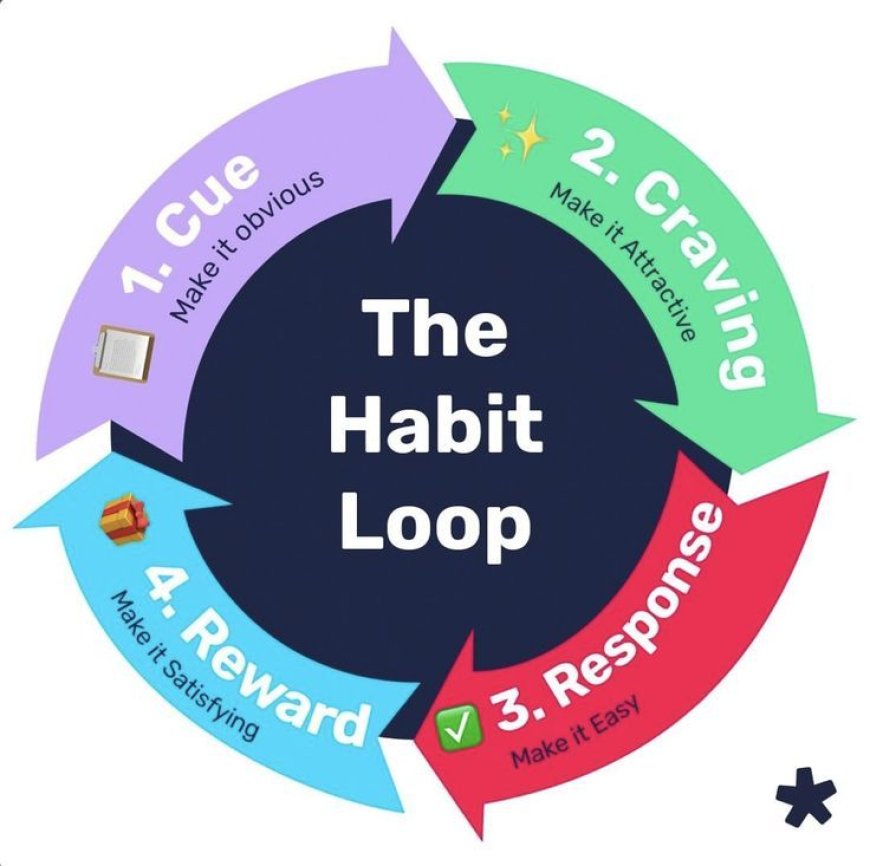
2. The Habit Loop You're Actually Fighting
There's a cue, a routine, and a reward, and most owners only notice the reward part. The cue might be you leaving the kitchen, the sound of a bag being unpacked, or just an unattended few seconds near food. The routine is the dog walking over, sniffing, and grabbing. The reward is whatever she gets to eat.
You can't punish your way out of a habit loop that's already this established, and yelling after the fact does almost nothing because the dog has already gotten the reward by the time you find out. This is one of those spots where I see owners go wrong constantly: they catch the dog mid-counter-surf, react big, and then feel like they've addressed it. They haven't. The dog learned "don't do this in front of a human," not "don't do this." That's a meaningfully different lesson, and it's part of why so many golden retrievers seem to wait until the kitchen is empty.
3. Management Comes Before Training
Before any actual training happens, the reward needs to stop showing up. This sounds almost too simple, but it's the part people skip because it feels less like "training" and more like housekeeping. Push things back from the edge. Use the back burners. Don't leave cutting boards loaded while you answer the door. None of this fixes the underlying behavior on its own, but it stops the behavior from getting paid, and an unpaid behavior fades a lot faster than a punished one.
I also can't talk about counter surfing without mentioning exercise and mental work, because a bored golden with energy to spare is going to find something to do, and counters are interesting. I wrote more about what actually happens when that daily outlet gets skipped, and it shows up in more places than just the kitchen.
Here's a quick-reference for the most common triggers I hear about from other golden owners:
| Trigger | What It Usually Looks Like | What Actually Helps |
|---|---|---|
| Food prep left unattended | Cutting boards, open bags, resting meat | Push items back, use back burners, close the kitchen with a gate |
| Boredom or low exercise | Counter checks happen mid-afternoon, no food even out | More structured exercise, a sniff walk, a food puzzle |
| Guests or distraction | Surfing spikes when people are over | Crate or tether dog during prep and serving |
| Puppy exploration | Pup stands on hind legs just to look, not always to steal | Redirect early, this often fades with maturity and training |
4. Teaching an Incompatible Behavior
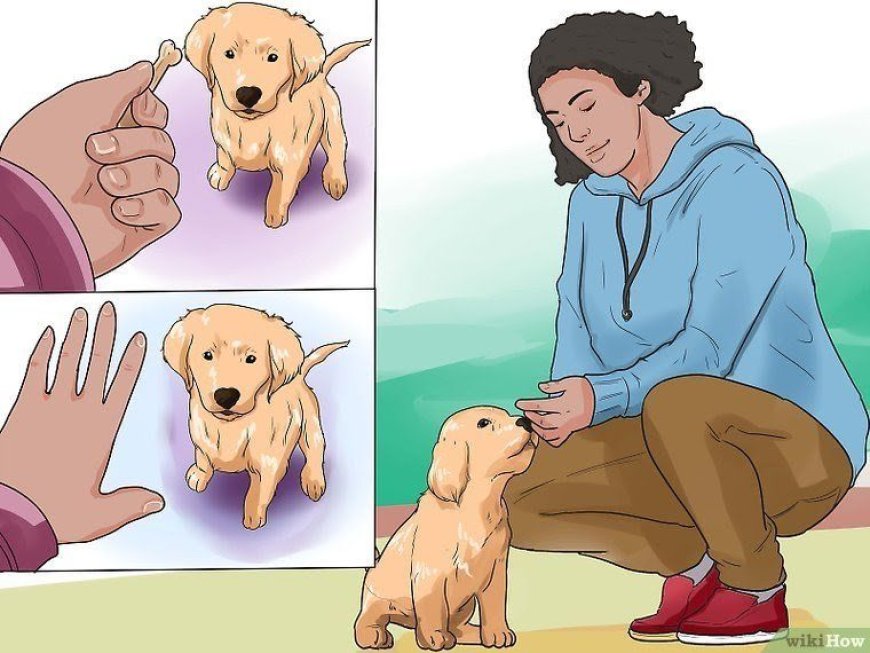
Management buys you time. Training is what actually changes the dog's default response. The goal is to teach a behavior that physically can't happen at the same time as counter surfing, things like a solid "place" command on a mat, or a reliable "off" that means four feet stay on the floor regardless of what's on the counter.
Start away from food entirely. Build the place or settle command in a low-distraction room, reward generously, and only once it's solid do you start practicing it in the kitchen with nothing interesting around. Then you add mild temptation, a plate with nothing on it, then a plate with something boring, and you work your way up. Skipping steps here is the second most common mistake I see. People want to jump straight to "ignore the steak" when the dog hasn't even mastered "stay on the mat with an empty plate three feet away." That's not a training failure on the dog's part, that's a sequencing problem on ours.
One thing I'd add, and it's not popular advice: more commands aren't the answer here. A dog who knows ten cues but doesn't reliably hold a "place" near food doesn't need an eleventh cue. She needs the existing ones practiced under real conditions. I've gone deeper on why piling on commands tends to backfire, if that's a pattern you recognize in your own training sessions.
5. Where People Usually Go Wrong
Beyond the timing issue already mentioned, the other big one is inconsistency between household members. If one person allows counter checks "just this once" while everyone else is holding the line, the intermittent reward schedule stays alive and the whole effort stalls. Golden retrievers are excellent at figuring out which person, or which moment, is the soft spot.
The other mistake worth naming directly is assuming this is purely a training issue when it sometimes overlaps with resource guarding or genuine food stealing driven by something other than opportunism. Those aren't quite the same problem, and the fix isn't identical either. I broke down the difference in more detail in another piece, since it trips up a lot of first-time owners who assume every food-related issue is the same behavior wearing a different hat.
And if your dog is still a puppy doing this at twelve or sixteen weeks, take a breath. A lot of this is exploration at that age, not an established habit yet, which is actually the easier version of this problem to solve.
6. What Realistic Progress Looks Like
This isn't a behavior that disappears in a weekend. Most owners see a noticeable drop within two to three weeks of consistent management plus daily place or off practice, with the habit mostly extinguished somewhere around the two month mark if everyone in the house stays on the same page. Golden retrievers are food motivated enough that backsliding can happen if management gets sloppy again, even after the behavior seemed solved. That's not a regression in the dog. That's just the reward showing up again.
Ellie's seven now, and she still glances at the counter when something smells good. She just doesn't act on it anymore, because acting on it stopped working a long time ago, and the place command became the more reliable payout. That's really the whole strategy in one sentence.
Frequently Asked Questions
Does counter surfing mean my dog is dominant or trying to challenge me? No. This idea has mostly been dropped by trainers who study dog behavior closely. It's a food-driven, opportunity-driven behavior, not a status play.
My golden only does this when I leave the room. Is she being sneaky on purpose? She's responding to the cue of you being absent, which removes the consequence she's learned to avoid. It looks calculated because, in a sense, it is, but it's pattern recognition, not deception in the human sense.
Will crate training fix this? A crate can manage the behavior during prep or mealtimes, but it doesn't teach the dog what to do when she's loose in the kitchen. Use it as a tool alongside training, not as the whole solution.
Is a deterrent spray or motion-activated alarm worth trying? They can interrupt the behavior short term, but most goldens habituate to them within a couple of weeks. They're a decent stopgap while you build the place or off cue, not a long-term fix on their own.
My puppy is already counter surfing at four months. Is that too early to train this? It's actually the ideal time. Puppies haven't built years of reinforcement history yet, so consistent management plus early place training tends to work faster than it does with an adult dog who's been successful at this for a while.
If you want a deeper look at the training fundamentals this builds on, the training section here on Golden Retriever Info covers a lot of the groundwork this particular fix depends on.
What's Your Reaction?
 Like
0
Like
0
 Dislike
0
Dislike
0
 Love
0
Love
0
 Funny
0
Funny
0
 Angry
0
Angry
0
 Sad
0
Sad
0
 Wow
0
Wow
0