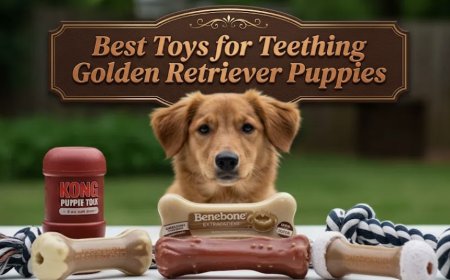
















Best Toys for Teething Golden Retriever Puppies
The amount of times I've seen someone post in a Golden Retriever group about the "heavy-duty chew toy" they bought for their 12-week-old puppy, only to return two days later with photos of it in three pieces, is honestly more than I can count at this point. And the advice they usually get? "Buy a harder one." That's almost always the wrong answer.
Teething puppies don't need the toughest toy on the shelf. They need the right toy for what their mouths are actually going through. Those are two very different things, and mixing them up can actually cause real harm to your puppy's incoming adult teeth.
When Ellie was going through her teething phase, I went through more chew toys than I'd like to admit before figuring out what worked. Some were too hard, some fell apart in under ten minutes, and a couple ended up in the trash the same day because I didn't feel comfortable leaving her alone with them. It took trial and error, and once I understood what was actually happening in her mouth during that stage, the right choices started making a lot more sense.
If you're in the thick of it right now, here's what I know.
1. What's Actually Happening When Your Golden Is Teething
Golden Retriever puppies begin losing their baby teeth somewhere around 3 to 4 months of age. Those sharp little needle teeth that have been shredding your hands since week one start falling out, replaced by adult teeth that are larger and take several more months to fully set into the jaw. The whole process is generally done by 6 to 7 months.
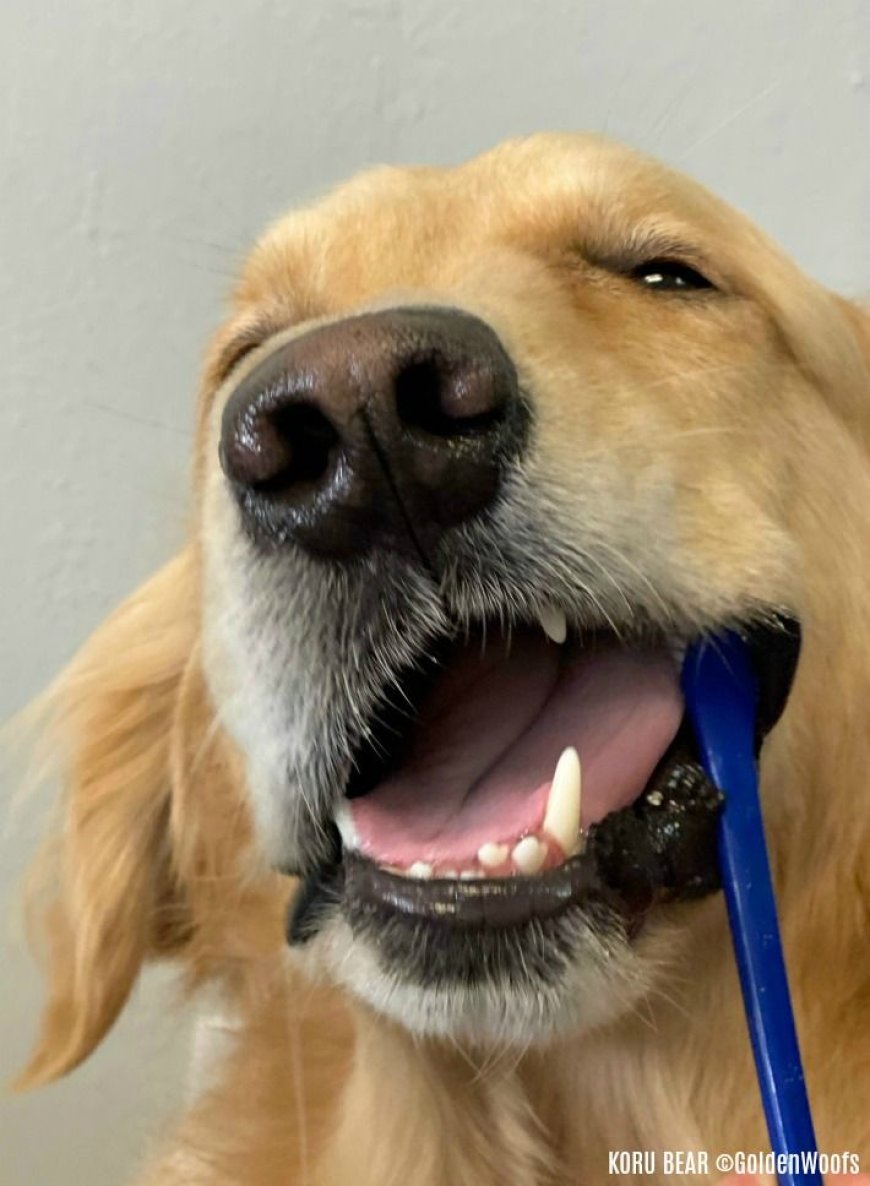
During that window, your puppy's gums are genuinely sore. Swollen, in some cases. Chewing applies counter-pressure to the gums and helps the incoming teeth push through, which is why teething puppies will chew on literally anything they can get to. This is biology, not bad behavior. If you're curious about what's actually driving all of that mouthiness, the article on why Golden puppies chew everything in sight is worth a read.
The thing that matters most for toy selection is this: your puppy's adult teeth are still forming and setting into the jawbone during this time. They're vulnerable. Hard toys designed for an adult dog, with a fully developed bite and established enamel, can chip or fracture those incoming teeth. A puppy's jaw structure isn't ready for that kind of pressure yet, no matter how confident their chewing looks.
This is why the "buy harder" advice can cause problems. It feels logical. It isn't.
2. What Actually Makes a Good Teething Toy
The toys that consistently work best for teething Golden puppies share a few qualities. None of them are complicated, but they're worth knowing because they'll help you evaluate anything you're considering.
Appropriate firmness. The most practical test I've seen is the thumbnail test: press your thumbnail firmly into the surface of the toy. If it leaves an indentation, the toy has enough give for a teething puppy. If your nail makes no mark at all, the material is too hard. This rules out more products than you'd expect, including some things clearly labeled "puppy-safe."
Size. A toy needs to be large enough that your puppy can't get it to the back of their throat. Golden puppies grow fast, so keep reassessing this as they do.
No detachable or breakable parts. Toys with plastic eyes, sewn-on noses, squeakers near the surface, or rope ends that fray quickly become hazards quickly. Teething puppies chew with determination, and anything that can come off will come off.
Durability that actually fits the stage. Some toys are soft enough to be "puppy safe" but fall apart within minutes. A toy that disintegrates means your puppy is swallowing pieces of rubber or stuffing, and that's its own problem entirely.
And the one quality that makes the biggest difference during the peak of teething? The ability to be frozen. Cold soothes inflamed gum tissue the same way it works on any other kind of swelling. A toy that can be chilled or frozen before you give it to your puppy is worth a lot more than a toy that just keeps them busy.
3. The Best Toys for Teething Golden Retriever Puppies
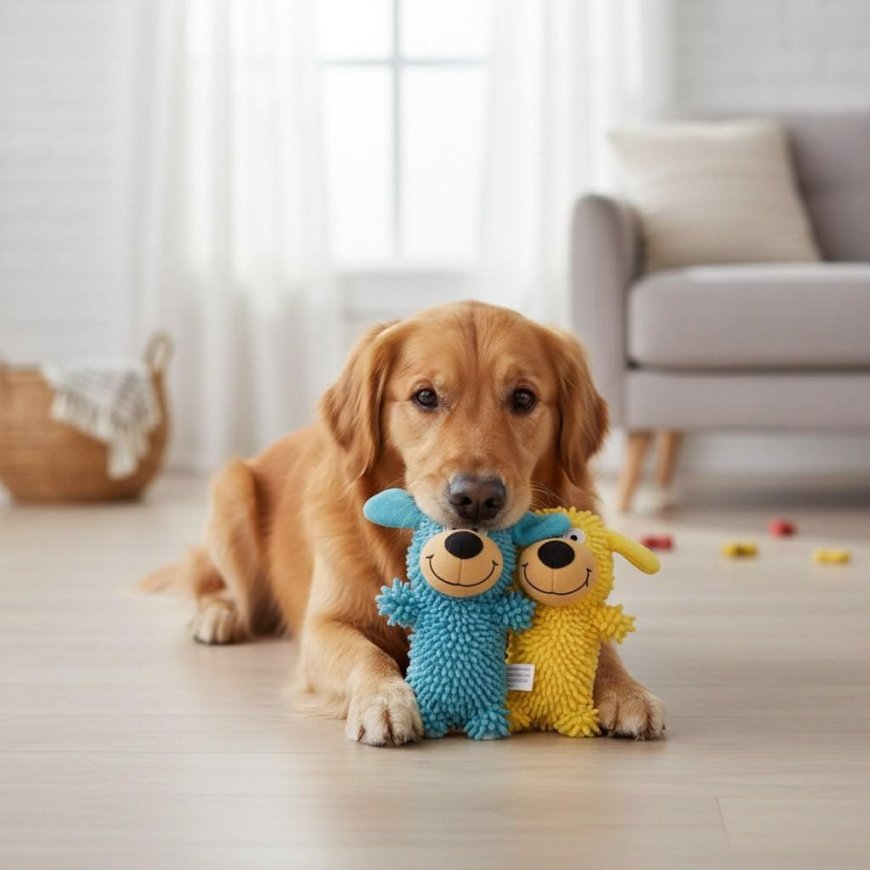
These are the types that have consistently worked well, based on my own experience and what I hear most from other Golden owners.
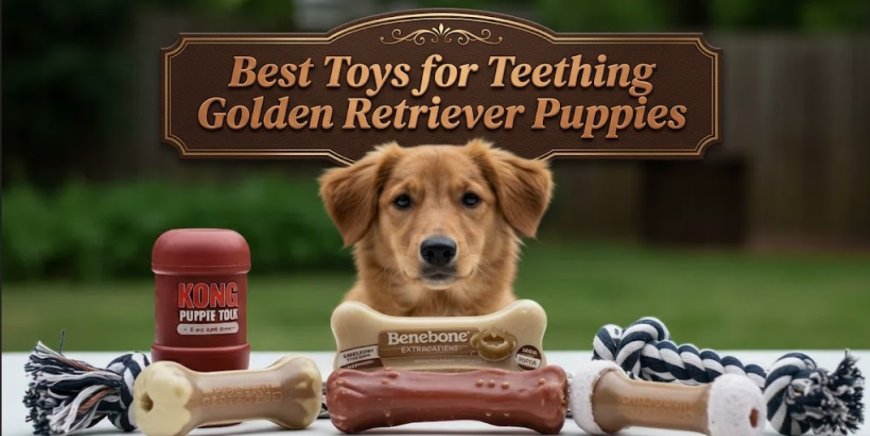
KONG Puppy Classic (frozen)
The KONG Puppy is made from a softer natural rubber formula than the standard adult KONG. That distinction matters. The regular KONG, the red one most people are familiar with, is too hard for a teething puppy and can put excess stress on teeth that are still coming in. The puppy version has genuine give to it, passes the thumbnail test, and can be stuffed with wet food, plain yogurt, or mashed banana and frozen solid overnight.
Ellie at four months, frozen KONG in hand, was a completely different dog than the frantic teething puppy from an hour before. The cold made a real difference. This was probably the single most-used item during that phase of her puppyhood.
Chilled rope toys (supervised only)
Rope toys have a mixed reputation, and it's partly deserved. Left alone with a rope toy, a puppy can chew off threads and swallow them, and ingested thread can cause serious digestive problems. But for supervised sessions, they're genuinely useful. The texture massages sore gums well, and if you wet the rope and freeze it beforehand, the cooling effect is excellent.
The rule here is non-negotiable: rope toys stay in the supervised session, then get put away. Not left on the floor. Not in the crate overnight.
West Paw Zogoflex Toppl or Quizl
West Paw makes rubber toys that are non-toxic, dishwasher-safe, and notably durable without being too hard. Their puppy-appropriate options have enough firmness to satisfy a chewing puppy without the rigidity that can stress those incoming teeth. They can also be stuffed and frozen, which keeps the gum-relief benefit in play.
These hold up longer than the Petstages option below, so they're a good choice if you want something that lasts well past the teething phase too.
Petstages Cool Teething Stick
This one was designed specifically with teething in mind. It has a water-filled center that you freeze before giving it to your puppy, so the cooling effect is built into the design. The outer texture is soft enough to be gentle on inflamed gum tissue and provides that massaging feeling that seems to be most helpful during the peak teething weeks. It doesn't hold up especially well once a puppy moves past teething into the stronger adolescent chewing phase, but for 3 to 6 months it does exactly what it promises.
Nylabone Puppy (nylon chews)
Nylabone makes a puppy-specific line that's noticeably softer than their adult products. These are designed to be chewed without breaking into swallowable pieces. They're not my first recommendation because they don't offer the soothing effect of a frozen option, but they're useful as a secondary toy when you need your puppy engaged with something safe and you don't have a frozen Kong ready. Some puppies take to them enthusiastically, others ignore them entirely. Worth trying.
Here's a quick comparison to help you evaluate:
| Toy Type | Good for Freezing? | Supervision Required? | Best Age Range | Durability |
|---|---|---|---|---|
| KONG Puppy (rubber) | Yes, highly recommended | Low risk unsupervised | 8 weeks to 6 months | High |
| Rope toy (wet/frozen) | Yes (wet rope first) | Always supervise | 10 weeks to 5 months | Low to Medium |
| West Paw Zogoflex | Yes | Low risk unsupervised | 8 weeks to adult | High |
| Petstages Cool Teething Stick | Yes (built-in water center) | Low risk unsupervised | 10 weeks to 5 months | Medium |
| Nylabone Puppy | Not designed for freezing | Low risk unsupervised | 8 weeks to 6 months | Medium |
4. Toys That Look Fine But Aren't
This is where I see the most mistakes made, and I made some of them myself.
Adult-strength rubber toys. The classic red, black, or blue KONG, the ones designed for adult dogs, are made from a harder rubber that a teething puppy's forming teeth simply aren't ready for. The pressure a puppy applies while chewing can create micro-fractures in the enamel of incoming teeth. This is probably the single most common teething toy mistake I see, and it usually comes from not realizing the puppy version exists for a specific reason.
Tennis balls. I know. Every Golden in history has been photographed with a tennis ball. But the felt covering is abrasive enough to wear down enamel with regular chewing, and the core breaks into chunks if a motivated chewer gets through the outer shell. For a teething puppy specifically, the felt texture feels satisfying on sore gums, which means they'll go after it harder than other toys. Not a great outcome.
Rawhide. The debate around rawhide has gone on for years, and I know there are owners who use it without problems. My concern during the teething phase specifically is that teething puppies chew with more urgency and less patience than adult dogs, they're uncomfortable and they want relief fast. That makes them more likely to bite off large pieces and swallow them, which is a choking and intestinal blockage risk. It wasn't something I was willing to introduce with Ellie during that window, and I generally don't recommend it for this stage.
Stuffed plush toys with plastic parts. The stuffed animals with plastic safety eyes and plastic noses look innocent, but a teething puppy will dismantle them methodically and the plastic pieces become a problem fast. If you want your puppy to have a plush comfort toy, look for embroidered features with no hard attachments at all.
One thing I'd add here: toys redirect chewing, but they don't teach bite inhibition. A lot of owners rely on toys as the complete solution during teething and skip the behavioral piece entirely. If you haven't looked into why Golden puppies bite absolutely everything, the toys will help more if you pair them with some intentional training around mouthing.
5. Practical Habits That Make the Toys Actually Work
The right toys help a lot. A few habits make them work even better.
Rotate what's available. If the same toy sits on the floor all day every day, it loses its appeal. Keep a rotation of three or four options and swap them out every couple of days. This also means when you need to redirect your puppy away from something they shouldn't have, there's always something interesting to offer instead.
Keep frozen toys ready in advance. Once teething peaks, make it a routine to have at least one stuffed, frozen Kong or chew ready at any given time. The evenings when your puppy is clearly uncomfortable and taking it out on the furniture are not the moments to realize you forgot to prep anything. Batch prep a few at once at the start of the week and rotate them.
And, pay attention to size as your puppy grows. Golden Retriever puppies grow surprisingly fast. A toy that was the right size at ten weeks might fit further into their mouth by fourteen weeks than you realize. Re-evaluate toy size every few weeks during this stage. Golden Retriever Info's new puppy checklist has a good rundown of what the early weeks actually require if you want a broader picture beyond just toys.
Keep toys positive. If a toy gets associated with being scolded or taken away as punishment, your puppy will start approaching it with uncertainty. Reserve toy interactions for positive moments.
Teething passes faster than it feels like it will when you're deep in it. By 7 months, most Golden puppies have their full set of adult teeth and the compulsive chewing that goes with gum discomfort starts settling down. You'll still want durable toys through the adolescent phase because that brings its own chewing intensity, but the gum pain piece is largely over by then.
If your puppy is also struggling with settling at night during this stage, which a lot of teething puppies do because discomfort tends to feel worse when they're still, the article on crate training a Golden without the crying has some genuinely useful guidance on that side of things.
Ellie is a senior dog now. I can't remember the last time I thought carefully about what chew toy was appropriate for her gum health. The teething phase is very real, but it's also very temporary. The right toys, a frozen Kong on standby, and some patience will get you through it.
FAQs
When do Golden Retriever puppies start teething?
Most Goldens begin losing their baby teeth around 3 to 4 months old. The adult teeth start pushing through during this time, and the full set is usually in by 6 to 7 months. The most intense chewing and gum discomfort tends to peak around 4 to 5 months, so that tends to be the window when toy selection matters most.
Can I give my teething puppy ice cubes?
Plain ice cubes are generally safe and many puppies find the cold soothing on sore gums. The main thing to watch is a puppy who bites down hard on them rather than just licking or mouthing, since solid ice is technically hard enough to chip a tooth forming in the jaw. Frozen toys with some give to them are a safer option for puppies that approach ice with real intensity.
How do I know if a toy is too hard for a teething puppy?
Press your thumbnail firmly into the surface. If it leaves any indentation at all, the material is appropriate. If your nail makes no impression, it's too hard for this stage. This test is worth doing with any new toy before you hand it over, regardless of how it's labeled on the packaging.
My puppy keeps going back to the same chair leg no matter how many toys I offer. What's going on?
Usually this comes down to texture or temperature. Wood furniture has a specific feel and hardness that some teething puppies find more satisfying than soft rubber. Try offering a frozen wet rope toy or a chilled Kong and redirect immediately and consistently every single time you catch them at the furniture. It can take a week or two of repeated redirection before the habit shifts, and that consistency is the whole thing. If you're finding that the chewing is happening even when toys are readily available, it's also worth looking at whether your puppy is getting enough mental stimulation throughout the day, because boredom compounds teething behavior significantly.
My puppy loses interest in toys within two minutes. Is that normal?
Yes, completely. Short attention spans are just part of early puppyhood. Toys that involve some kind of food puzzle, like a stuffed frozen Kong that requires work to empty, hold attention longer than toys that just sit there. Rotating options regularly helps too. As your puppy's brain matures, you'll notice naturally longer engagement with toys. The teething stage actually tends to help here a little, because the gum relief keeps them coming back to the right toy more consistently than they otherwise would.
What's Your Reaction?
 Like
0
Like
0
 Dislike
0
Dislike
0
 Love
0
Love
0
 Funny
0
Funny
0
 Angry
0
Angry
0
 Sad
0
Sad
0
 Wow
0
Wow
0