




















Best Food for Golden Retrievers in 2026

The summer Ellie was two years old, I switched her to a grain-free food and felt very good about myself.
The packaging looked premium. The ingredient list opened with salmon. The price was nearly double what I'd been paying, which I took as confirmation of quality rather than evidence that I was being sold on marketing language. She loved it. I felt like a responsible dog mom.
Then the FDA's investigation into a potential link between grain-free diets and dilated cardiomyopathy started getting picked up in the dog owner community. And Golden Retrievers were specifically named among the breeds appearing most frequently in the case data. I won't pretend I moved immediately — Ellie was on that food for about four months before I switched her back to a grain-inclusive formula. But that experience is what pushed me to actually read nutritional research rather than trust packaging, and it's the foundation of what I share on Golden Retriever Info when people ask me about food.
Here's what I've learned since then.
1. What Golden Retrievers Actually Need (That Generic Dog Food Advice Misses)
Goldens have breed-specific nutritional needs that a lot of general "best dog food" content glosses over.
Joint health comes first, and it's not optional for this breed. Golden Retrievers are prone to hip dysplasia, elbow dysplasia, and joint degeneration well before old age — some dogs show signs by age four or five. Glucosamine and chondroitin in the food are genuinely useful, not just marketing points. Look for glucosamine listed somewhere in the guaranteed analysis, ideally 400mg or more per serving for a large breed dog. Many standard adult formulas don't include them at all.
Coat quality is the second Goldens-specific need. That dense double coat requires adequate omega fatty acids. Omega-6 supports the skin barrier and texture; omega-3 from fish sources, specifically EPA and DHA, reduces inflammation and adds shine. A food with salmon, herring, or sardines in the ingredient list, or added fish oil, will support the coat better than one that relies entirely on chicken fat.
Weight management is probably the most underrated factor. Goldens will eat. They'll eat when they're hungry, when they're bored, when they smell something interesting, when someone is in the kitchen. They are not self-regulating eaters, and they're prone to obesity, which accelerates joint damage and shortens healthy lifespan. A food with calorie density so high that the recommended serving feels insufficient creates a feedback loop of begging and overfeeding. This matters when comparing formulas.
And then heart health, which connects back to the mistake I made.
Golden Retrievers have a genetic predisposition to dilated cardiomyopathy independent of diet — it's a breed-level vulnerability. The FDA investigation, which ran from 2018 to 2022, found Goldens over-represented in DCM cases linked to grain-free diets high in peas, lentils, and chickpeas. The investigation closed without establishing a definitive causal relationship. But veterinary cardiologists widely recommend that Goldens eat grain-inclusive diets unless there's a specific, confirmed medical reason to avoid grains. "Grain-free sounds cleaner" is not that reason.
2. Kibble, Wet, Raw, and Fresh: What Each Is Actually Good For
Most Golden owners are choosing between four main food formats. All of them can work. None of them is universally right, and the choice depends on budget, lifestyle, and the individual dog more than on any ranking.
| Food Type | Pros | Cons | Best Suited For |
|---|---|---|---|
| Dry kibble | Affordable, convenient, long shelf life, dental friction benefit, huge range of quality formulas | Variable ingredient quality, lower moisture, some contain fillers | Most owners; widest range of options at every price point |
| Wet/canned | High moisture, highly palatable, useful for seniors or picky eaters | Expensive at scale, less convenient, can cause loose stools in transition | Seniors, dogs needing extra hydration, dogs with reduced appetite |
| Raw (commercial) | High protein, low carb, minimal processing | Food safety risks if mishandled, expensive, not all commercial raw is nutritionally complete | Experienced owners who research sourcing and safety protocols carefully |
| Raw (homemade) | Full ingredient control | Almost universally nutritionally imbalanced without a veterinary nutritionist | Owners who have consulted a vet nutritionist and commit to the work |
| Fresh/subscription cooked | Whole food ingredients, human-grade, pre-portioned to your dog | Expensive, requires refrigeration, impractical for travel | Owners who prioritize ingredient transparency and can sustain the cost |
My own history with Ellie: she's been on high-quality dry kibble for most of her life. In her senior years, I started mixing in a small amount of wet food to make meals more interesting and to add moisture. I tried a fresh food subscription for about six weeks — she thought it was extraordinary, honestly, she'd hover near the fridge — but the monthly cost wasn't something I could maintain long-term.
The trap most people fall into is assuming price equals quality. It doesn't, not reliably. Purina Pro Plan is not a luxury brand and it doesn't market itself as one, but it has more independent feeding trial research behind it than most premium-packaged foods. [INTERNAL LINK: golden retriever food budget guide] I've seen dogs with dull coats and recurring digestive issues switched to Royal Canin or Pro Plan after years on an expensive boutique brand, and the difference was obvious within two months.
3. What Changes at Each Life Stage (and Why It Actually Matters)
A Golden Retriever puppy and a seven-year-old Golden do not have the same nutritional requirements. Feeding them the same formula is a genuine problem at the puppy end, and a moderate problem at the senior end.

Puppies (8 weeks to 12-18 months)
Large breed puppy formula. Not regular puppy formula.
This distinction matters more for Goldens than the packaging suggests. Regular puppy formulas are developed for smaller breeds and contain calcium and phosphorus levels that are appropriate for a Chihuahua growing fast and finishing growth by six months. A Golden Retriever puppy on that formula, going through a much longer and more demanding growth phase, gets excess calcium, and elevated calcium during skeletal development in large breeds has been associated with osteochondrosis and other orthopedic problems.
Large breed puppy formulas maintain a calcium-to-phosphorus ratio of roughly 1:1 to 1.8:1 and are formulated to support slower, steadier bone development. The AAFCO statement should specifically say the food meets requirements "for the growth of large breed puppies," not just "for all life stages," which is a looser standard. [INTERNAL LINK: golden retriever puppy feeding schedule]
Adults (roughly 12-18 months to 7 years)
Maintenance formula, calorie-controlled, with joint support increasingly relevant from around age four. Watch calorie density on premium kibbles — some run 400+ calories per cup, which means the recommended daily amount fits into a smaller bowl than the dog considers satisfying. This is where begging habits form.
Seniors (7+ years)
Goldens age into senior status earlier than many people anticipate, the transition catches a lot of owners off guard because the dog still seems fine. At seven, switch to a senior formula or a reduced-calorie adult formula. Senior Goldens need highly digestible protein to maintain muscle mass, fewer total calories, continued joint support, and antioxidants for cognitive health. Many also benefit from additional omega-3 supplementation beyond what's in the food, particularly for joint inflammation management.
A plain-text reference for what this looks like across the lifespan:
8 weeks – 12 months   →   Large breed puppy formula (AAFCO growth/large breed)
12 – 18 months        →   Transition to adult large breed formula
18 months – 7 years   →   Adult large breed maintenance
7 years onward        →   Senior formula or reduced-calorie adult
4. Reading the Label Without Getting Talked Out of Your Money
Dog food packaging is built to sell. Phrases like "natural," "holistic," "ancestral diet," and "clean ingredients" have no legal definition in pet food labeling. They mean whatever the manufacturer says they mean.
The actual useful information is on the back or side panel, not the front.
The AAFCO nutritional adequacy statement tells you whether the food was formulated to meet minimum nutritional standards, or whether it was actually tested on dogs through a feeding trial. Both are acceptable, but feeding trial validation means real dogs ate the food and were assessed — it's not just a nutritional calculation on paper. For puppies especially, feeding trial data is worth looking for.
The ingredient list. Ingredients are listed by pre-cooking weight, which means a whole chicken is listed first because it's heavy with water content. After processing, that water cooks off and the actual chicken protein is reduced significantly. So "chicken meal" as the second or third ingredient isn't automatically inferior to whole chicken first — meal is already dehydrated, so the protein content is more concentrated. The issue is when neither appears until after several fillers.
Named protein sources — chicken, salmon, lamb, beef — are preferable to "animal meal" or "meat and bone meal" where the animal source isn't specified. It's not that unnamed sources are automatically dangerous; it's that specificity is a sign of quality control.
Grain-free: covered in Section 1, but to repeat the practical point — for a Golden Retriever with no diagnosed grain intolerance, grain-free is a marketing choice, not a health choice, and for this breed specifically there's a reason to be cautious about it. [INTERNAL LINK: golden retriever grain-free diet risks]
By-products are worth a brief note because they get a worse reputation than they deserve. Organ meats are nutritionally dense. Chicken by-products from a named, regulated manufacturer are not a red flag. Unspecified "meat by-products" from an unidentified animal source are a different matter and worth noting.
The readers who come to Golden Retriever Info regularly asking about coat dullness, loose stools, or recurring low-grade digestive issues are often feeding foods whose ingredient lists don't support what they're trying to achieve. Fifteen minutes reading the actual panel rather than the front of the bag usually reveals the problem. [INTERNAL LINK: golden retriever coat health guide]
The straightforward answer to what food a Golden Retriever should eat: grain-inclusive, life-stage appropriate, named protein source in the first few ingredients, from a manufacturer that funds or conducts actual feeding research.
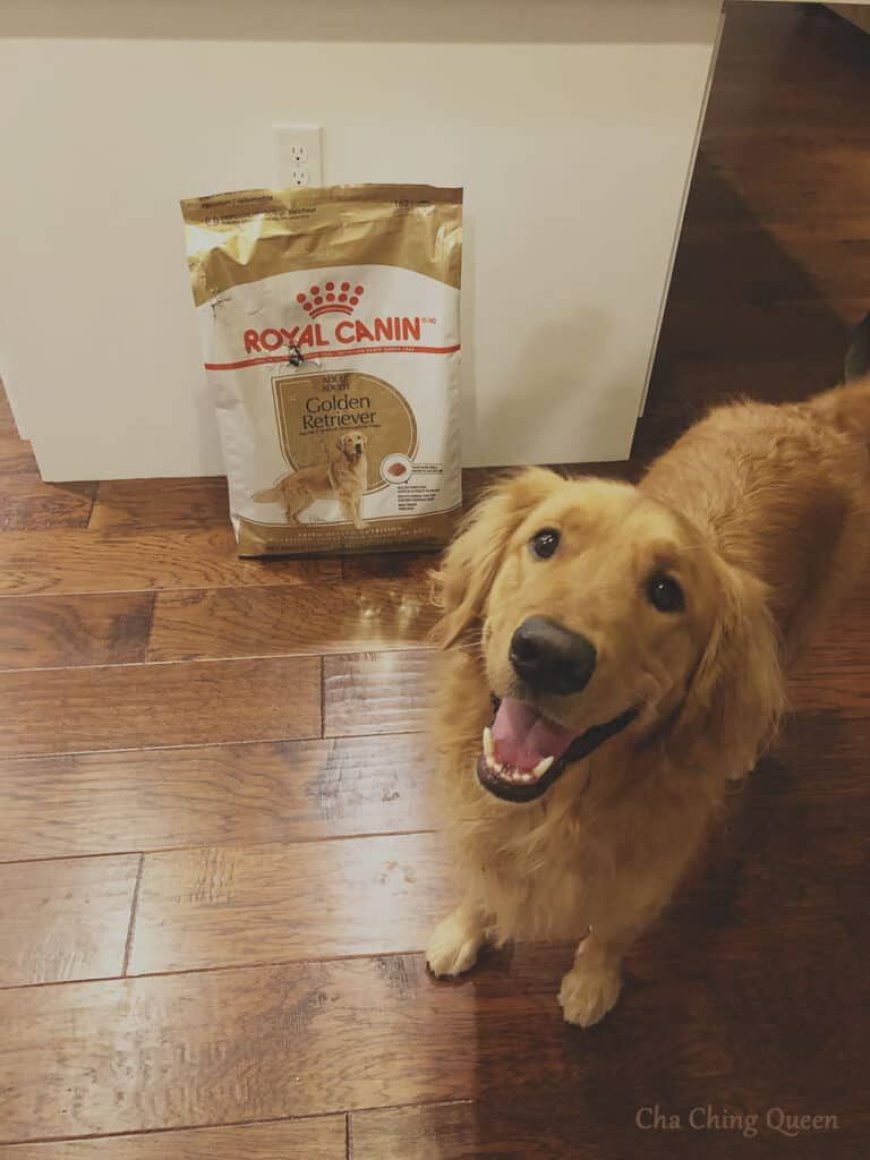
Purina Pro Plan Large Breed, Royal Canin Golden Retriever breed-specific formula, and Hill's Science Diet Large Breed consistently get veterinary support and have the research behind them. Fresh food services like The Farmer's Dog and Ollie are legitimate alternatives for owners who prioritize ingredient transparency and can sustain the cost. Raw feeding can work, but only with an actual understanding of nutritional balancing — which most home raw feeders, myself included if I'm being honest, don't have without help from a veterinary nutritionist.
At Ellie's next annual vet appointment, I'm planning to have her food reassessed since she's deep into senior territory now. Your vet's recommendation, based on your specific dog's weight, bloodwork, and health history, will always be more accurate than any ranked list.
FAQs
Is grain-free food actually dangerous for Golden Retrievers? Not definitively proven dangerous, but the caution is specific to this breed. The FDA investigation found Goldens over-represented in DCM cases linked to grain-free, legume-heavy diets. The investigation closed without establishing a definitive causal link, but veterinary cardiologists continue to recommend grain-inclusive diets for Goldens. If your dog has no confirmed grain allergy, there's no nutritional benefit to grain-free, and for this breed, there's a documented reason to avoid it.
I've been feeding my 10-month-old Golden regular puppy food. Should I switch? Yes, sooner rather than later. Regular puppy formulas are formulated for smaller breeds with different growth curves and have calcium levels that are excessive for a large breed puppy in a prolonged growth phase. Switch to a large breed puppy formula with an AAFCO statement specifically for large breed puppy growth. The transition should happen gradually over seven to ten days to avoid digestive upset.
How do I know if I'm feeding the right amount? The bag's feeding guide is a starting point, not a final answer. Assess body condition instead: you should feel the ribs easily without pressing hard, and there should be a visible waist from above. If you can't feel the ribs without pressing, reduce the daily amount by ten percent and reassess in four weeks. Most Goldens in average activity need somewhere between 1,300 and 1,700 calories per day, but that number shifts with age, neutering status, and how much they actually move.
My Golden has been on the same food for three years and recently started gaining weight. Do I need a different food? Probably not the food itself. More likely her activity level has decreased, her metabolism has slowed with age, or the same portions are producing a caloric surplus that wasn't there before. Try reducing her current food by ten to fifteen percent before switching to a weight management formula. Weight management kibbles work by adding fiber to dilute calories, which some dogs do fine with and others don't — digestively or behaviorally. If reducing quantity doesn't produce results over six to eight weeks, then a formula switch and a vet conversation make sense.
Are expensive boutique dog foods better than grocery store or vet-brand foods? Often not, and sometimes worse. Premium-packaged, boutique foods frequently lack the feeding trial data and nutritional research that brands like Purina Pro Plan or Hill's Science Diet have behind them. Marketing language about "ancestral diets" and "clean ingredients" has no regulatory definition. The boutique food space has also produced a disproportionate number of the grain-free, legume-heavy formulas associated with DCM concerns. Price and packaging aesthetics are not a proxy for nutritional quality.
What's Your Reaction?
 Like
0
Like
0
 Dislike
0
Dislike
0
 Love
0
Love
0
 Funny
0
Funny
0
 Angry
0
Angry
0
 Sad
0
Sad
0
 Wow
0
Wow
0