













Golden Retriever Separation Anxiety: Real Fixes
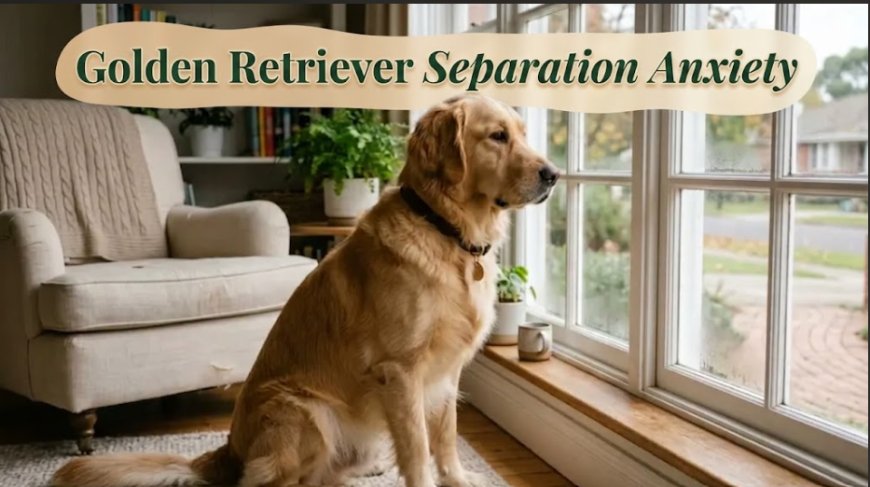
For the first several months after I brought Ellie home, I had a whole departure routine. I'd sit with her for a few minutes before leaving, tell her I'd be back, give her a long cuddle, scatter some treats around the living room as a distraction, and then try to slip out the door while she was sniffing around. When I came home, I made a big fuss of the reunion because that felt like the kind and loving thing to do.
I thought I was being a good dog mom.
I was making it worse. Every piece of that routine was signaling to Ellie that departures were significant emotional events, and I spent about three months reinforcing that before I understood what I was actually doing. Once I changed my own behavior, hers started to shift. Slowly, but clearly.
This is what I've learned about separation anxiety in Goldens, including what actually helps and what to stop doing first.
1. What It Actually Looks Like (And What It Isn't)
There's a real difference between a Golden who gets destructive when bored and a Golden who has actual separation anxiety. Both can result in a chewed couch or a scratched door, but the cause, and the fix, are completely different.
Boredom destruction usually happens after the dog has settled for a while. An hour or two into your absence, they've run out of entertainment and found a shoe. The behavior is calm in origin. They chose chaos because nothing better was available.
Separation anxiety is activated from the start. The distress begins the moment you pick up your keys, sometimes before that. Signs include pacing or trembling before you even leave, howling or barking that starts the second you close the door (your neighbors may know about this before you do), destructive behavior that's concentrated right at exit points, and house-training accidents in a dog who is otherwise reliably trained. Some dogs salivate heavily. Some injure themselves trying to get through a door or window.
The single most useful thing you can do early on is set up a phone or camera facing the door, leave for twenty minutes, and review the footage when you get back. What happens in the first ten minutes after your departure tells you almost everything. An anxious dog doesn't settle and then cause trouble later. They start immediately.
Golden Retriever Info has a useful piece on Golden Retriever paw licking that covers how stress shows up physically in this breed, and it's worth reading alongside this if your dog is showing more than one sign.
2. Why This Breed Is Particularly Vulnerable
Not every dog develops separation anxiety at the same rate, and there are reasons Goldens show up in this conversation more than some other breeds.
Golden Retrievers were bred to work in close partnership with a person. Not as independent hunters, not as livestock guardians operating at a distance. The entire history of the breed is about working side by side, staying close, staying attuned. That orientation toward a human partner is baked in, and it's a big part of why they're such extraordinary companion dogs. But it also means that prolonged separation from the person they're bonded to is genuinely distressing in a way it might not be for a more independent breed.
Ellie knew my departure cues by the time she was ten months old. She could tell the difference between me putting on sneakers to take her for a walk and putting on sneakers to go to the grocery store. The sneakers looked the same to me. Not to her.
This doesn't mean Goldens can't learn to be comfortable alone. They absolutely can. But it does mean that the "just leave and they'll figure it out" approach that gets recommended in some training circles tends to backfire with this breed specifically. You're not letting them habituate to something neutral. You're leaving a dog in a state of actual distress, repeatedly, without giving them tools to manage it differently.

3. The Approach That Actually Works
The method with the most consistent results for separation anxiety is graduated desensitization. The concept is simple: you teach your dog that your departures are temporary and predictable, by starting with very short absences and expanding the duration only as your dog stays calm.
The piece that people most often skip is the most important one. You have to return before the dog reaches a high anxiety state. Leaving for two hours when your dog hasn't been conditioned to handle two hours isn't training. It's just repeatedly stressful.
Here's a rough progression that worked for Ellie:
DESENSITIZATION PROGRESSION GUIDE (APPROXIMATE)
| Stage | Absence Length | What You're Building |
|---|---|---|
| Starting point | Under 30 seconds | Dog stays calm; you walk out and return immediately |
| Week 1–2 | 1–5 minutes | Dog begins to settle before you return |
| Week 3–4 | 10–20 minutes | Dog napping or resting when you come back |
| Week 4–6 | 30–60 minutes | Handles most short outings without distress |
| Week 6 and beyond | Build toward longer durations | Gradual expansion over several more weeks |
That timeline isn't rigid. Some dogs move through faster, some need more time at each stage. The rule is: only expand when your dog is genuinely comfortable at the current level, not just surviving it.
A few additions that help: a food puzzle or frozen Kong given exclusively at departure time, so the exit becomes something to look forward to rather than dread; a short, boring, consistent exit routine instead of a drawn-out goodbye; and coming home without a big greeting until your dog has calmed down. That last one is genuinely difficult. Goldens are such enthusiastic greeters, and it feels cold to walk past them when they're thrilled to see you. But the goal is to make your arrivals and departures unremarkable, not emotionally loaded.
The overlap between sleep anxiety and separation anxiety in young Goldens is real. The piece on why Golden puppies refuse to sleep at night gets into the underlying settling difficulty that connects both.
4. Stop Doing These Things First
Before any training has a chance to work, there are behaviors that actively work against progress.
The elaborate departure ritual is the first to go. Extended cuddles before leaving, hiding treats as a distraction, whispering reassurances at the door, then slipping out quietly. I did every single one of these. What they do is lengthen the departure event and signal to the dog that something emotionally significant is about to happen. The goal is the opposite. Leave like it's nothing. Grab your bag, say nothing extra, go.
Getting a second dog to "fix" the anxiety comes up constantly, and it's worth being honest about it: it sometimes helps and often doesn't, because true separation anxiety in Goldens is frequently specific to a person, not about being alone in the general sense. A dog bonded to you won't automatically transfer that security to another dog. It might help, it might not, and if it doesn't you've added another dog to the household without solving anything. Worth thinking through before committing.
Scolding for damage done while you were gone doesn't teach what people think it teaches. Dogs don't connect a consequence that arrives ten or fifteen minutes after the fact to the behavior that caused it. And a dog who is already anxious about being left doesn't benefit from learning that your returns are stressful too. It compounds things.
The article on 7 things nobody tells new Golden owners walks through some of these early-stage mistakes in more depth, and if you're in that first year, it's worth a read alongside this one.
There's also a quieter mistake that I didn't realize I was making for a while: the over-the-top reunion greeting. Coming home and immediately kneeling down, talking in a high voice, letting Ellie jump all over me because it felt mean not to. Every time I did that, I was confirming that my return was a huge event, which meant my departure was too. Once I started coming home quietly and waiting for her to settle before acknowledging her, the whole emotional charge around my comings and goings gradually dropped.
FAQs
Ellie panics when I leave but is totally fine when my husband stays home. Is that separation anxiety?
Yes, that's person-specific separation anxiety, which is the most common form in Goldens. The training approach is the same, but the goal is conditioning your dog specifically to your absences. A useful starting point is short solo outings where only you leave, at increasing durations, while your husband is home. Over time you're teaching your dog that your absence is safe and temporary, which is different from just teaching them to tolerate being in the house alone.
At what age does separation anxiety typically appear in Golden Retrievers?
Two windows are most common. The first is early puppyhood, when the dog is first experiencing being left alone after coming from a litter. The second is around 12 to 18 months, when social bonds solidify and the dog becomes more aware of who specifically they're attached to. Senior Goldens can also develop it later in life, particularly after a major change, a household move, or the loss of another pet they lived with.
How long does treatment realistically take?
Mild cases with consistent work can improve noticeably in three to four weeks. Longstanding, severe anxiety in a dog who has been practicing the behavior for years can take three to six months. The variable that matters most isn't time, it's consistency. Sporadic, occasional sessions produce very slow results. Daily, methodical practice moves things faster.
Should I talk to my vet about medication?
For moderate to severe cases, yes. Fluoxetine (sold as Reconcile for dogs) is FDA-approved specifically for canine separation anxiety, and the research supports using it alongside behavior modification rather than as a standalone solution. What medication does is lower the dog's anxiety baseline enough that training can actually reach them. Some owners are reluctant to go that route, but for a dog in genuine distress, it's a real and legitimate tool.
My Golden seems happy all the time, but neighbors say she cries for hours when I leave. How is that possible?
A dog who is anxious during absences and joyful during them isn't unusual at all. The anxiety is triggered by specific circumstances: your departure, the empty house, the uncertainty. When you're home and present, none of that is active. What you're seeing is a dog who is well-bonded and happy in your presence, but hasn't yet been taught that your absence is temporary and safe. Those two things coexist in the same dog all the time.
The hardest part of working through this with Ellie wasn't learning the training steps. The steps aren't complicated. The hard part was accepting that my instincts weren't always helping her, that the long goodbyes and the emotional reunions that felt loving to me were feeding the very thing I was trying to calm. Adjusting your own behavior is harder than adjusting your dog's.
More on behavior, health, and the full picture of what Golden Retrievers actually need is available across Golden Retriever Info, including topics that feed into this one.
What's Your Reaction?
 Like
0
Like
0
 Dislike
0
Dislike
0
 Love
0
Love
0
 Funny
0
Funny
0
 Angry
0
Angry
0
 Sad
0
Sad
0
 Wow
0
Wow
0