
















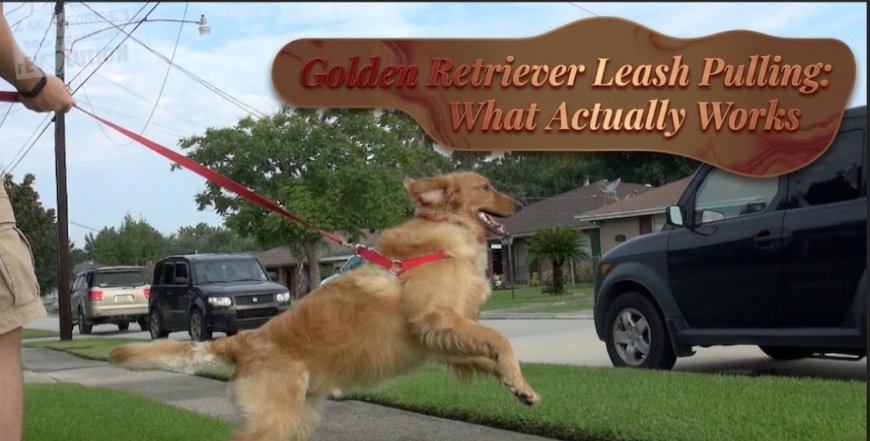
Golden Retriever Leash Pulling: What Actually Works
The biggest myth I kept seeing when Ellie was young? That Golden Retrievers eventually grow out of pulling. New owners would show up in Facebook groups saying their dog dragged them everywhere, and someone would always reply with "don't worry, they calm down by two." I believed it for longer than I should have.
They don't grow out of it. Not without real, intentional work.
I spent more walks than I care to admit being hauled down the sidewalk by a dog who treated every squirrel, every stranger, and every interesting patch of grass like a five-alarm emergency. And here's the thing people don't say enough about Goldens: they're strong. Sixty pounds of enthusiastic retriever on a leash doesn't just feel inconvenient. It feels like you're being used as a sled.
If you're in the middle of this right now, know that it's not because your dog has a bad personality or because you did something wrong early on. Pulling is almost always a training gap and a biology thing, and it's fixable. Not overnight, but fixable.
1. Why Golden Retrievers Pull (And Why The Common Explanations Miss The Point)
Most of the explanations floating around online focus on dominance or stubbornness. Neither of those is actually what's happening.
Pulling works. That's it. When a dog pulls toward something interesting and gets even six inches closer to it, their brain logs that as a successful strategy. Do that a few hundred times across puppyhood and early adolescence and you've built a deeply reinforced habit. It has nothing to do with your dog thinking they're in charge.
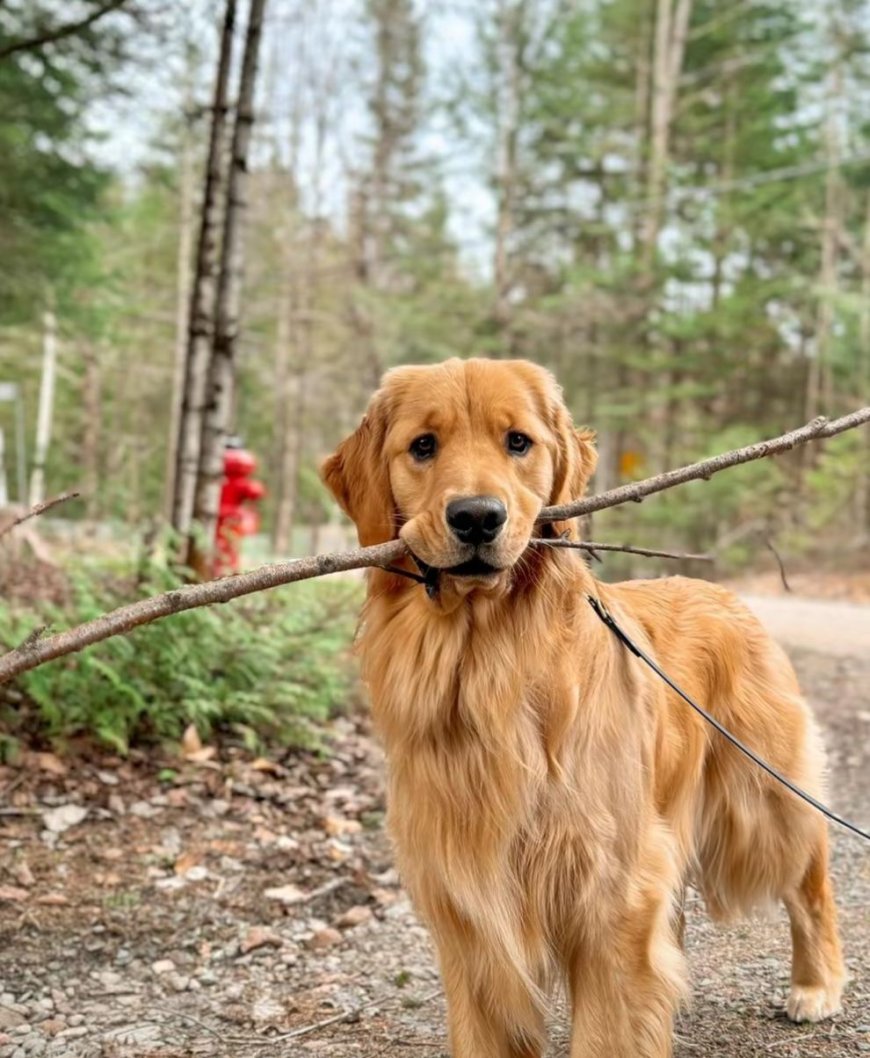
Goldens specifically are wired to be highly responsive to their environment. They were bred to track movement, follow their nose, and retrieve with urgency. When something catches their attention mid-walk, every instinct they have fires at once. That's not bad behavior. That's a Golden being exactly what a Golden is.
There's also an energy piece that rarely gets mentioned. A Golden who's been inside all day will always be harder to walk than one who had some activity beforehand. Even ten or fifteen minutes of backyard play before a walk takes the edge off the initial excitement significantly. If your Golden is bouncing off the walls at home before you even touch the leash, it might be worth reading about whether your Golden Retriever puppy's energy level is normal or over the top first, because the two problems are often connected.
2. Methods That Actually Produce Results (And One That Doesn't)
There's no single technique that solves this for everyone. But a few methods consistently work when owners actually stick with them.
Stop and wait. The second the leash goes taut, you stop walking. Completely. No pulling back, no scolding, no redirecting with a treat. You just stop, and you wait. The moment your dog circles back and the leash goes slack, you move again. This sounds almost insultingly simple, but it requires a level of consistency that most people don't realize going in. You have to do it every single time. One walk where you're running late and you let the pulling slide because you just need to get around the block, and you've muddied the feedback. Dogs read patterns, not intentions.
Direction changes. When your dog surges ahead and the pulling starts, you calmly turn around and walk the other way. No announcement, no drama. Your dog quickly figures out that the only way to actually get anywhere is to pay attention to where you're going, because you're clearly not following them.
Reward the check-ins. This one made the biggest difference with Ellie. Every time she glanced back at me during a walk, I gave her a small treat and a quiet "yes." Not big, excited praise, just a calm acknowledgment. Over time, she started offering those looks back voluntarily because she'd learned that checking in with me paid off. You're building attentiveness, not just suppressing pulling.
And the one that doesn't work? Retractable leashes. They teach the exact opposite of everything you're trying to build. The tension is constant, the dog never learns what "loose leash" even feels like, and there's no clear feedback loop. Use a standard four to six foot leash while you're training, full stop.
Here's a quick comparison of the most common methods so you can see what fits your situation:
| Method | How It Works | Realistic Timeline |
|---|---|---|
| Stop and wait | You freeze the moment leash tightens; resume when slack | 2–4 weeks of daily consistency |
| Direction changes | Turn around when dog gets ahead; no warning | 2–3 weeks; great for high-arousal dogs |
| Reward check-ins | Treat dog for voluntarily looking back at you | Ongoing; builds lasting attentiveness |
| Front-clip harness | Steers dog sideways when they surge forward | Immediate management, not a training fix |
| Pressure and release | Dog learns pulling makes nothing happen | Works best combined with other methods |
The front-clip harness is worth a separate mention. It won't train your Golden, but it gives you real physical control while the training is still in progress. For a large, enthusiastic Golden in the early weeks, that matters.
3. Where Most Owners Actually Go Wrong
The mistake isn't usually the wrong method. It's using the right method without enough follow-through.
Leash training works through repetition over time. If you do three days of stop-and-wait and then have a busy week where you just survive the walks, you've reset most of your progress. That's not your dog's fault. They're reading whatever feedback they're getting, and inconsistent feedback teaches nothing.
The second thing people get wrong is only practicing on walks. The skills you're building, focus, impulse control, responding to leash pressure, can all be started at home first. I worked on Ellie's leash manners in the backyard for a couple of weeks before I took any of it to a real street with real distractions. Lower the difficulty before you raise it.
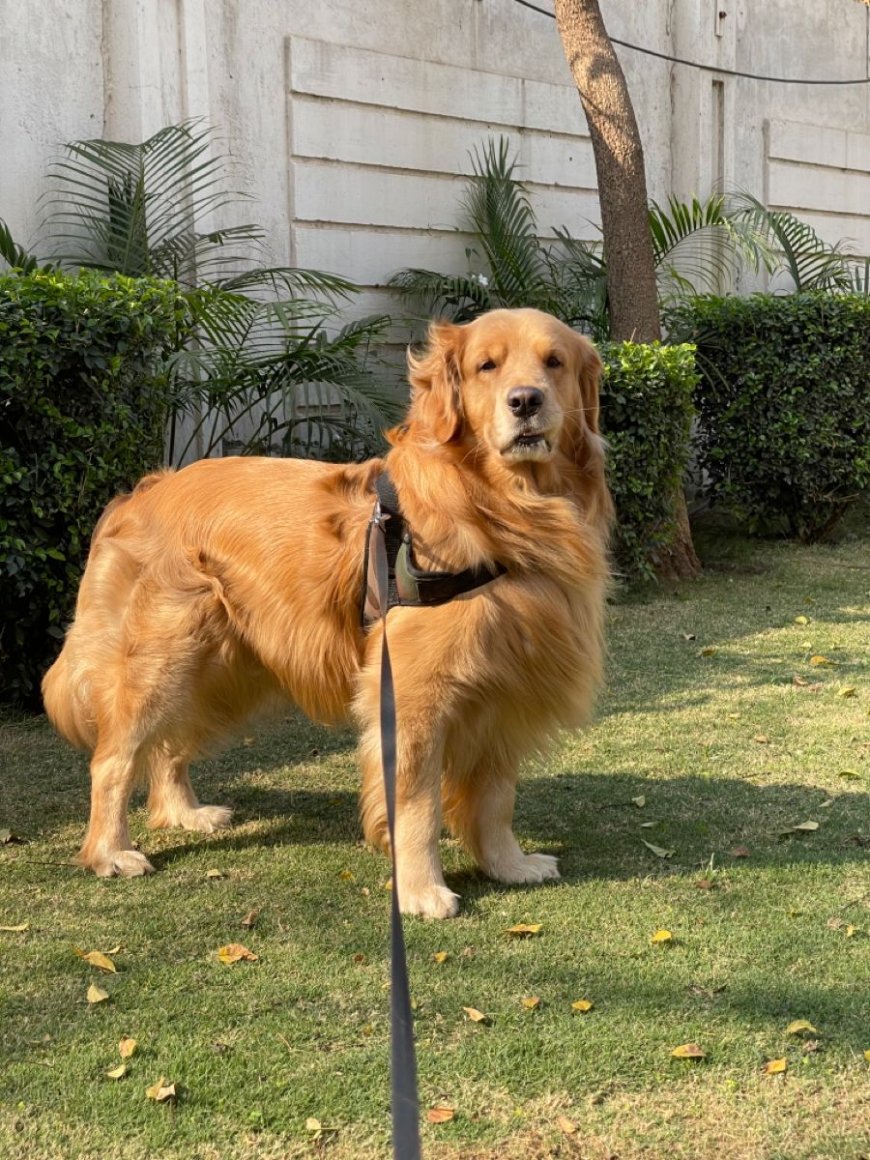
There's also a mechanical thing that's easy to miss: where you're holding the leash and how much tension you're carrying in your arm. A lot of owners unconsciously hold the leash tight all the time, which means there's steady backward pressure even when the dog isn't really pulling. Golden Retrievers were bred to feel resistance and lean into it. If you're providing constant low-level tension, you're giving your dog something to push against. The goal is a loose leash, and sometimes that means actively relaxing your grip even before your dog has earned it.
The patience required here is similar to what makes crate training a Golden without the crying take longer than owners expect. You're asking for calm, controlled behavior in a situation that feels genuinely exciting to them. That gap between what they want to do and what you're asking takes real time to close.
4. Getting The Behavior To Hold Up In The Real World
A Golden who walks perfectly in your quiet neighborhood on a weekday morning is not a trained dog. A trained dog walks well on a Saturday afternoon near a busy park. You need both.
Once the basics are starting to stick in low-distraction environments, you have to proof them. Practice near other dogs, around kids, in places with interesting smells, at different times of day. Every new environment is basically starting from scratch for a dog who hasn't been there. That's not backsliding, that's just how generalization works.
Short, intentional training sessions beat long reactive walks. Fifteen minutes of deliberate practice where you're actually working on the behavior is worth more than an hour of just managing the pulling. If you have a young Golden in the adolescent phase, anywhere from six to eighteen months, expect things to get a little worse before they get better. That's the phase where everything you've built gets tested. Your dog isn't forgetting. They're pushing. Stay consistent and it passes.
Mixing training into play helps Goldens stay engaged. Asking for a sit before crossing a street, rewarding a spontaneous look back, treating moments of calm when a dog passes by, these micro-moments add up and keep the walk from becoming something your dog tunes out. Golden Retriever Info has quite a bit on building that foundation, including pieces on why Golden puppies bite everything, which connects to the same impulsive, high-arousal energy that makes leash manners hard in the first place.
FAQs
My Golden is already two years old and still pulls badly. Is there still hope?
Yes, and honestly adult dogs can sometimes make faster progress than puppies because they have better focus. The process is the same, consistent feedback and clear rewards repeated over time. A deeply ingrained habit may take a few more weeks to shift, but there's no point at which a Golden becomes untrainable.
Do I need a professional trainer to fix leash pulling?
Not necessarily. The methods that work are genuinely learnable by anyone willing to be consistent. Where a trainer helps is if you're dealing with reactivity on top of the pulling, meaning your Golden lunges or barks at other dogs, because that's a different layer that sometimes needs more structured guidance.
What's the best harness for a Golden who pulls hard?
A front-clip harness like the Ruffwear Front Range or the PetSafe Easy Walk gives you good control without causing discomfort. The clip on the chest turns the dog sideways when they pull, which interrupts the momentum without punishing the dog. Avoid anything that puts pressure on the throat.
Should I use treats on every single walk forever?
No, and you shouldn't need to. Once the behavior is consistent, you can move to intermittent rewards, treating occasionally and unpredictably rather than every single time. That actually strengthens the behavior because the dog stays engaged not knowing when the reward is coming.
My Golden only pulls toward other dogs. Is that the same problem?
It's a variation. Dogs that pull specifically toward other dogs often have a high arousal response to their own species, which means you'll also need to work on focus exercises in the presence of triggers, keeping distance at first, asking for attention before another dog gets close, rewarding calm over fixation. Same principles, more specific application.
Most of the advice about leash training makes it sound more complicated than it is, or it glosses over how long the consistency part actually takes. The real answer sits somewhere in the middle: the methods are simple, but following through every day, in every situation, is the part that takes real commitment. Your Golden genuinely wants to work with you. That's one of the things that makes this breed so special. The job is just making clear what "working with you" looks like when there are squirrels, other dogs, and interesting smells in every direction.
You can find more on training your Golden at Golden Retriever Info's training section, which covers everything from basic commands to managing the more frustrating adolescent behaviors.
What's Your Reaction?
 Like
0
Like
0
 Dislike
0
Dislike
0
 Love
0
Love
0
 Funny
0
Funny
0
 Angry
0
Angry
0
 Sad
0
Sad
0
 Wow
0
Wow
0