










How Wolves Handle Bite Inhibition in Their Packs
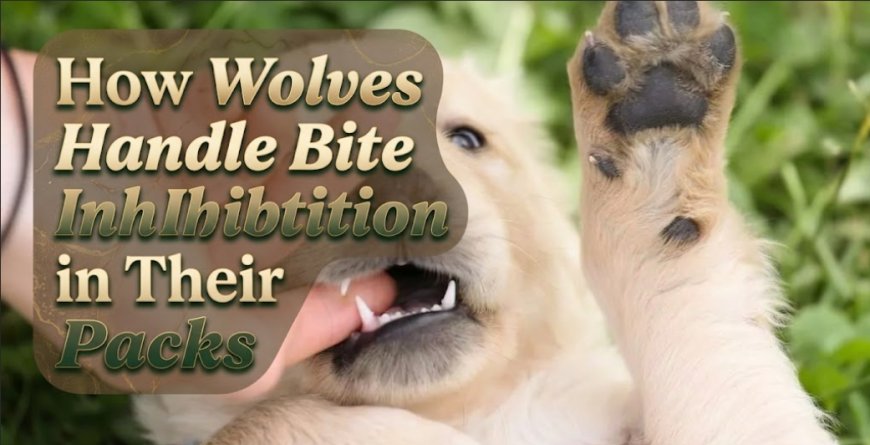
The thing I kept seeing, over and over, in dog training discussions was this particular claim: that wolves teach their pups bite pressure through dominance corrections, and that replicating this hierarchy is the key to getting your dog to stop biting so hard. Sometimes it came with specific instructions, scruff shakes, alpha rolls, firm holds until the puppy stopped struggling. Sometimes it was vaguer, just a broad assertion that wolves have this figured out in their packs and we should model what they do.
I read some version of this probably a dozen times before Ellie was six months old. It wasn't fringe advice, either. It showed up in training forums, comment sections on popular dog blogs, and recommendations from trainers who genuinely believed they were working within a wolf-based behavioral framework.
The actual research on how wolf packs handle bite inhibition tells a very different story. And I think understanding what's really happening in those packs, rather than the mythology that's been layered over it for decades, changes how you interpret what your puppy is doing when she clamps down on your hand at 11 weeks old.
1. Where the Dominance Model Actually Came From
To understand how we ended up with the "alpha wolf correction" approach to puppy biting, you have to go back to research from the 1940s through the 1960s on captive wolf groups. Those studies documented hierarchical displays, aggressive posturing, and what researchers described as dominance and submission roles within the group. The observations themselves weren't wrong. The interpretation is where things went sideways, and it's a good lesson in how context can completely distort what a data set means.
The wolves being studied were not family units. They were unrelated adult wolves placed together in an enclosure, which is a fundamentally different social situation from anything that occurs in nature. Think about what you're actually creating when you force unrelated adults of any highly social species into a confined space with limited resources. You get stress responses, status competition, and displays of force that simply don't appear in the same animals living in their natural social groups. It's roughly analogous to studying human family dynamics by observing strangers locked in a room together and concluding that's how families normally operate.
Field research on naturally forming wolf packs, done in earnest from the 1990s onward, found something quite different. Wild wolf packs are almost exclusively family units, a breeding pair and their offspring from one to three seasons. The so-called "alpha" is functionally just the parent. The social dynamics are parental and cooperative, not tyrannical. The wolf who coined the term "alpha wolf" in popular culture, researcher David Mech, spent years afterward writing about why the term should be retired from discussions of wolf behavior entirely. He was clear that the original framing was based on an artificial situation that doesn't reflect how wolves actually live.
That's the foundation of the "wolf dominance" model of dog training. And it matters, because a lot of puppy bite advice built on top of it is built on something that wasn't accurate to begin with.
2. What Wolf Pups Actually Do to Learn Bite Inhibition
Wolf pups are born blind and essentially immobile. They spend the first couple of weeks in a developmental phase where most of their energy goes into feeding and basic physiological growth. By about three weeks old they're mobile and beginning to interact with their littermates, and bite play starts almost immediately after that. It's uncoordinated, uncontrolled, and often too hard.
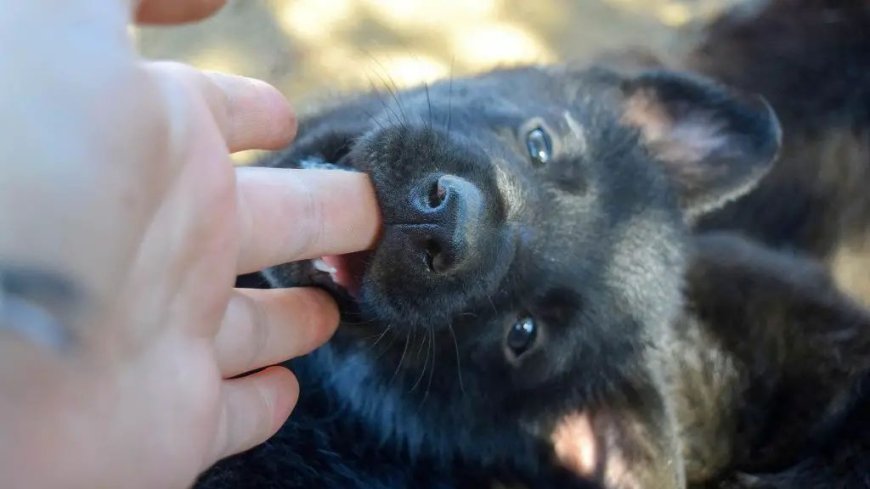
This is actually the point. They bite each other too hard because they have no reference yet for what too hard means. The feedback loop that teaches them bite pressure calibration isn't complicated: when one pup bites too forcefully during play, the other yelps and the game stops. Not because an adult intervened. Not because someone corrected the biter. The game ended because the recipient withdrew. That withdrawal is the entire mechanism.
Hard bite, play stops. Soft bite, play continues. Over hundreds and eventually thousands of repetitions across the first weeks of life, the pups build a calibration they carry forward. Adults in the pack do sometimes intervene and provide feedback, but the primary bite inhibition learning happens through peer interaction, and the correction is always the same thing: loss of the play partner.
There's something worth sitting with in that. The wolf pup isn't learning "the dominant animal doesn't allow hard biting." She's learning "when I bite at this pressure, my playmate leaves." That's a consequence-based lesson, and it has nothing to do with hierarchy or rank. It's social feedback in the most direct possible form.
3. Where Applying the Myth Actually Does Damage
When "dominate your dog to correct bite pressure" gets applied to actual puppies, a few things tend to happen.
A scruff shake or a physical hold-down might suppress the biting in that immediate moment. A frightened puppy will stop what she's doing. But the lesson she's learning isn't "I should bite softer." It's something closer to "humans are unpredictable and sometimes cause discomfort." That's a very different piece of information to carry forward, and it doesn't produce a dog with genuinely calibrated bite inhibition. It produces a dog who has learned that human hands near her face can mean something unpleasant.
For Golden Retrievers specifically, this matters quite a bit. Goldens were developed over generations to retrieve game birds with a soft mouth, meaning without damaging what they were carrying. The instinct for soft bite pressure is genuinely embedded in the breed, but it still requires the same social reinforcement process that wolf pups go through with their littermates. The window for that reinforcement in domestic dogs is generally understood to close around twelve to fourteen weeks, which is why the first weeks after a puppy comes home carry real weight. If you're in that period right now and trying to set up everything correctly, the new puppy checklist at Golden Retriever Info lays out what those early weeks should actually look like.
4. What the Wolf Pack Model Gets Right, Once You Strip the Mythology
Here's what I find genuinely useful in the wolf pack research, once the dominance framing is removed. Wolves teach bite inhibition through social consequence, not punishment. The biter loses the game. That principle is accurate, it applies directly to domestic dogs, and it's the basis for most modern bite inhibition protocols.
The "yelp and withdraw" method that many trainers recommend, where you make a short high-pitched sound and immediately stop the interaction when your puppy bites too hard, is a direct functional parallel to what wolf littermates do with each other. Your puppy loses access to you and the game, just as a wolf pup loses her littermate when she bites too hard. The signal is "that pressure was too much," and the consequence is that the social interaction ends. No dominance required. No hierarchy involved.
It doesn't work identically for every puppy. Some dogs, particularly very aroused ones, actually get more excited by a loud yelp and escalate rather than pause. For those dogs, a quiet and immediate withdrawal works better than the dramatic sound. The full breakdown of why Golden puppies bite so hard and so often covers the different underlying drivers and why individual puppies respond differently to the same method. But the core mechanism is the same regardless of which version you use: social access is the currency, and bite pressure controls whether you keep it or lose it.
5. The Timing Question That Doesn't Get Enough Attention
One thing that comes up constantly when bite inhibition is discussed is whether there's a fixed window, and what happens when it passes. It's worth thinking through honestly because a lot of conflicting advice exists on this.
Wolf pups spend their first three months with near-constant social contact within the pack. Bite calibration happens across hundreds of play interactions before the pups begin transitioning to more independent behavior around and after week twelve. Research on domestic dogs suggests the sensitive period for bite inhibition learning aligns roughly with this, ending somewhere between twelve and fourteen weeks. After that, learning is still possible, it's just slower and requires more consistent reinforcement over a longer period.
What this means practically is that the weeks between eight weeks (when most puppies come home) and twelve or thirteen weeks are genuinely high-value for this work. Not the only window, but the one where learning happens most readily and sticks most effectively. The Golden Retriever Info article on puppy week one surprises captures a lot of what those first days actually look like, including the biting that catches most new owners completely off guard.
A side note here because I think it's honest and useful: I remember being genuinely unprepared for how hard Ellie bit as a puppy. She wasn't aggressive, not even slightly, just completely uncalibrated. It took several weeks of very consistent withdrawal and redirection before she started to self-regulate. The process isn't fast even when you're doing everything right. Expecting instant results is probably the most common reason owners abandon a method that would actually work if they stayed with it long enough.
Wolf Pack vs. Domestic Dog Bite Inhibition: The Actual Comparison
| Element | Wolf Pack | Domestic Dog |
|---|---|---|
| Primary source of feedback | Littermates; adults occasionally | Littermates early on; humans after adoption |
| What feedback looks like | Yelp plus play withdrawal | Yelp or quiet pause, then end of interaction |
| Key learning window | Roughly weeks 3 to 12 in the pack | Roughly weeks 3 to 12-14 (sensitive period) |
| Role of physical corrections | None; withdrawal is the whole mechanism | Counterproductive; teaches avoidance, not calibration |
| What the dog actually learns | Soft bite keeps the game going | Soft bite keeps the human engaged |
| Dominance or rank involved | No; pure social consequence loop | No; rank-based corrections are not what works |
The wolf pack model, understood on its actual terms rather than through the dominance mythology, turns out to be a fairly clean template for understanding why modern bite training works. Loss of social access is the feedback signal. Consistency is what makes the lesson land. You don't have to simulate being an alpha, hold your dog down, or impose any kind of hierarchical correction. You just need to replicate, as best you can in your living room, the thing wolf pups get from their littermates automatically.
The irony is that the "follow the wolf pack" advice, interpreted correctly, leads somewhere much gentler than the dominance trainers ever intended it to go. More on Golden Retriever puppy behavior and what to expect through each stage is available at Golden Retriever Info.
FAQs
Do wolves actually punish each other for biting too hard?
Not in the way the dominance model implies. The correction is the natural social consequence of biting too hard: the other animal withdraws and the interaction stops. There's no punitive intent involved. It's a feedback loop, not a disciplinary action. Adult wolves occasionally intervene in pup play and provide correction, but the primary mechanism is peer interaction and the loss of play that follows an overly hard bite.
My puppy is four months old and still biting hard. Is the window gone?
The sensitive period makes the learning faster and more automatic, but it doesn't end completely. Adult dogs can develop better bite inhibition with patient, consistent training. It takes more repetitions and more time than it would have at eight or ten weeks, but the same mechanism still applies: consistent withdrawal when pressure is too high, consistent engagement when pressure is appropriate. Progress is slower, not impossible.
Is the "yelp like a puppy" method scientifically based?
Yes, it's directly modeled on what wolf and dog pups do with each other during play. A high-pitched yelp signals that the bite crossed a threshold, and the immediate withdrawal ends the social session. The caveat is that some puppies find the yelp exciting rather than aversive, particularly highly aroused dogs who are already over-threshold. For those puppies, a quiet, immediate pause and withdrawal works better than the dramatic sound.
Why do some dogs never develop good bite inhibition even with training?
The two most common factors are early separation from the litter (before six weeks, before the primary peer-based learning can happen) and inconsistent response to biting in the training period. If biting sometimes ends the game and sometimes doesn't, depending on who's in the room or how tired the owner is, the dog gets a muddled signal. Inconsistency across family members is probably the single biggest reason bite inhibition training stalls in otherwise normal puppies.
Does breed history affect how quickly this develops?
It does play a role. Goldens were specifically selected over generations for a soft mouth, meaning the instinct toward bite pressure control is genuinely present in the breed genetics. That instinct still needs reinforcement to develop fully, but Goldens tend to respond to bite training faster than breeds where high bite drive was the goal of the breeding program. Terriers bred for gripping, or certain working breeds built to hold, may require longer and more deliberate work because inhibition runs somewhat against what those dogs were historically built to do.
What's Your Reaction?
 Like
0
Like
0
 Dislike
0
Dislike
0
 Love
0
Love
0
 Funny
0
Funny
0
 Angry
0
Angry
0
 Sad
0
Sad
0
 Wow
0
Wow
0