















How to Stop a Golden Puppy From Jumping on Guests
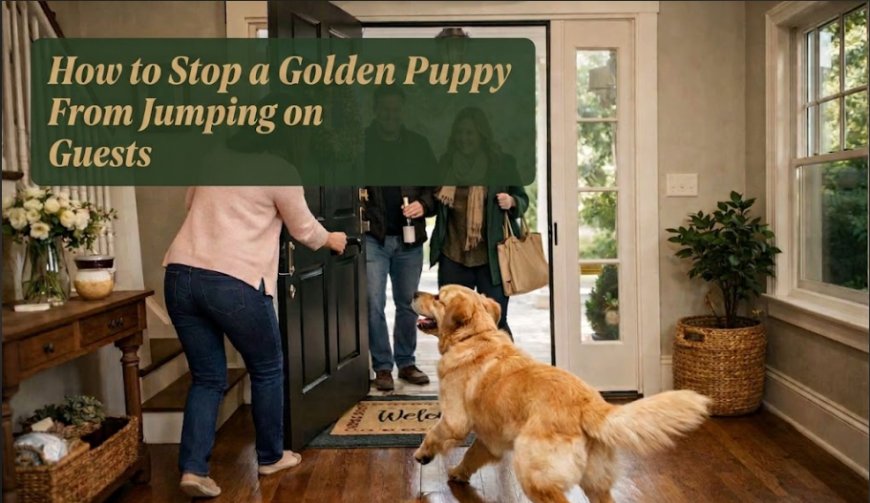
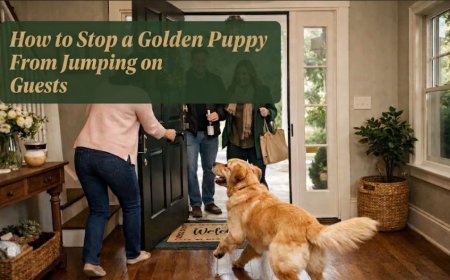
Your golden puppy does not understand personal space. She also does not care that your neighbor is wearing white pants. The second the doorbell rings, every ounce of restraint she has evaporates, and she launches herself at whoever just walked in like they're the first human she's ever loved. Which, for about four seconds, they are.
This isn't bad behavior in the way that phrase usually gets used. It's a temperament trait colliding with a training gap, and the breed makes it worse. Golden retrievers were bred to be affectionate, biddable, and intensely social, which is exactly why they make wonderful family dogs and exactly why a fifteen-pound bundle of enthusiasm thinks jumping is a perfectly reasonable greeting. It's also one of the questions we hear most often at Golden Retriever Info, which tells you it's more common than it feels when you're the one apologizing for muddy paw prints on someone's shirt.
The good news is that this is one of the more fixable puppy behaviors, as long as you're consistent about it and honest with the people who walk through your door.
1. Why Golden Puppies Jump in the First Place
Jumping is mostly about face-seeking. Puppies want to get close to your face because that's where the good stuff happens: eye contact, smiles, that high-pitched voice we all use without meaning to. Standing on hind legs is the fastest route there, and a golden puppy figured this out long before any of us tried to stop it.
There's a timing problem working against you too. Most guests, even the ones who claim to dislike jumping, will laugh, bend down, or say something delighted in the first half second after a puppy jumps on them. That reaction is exactly what reinforces the behavior. Your puppy isn't being defiant. She's repeating something that has worked every single time it's been tried.
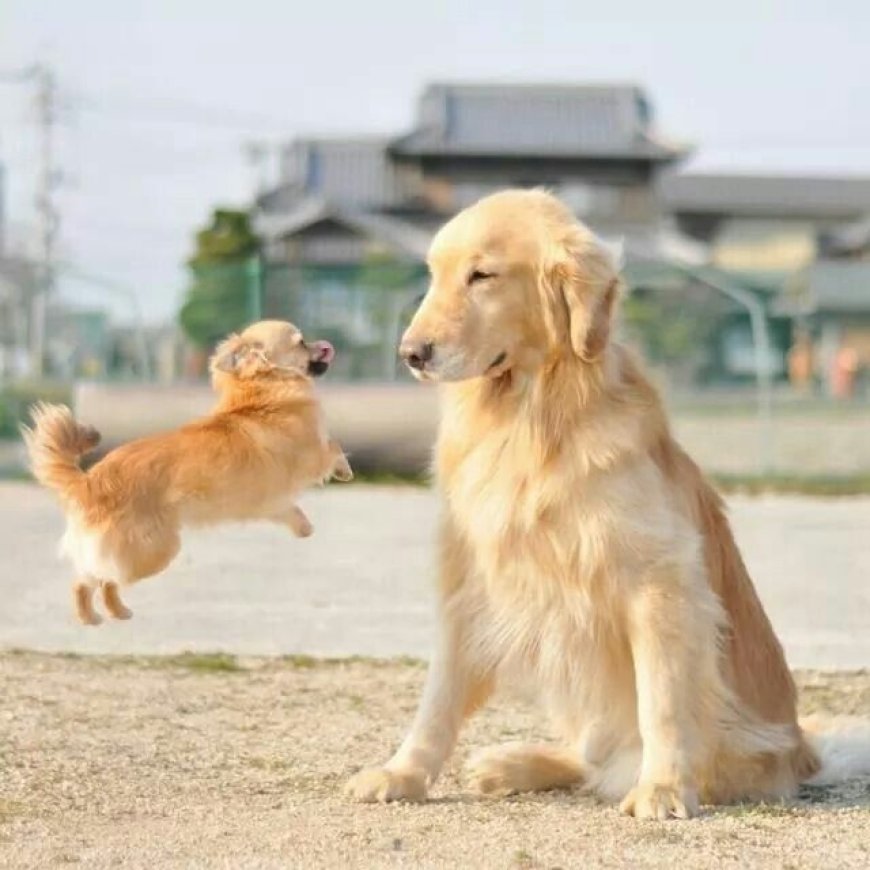
Add in the fact that puppies have almost no impulse control before about five or six months, and you get a dog who gets more excited the longer the front door stays open, not less. If this level of chaos has you wondering whether your puppy's energy is normal at all, that's worth sorting out on its own, separate from the jumping itself.
2. The Reaction That Makes It Worse
Here's where a lot of new owners go wrong, and it's an easy trap to fall into. Someone yells "down," someone else pushes the puppy off with their hands, and a third person crouches down to "calm her" by petting her while she's still airborne. All three responses, even the well-meaning ones, give the puppy attention at exactly the moment you don't want to reward.
Pushing a puppy off with your hands is the biggest offender. To a golden retriever, hands on her body during an exciting moment reads as play, not correction. She jumps again immediately because the game just got more fun.
And if you've found yourself adding more commands when the first one doesn't land, sit, off, down, no, all in the same breath, that escalation pattern is worth a closer look on its own. Piling on words rarely solves anything at the front door or anywhere else. Inconsistency is the real cost here. If one family member allows jumping because "she's just being friendly" while another tries to train it away, the puppy never gets a clean signal about what actually works.
3. Teaching Four Paws on the Floor
The fix is less about stopping the jump and more about building a different habit that physically can't happen at the same time. A dog with four paws on the ground cannot also be airborne, so that's the behavior worth rewarding.
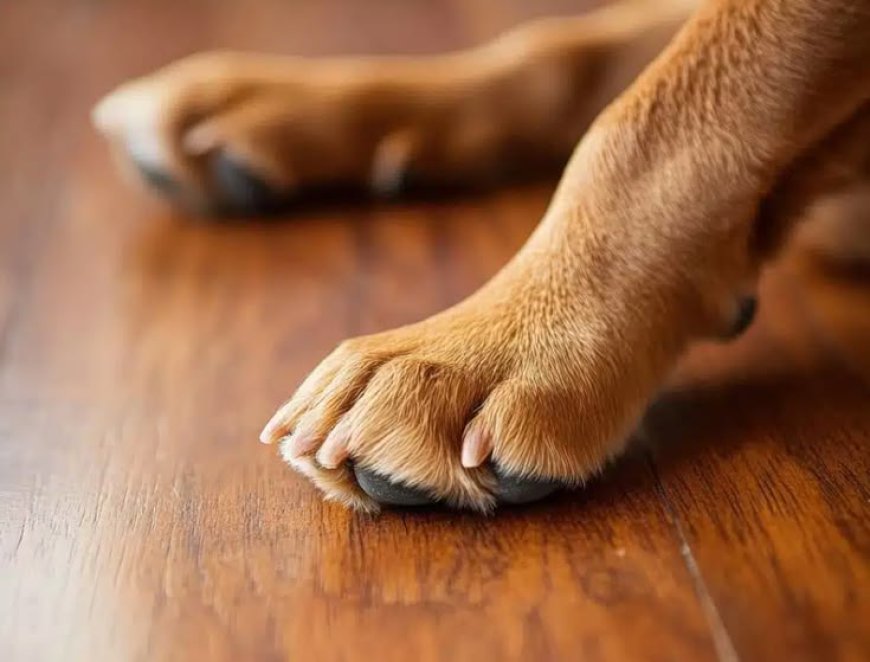
Start without the doorbell involved at all. Practice greetings with a calm family member walking in and out of a room. The moment the puppy has all four feet down, even briefly, mark it with a treat and a calm "yes." If she jumps, the person walking in simply turns away and waits, no words, no eye contact, until she settles, then rewards the settle.
Once that's reliable, add mild excitement. Knock on an interior door before walking through it. Use the actual front door with no one behind it. Layer in real guests only after the easier version is solid, usually after a week or two of short daily sessions.
A leash indoors helps enormously during this phase. Clip it on before anyone arrives and you can guide her into a sit, preventing the launch physically while the new pattern is still forming. This isn't punishment. It's just removing the chance to rehearse the wrong behavior while the right one takes hold.
Quick Reference: What to Reward vs. What to Avoid
| Situation | Reward This | Avoid This |
|---|---|---|
| Puppy approaches calmly | Treat the moment all four paws touch down | Petting while she's mid-jump |
| Puppy jumps anyway | Turn away, ignore completely | Yelling "down" or "no" |
| Guest walks in | Calm sit before any greeting | Letting guests greet immediately |
| Puppy settles after being ignored | Immediate praise and a treat | Waiting too long to mark the calm |
4. Getting Guests on Board
This step gets skipped more than any other, and it's usually the reason training stalls. You can be perfectly consistent at home and still end up with a jumping fifty-pound dog if every guest who walks in undoes the work in the first ten seconds.
Text people before they arrive if you have to. Something simple works fine: she's in training, please ignore her completely until she's sitting, no talking, no eye contact, no hands. Most people are happy to help once they understand it gets them to a calmer dog faster, not slower.
For guests who really can't resist, keep a leash and a treat pouch by the door so you can manage the greeting yourself. Ask the puppy to sit, hand the guest a treat to drop near her feet once she's seated, and let the reward come from the floor rather than from excited hands reaching toward her face.
5. When Jumping Sticks Around Longer Than Expected
Some golden puppies take longer than others, and there's usually a specific reason rather than a training failure. A puppy under four months has limited physical impulse control no matter how good your technique is, so expect gradual improvement rather than a clean fix. You'll sometimes hear that a golden "just grows out of it," and there's a kernel of truth there since adult dogs do settle, but waiting it out without any training tends to produce a seventy-pound adult with the same habit and a lot more force behind it.
Exercise matters more than people expect here too. A puppy who hasn't had a real outlet for her energy that day will struggle to hold any calm behavior, jumping included, no matter how many treats are on offer. We've gone into this in more depth if daily activity seems like part of the problem.
If you're also dealing with a puppy who seems to trust every single person who walks through the door without an ounce of caution, that's actually connected to this same gap, and it's worth reading alongside this one.
There's also a common mix-up worth clearing up: crate time doesn't directly fix jumping, though a puppy who's had a settling period in her crate before guests arrive tends to greet people from a calmer baseline. Crate training and greeting training are related skills, not the same skill, and treating them as interchangeable is one of the more frequent mistakes new owners make.
Most puppies show real improvement within two to four weeks of consistent practice, guests included. Full reliability, the kind where you stop thinking about it, usually lands somewhere between five and eight months old, which lines up with when impulse control catches up developmentally anyway.
My own senior girl, Ellie, went through exactly this phase as a puppy, launching herself at the mail carrier with the kind of joy you'd think she'd won something. What worked wasn't a single trick. It was being boring and consistent about ignoring the jump for longer than felt natural, until one day she just didn't do it anymore.
FAQs
Will my golden puppy outgrow jumping on its own, without any training? Some reduction happens naturally as impulse control develops past five months or so, but a puppy who's never been taught an alternative greeting will likely keep jumping into adulthood, just with more weight behind it. Training speeds this up and keeps the habit from hardening.
Is it true that golden retrievers are too friendly to train out of jumping? No. Friendliness and impulse control are separate traits. Goldens are highly trainable as a breed, and the same friendliness driving the jumping is what makes them quick to pick up an alternative greeting once it's reinforced consistently.
Should I use a spray bottle, a leash correction, or anything physical to stop the jump? Physical corrections tend to either escalate the excitement or create confusion about why she's being touched during a greeting at all. Ignoring the jump and rewarding the calm alternative works faster and avoids any unintended association between guests and discomfort.
What if my puppy only jumps on certain people, like kids or men with deep voices? That's usually about energy and pitch rather than a problem specific to that person. Higher-energy or louder greetings tend to amplify jumping, so practicing calm entrances with those specific people, slowly, helps more than general training alone.
How long before my puppy stops jumping on guests entirely? Most households see noticeable improvement in two to four weeks with daily short sessions and guest cooperation. Full consistency, including with excited strangers, often takes a few months longer simply because that's how long impulse control takes to mature.
What's Your Reaction?
 Like
0
Like
0
 Dislike
0
Dislike
0
 Love
0
Love
0
 Funny
0
Funny
0
 Angry
0
Angry
0
 Sad
0
Sad
0
 Wow
0
Wow
0