


Why Golden Retrievers Were Bred as Hunting Dogs
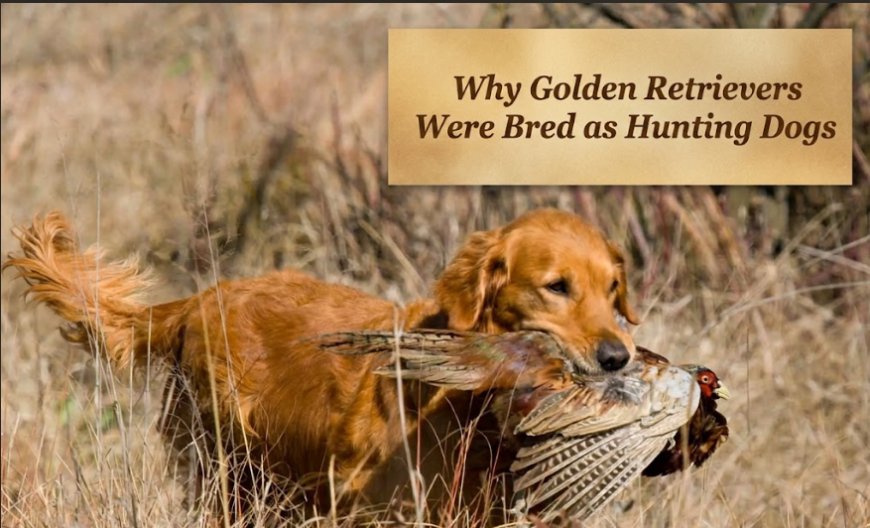
A golden retriever was never meant to spend its life waiting by the door for a walk. That's not a criticism of the millions of goldens currently doing exactly that. It's just not the job the breed was built for. The job was retrieving shot waterfowl and upland game across rough Scottish terrain, on command, without damaging the bird, and that single fact explains more about your dog's daily behavior than most people realize.
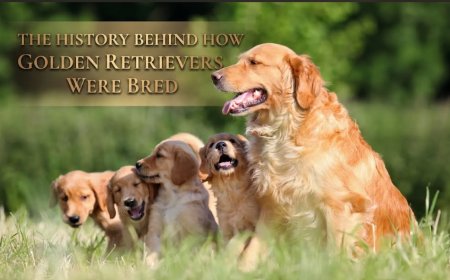
The fuller origin story, the actual breeding records and how the cross came together in 1868, is covered in detail in the history behind how golden retrievers were bred. This piece skips that and goes straight at the part people usually gloss over: what the job itself required, and what's still running in the background of a dog who's never seen a shotgun in its life.
1. The Job a Retriever Was Actually Built For
A shooting party in the 19th century Highlands typically used several types of dogs, each doing a separate piece of the work. Spaniels flushed birds out of cover, working close to the gun and moving fast through brush. Pointers and setters located game at a distance and held a frozen point until the hunter caught up. Retrievers did neither of those jobs. They sat, watched the sky, marked exactly where a downed bird landed, and waited for a command before moving.
That waiting part matters more than people give it credit for. A retriever that broke early, chasing a bird the second the gun fired, was considered poorly trained or poorly bred. The whole value of the role was steadiness. A dog had to track multiple falls across a field, hold the locations in memory, and only then go fetch them in the order the hunter called for, often working entirely independently across water or thick cover the hunter couldn't follow into.
This is a fundamentally different skill set from a flushing or pointing dog, and it's worth sitting with that difference for a second. Spaniels are bred for speed and intensity close to the gun. Retrievers are bred for patience, memory, and independent problem-solving at a distance. Golden Retriever Info gets a lot of questions from new owners confused about why their dog seems so calm one minute and so locked-in the next. That's the retriever job description, basically unchanged, running in a dog that's never retrieved anything more dangerous than a tennis ball.
2. What a Real Retrieve Looked Like, Start to Finish
It helps to walk through the actual sequence a working retriever performed, because it's more involved than "go get the bird."
A typical retrieve, in order:
- Bird is shot and falls, sometimes out of direct line of sight
- Dog marks the fall location mentally, without moving
- Dog waits, sometimes for several minutes, for a release command
- On command, dog moves to the marked spot using memory, not scent alone
- If the bird isn't visible, dog switches to scent work and search patterns
- Dog picks up the bird with a controlled, non-damaging bite
- Dog returns directly to the handler, often swimming or crossing rough ground
- Dog delivers the bird to hand and sits, waiting for the next command
Every step on that list got selected for over generations. The waiting, the memory, the scenting ability, the swim drive, the gentle carry, all of it was a deliberate breeding choice, not a happy accident.
3. The Traits That Only Make Sense in a Field, Not a Living Room
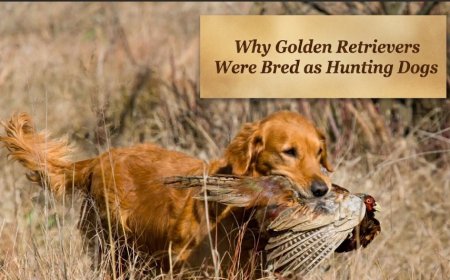
The soft mouth gets mentioned a lot in golden retriever content, usually as a cute fact. It's worth taking seriously instead. A dog that crushes or mangles a retrieved bird is useless to a hunter who wants the meat intact for the table. Breeders selected hard for bite control, generation after generation, until it became a defining trait of the breed rather than an individual skill some dogs happened to have.
The double coat tells a similar story. Highland weather in hunting season is cold, wet, and frequently involves swimming across lochs to retrieve birds that fell in open water. A single thin coat soaks through and offers no insulation. The dense undercoat paired with a water-resistant outer layer exists because a dog without it would be cold, slow, and useless after the second retrieve of the morning.
And the nose matters more than people assume. Marking a fall by sight only works when the bird is visible the entire time. Plenty of falls happen in tall grass, reeds, or thick brush where the dog has to switch entirely to scent. A weak nose meant missed birds, and missed birds meant a retriever wasn't doing its job. The scenting ability bred into goldens traces back partly to the Bloodhound lines added early in the breed's development specifically to sharpen this.
4. Why That Wiring Still Runs the Show at Home
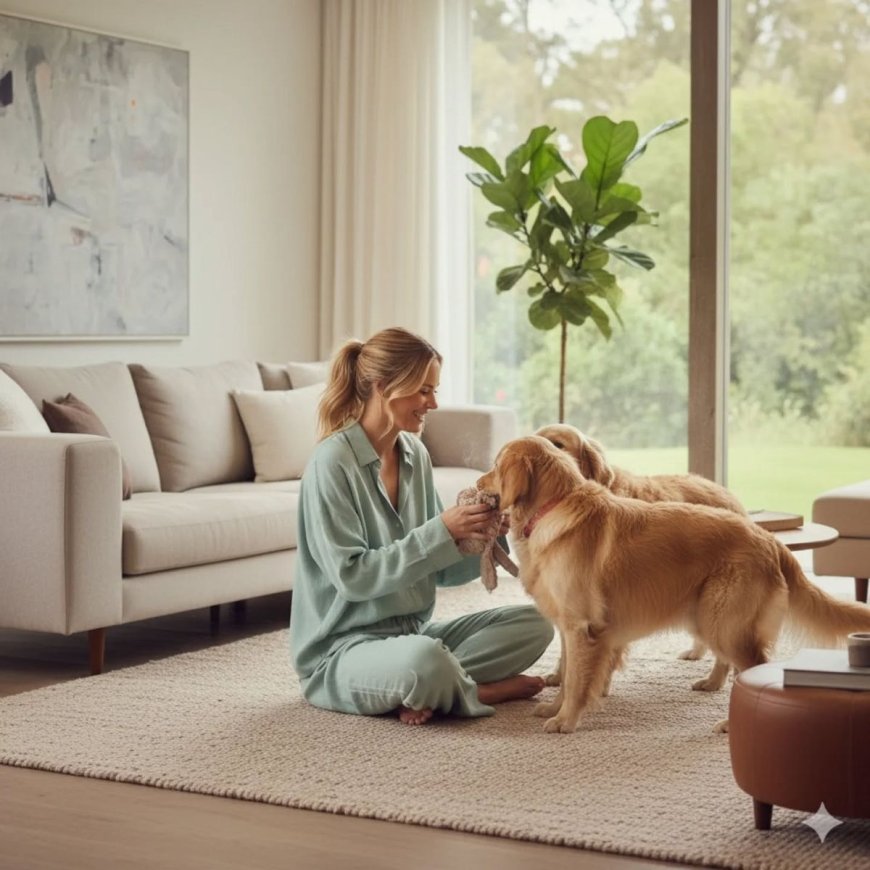
Here's where people usually go wrong with their own dog: they assume a golden retriever is, by temperament, a low-key companion breed that happens to like fetch. It's closer to the opposite. The breed is a working gun dog whose job mostly disappeared, and a lot of "problem" behavior in pet goldens is just that working drive looking for somewhere to go.
A golden that paces, chews everything in sight, or seems restless after a short walk around the block isn't necessarily badly behaved. It might just be under-exercised relative to what the breed was built to handle, which is covered in more depth in how much exercise does an adult golden need. A dog bred to work full mornings in the field doesn't switch that off because it lives in an apartment now.
The independent-retrieve instinct shows up in less obvious ways too. Hunting retrievers were bred to work at a distance and solve problems on their own, which is part of why so many goldens are slow to come back when called in an open space, especially around distractions. It's not defiance so much as old wiring; why a golden retriever won't come when called gets into the training side of that specific issue.
The carrying instinct is probably the most visible holdover. A dog that needs something in its mouth, a toy, a sock, a stick, the corner of a blanket, is running a much milder version of the same drive that made it useful in a marsh with a dead pheasant. Giving that instinct a job, structured fetch, a weighted retrieve toy, formal training that channels the pulling energy on leash into something productive, tends to work better than trying to suppress it outright. The approach used for leash pulling leans on the same idea: redirect the drive rather than fight it.
None of this means every golden needs to act like a field dog. Most don't get the chance and do fine without it. But a dog bred this specifically for a working role doesn't lose the instincts just because the role disappeared, and a lot of what looks like a behavior problem is really just an old job with nowhere left to go.
Frequently Asked Questions
Do golden retrievers still actually hunt today? Some do. Field-line goldens, bred specifically for working ability rather than show conformation, are still used in hunting and field trials. Most pet-line goldens have the instincts intact but have never been trained for actual fieldwork.
Why does my golden retriever bring me random objects constantly? That's the retrieving drive looking for an outlet. The instinct to carry and deliver something to a person doesn't disappear just because there's no bird involved.
Is it true golden retrievers can carry a raw egg without breaking it? Many can, and it's a commonly used demonstration of soft mouth control. It's not a guaranteed trait in every individual dog, but the underlying bite inhibition is real and bred-in.
Are field-bred and show-bred golden retrievers actually different? Yes, noticeably. Field lines tend to be leaner, higher-energy, and more intensely focused on retrieving tasks. Show lines are generally calmer and bred more for conformation and temperament than working drive, though both come from the same root breed.
Does the hunting background explain why my golden loves water so much? Mostly, yes. Retrieving fallen waterfowl from lochs and rivers was a core part of the original job, and the swim drive that required is still very much present in the modern breed regardless of whether a dog ever sees a hunting field.
The full breeding history, the actual records, the dogs involved, the decades it took to lock in these traits, is the more detailed read if any of this has you curious about where it all started.
What's Your Reaction?
 Like
0
Like
0
 Dislike
0
Dislike
0
 Love
0
Love
0
 Funny
0
Funny
0
 Angry
0
Angry
0
 Sad
0
Sad
0
 Wow
0
Wow
0