










What Golden Retrievers Teach Us About Trust and Anxiety

The thing people kept saying to me when I first got Ellie was that Goldens don't really get anxious. Too friendly. Too happy. Too busy wanting to please everyone around them to feel anything complicated.
I believed it, for a while.
1. The Assumption That Gets Almost Everyone Wrong
It's everywhere in Golden Retriever communities. The idea that this is one of the emotionally simple breeds. Cheerful. Resilient. Not prone to the kind of nervous system dysregulation you'd worry about with a more "sensitive" dog.
The reality is almost the opposite.
Golden Retrievers are emotionally perceptive dogs. They read their owners carefully, track changes in routine, notice shifts in tone before the words even land, and carry the weight of uncertainty in very physical ways. The anxiety looks different from what people expect, which is exactly why it keeps getting misread as something else. A phase. Stubbornness. Just a Golden being a Golden.
I've talked to owners who were convinced their dog was "being dramatic" when she paced before a vet visit, or "going through something" when he stopped eating for three days after a household change, or "clingy for no reason." None of that is drama. It's a dog with a highly attuned nervous system trying to make sense of something that doesn't feel right.
2. What Anxiety Actually Looks Like in This Breed
The classic image of a stressed dog is hunched posture, tail tucked, whites of the eyes showing. Goldens sometimes show all of that. But the subtler signals are the ones that get missed, partly because Goldens are social enough to keep trying to connect even when they're struggling.
Yawning repeatedly in a low-stimulation environment. Lip licking when nothing edible is nearby. Shaking off after a social interaction the way a dog shakes off water, when she's dry. Sniffing the ground obsessively when there's nothing of interest there. These are displacement behaviors, things a dog does to manage an internal state that's uncomfortable.
Ellie does a specific thing when she's anxious that took me embarrassingly long to recognize. She goes and gets a toy. Not to play, not to bring it to me. She just holds it in her mouth and stands there looking slightly lost. It's her way of redirecting energy in her body when she doesn't know what else to do with it. I thought she was being cute for a long time before I understood she was telling me something.
The more obvious physical signals, panting when it's not hot, shedding more than usual in a short span, loose stools without a dietary explanation, get attributed to other causes because the baseline assumption that Goldens aren't anxious is still sitting quietly in the owner's mind, filtering things out.
This is worth understanding because the breed is commonly described in ways that make owners less likely to recognize distress when it shows up. If you're new to the breed, the Golden Retriever Info piece on 7 things nobody tells new Golden owners covers some of the surprises that catch people off guard early on.
3. What Trust Actually Means to This Dog
Golden Retrievers extend trust quickly. They revise it constantly based on evidence. And they communicate clearly when it's been eroded, though not always in ways that are easy to read.
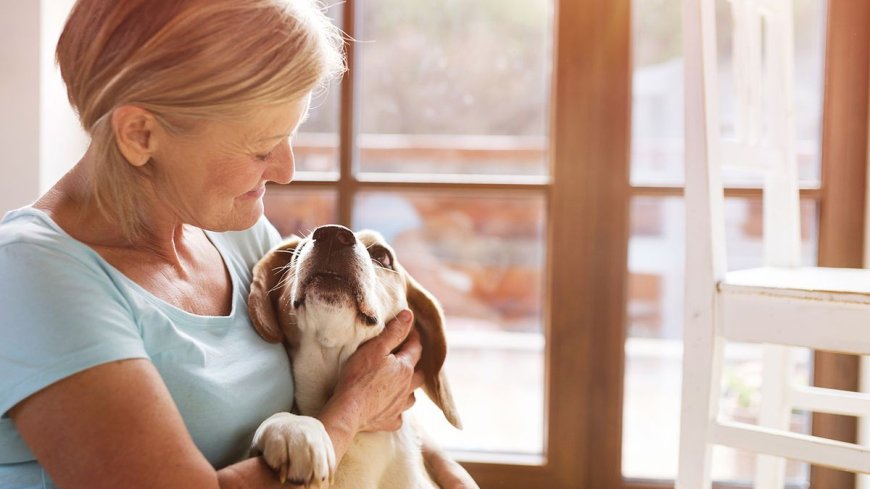
Watching this process with Ellie over eleven years has been genuinely instructive, more than any book I've read on the subject, and I've read a few.
Trust for a Golden isn't built through affection alone. A dog who is adored but lives in a chaotic environment, whose owner's responses are unpredictable, who sometimes gets a reaction and sometimes gets ignored for the exact same behavior, is not a dog who feels secure. She might love her owner completely. But she won't feel safe, and that distinction matters more than most people realize.
The places where trust breaks down are usually the same ones. Inconsistent rules top the list. A dog allowed on the couch on Sunday and scolded for it on Monday is not a dog who understands the rule. She's a dog living in low-level uncertainty about what any given day will bring. That uncertainty is exhausting, and it registers in the body the same way anxiety from a more obvious trigger does. You don't need a thunderstorm to stress out a dog. Inconsistency does it slowly and silently.
The other thing that erodes trust is how a dog is handled when she's already stressed. Owners often flood an anxious Golden with reassurance, and that reassurance makes the owner feel better, but it tells the dog almost nothing about whether the situation is actually safe. What builds trust in those moments is calm, steady behavior from the person she depends on. Not coldness. Steadiness. They're different things, and dogs know the difference.
4. Where Good Intentions Miss the Mark
Most owners, when they learn their Golden is anxious, respond by trying to manage the dog's feelings directly. More comfort, more soothing, more enrichment in the moment. The instinct is right. The execution is often off.
The specific mistake I see most often: treating the symptom without touching the environment. An anxious Golden who paces before guests arrive gets a chew or a puzzle feeder. The chew occupies her for 20 minutes, the guests arrive, and the pacing resumes, because the underlying source of stress hasn't changed. She doesn't know where she's supposed to be when the door opens. She doesn't know whether the guests will crowd her or give her space. She doesn't have a clear routine to fall back on.
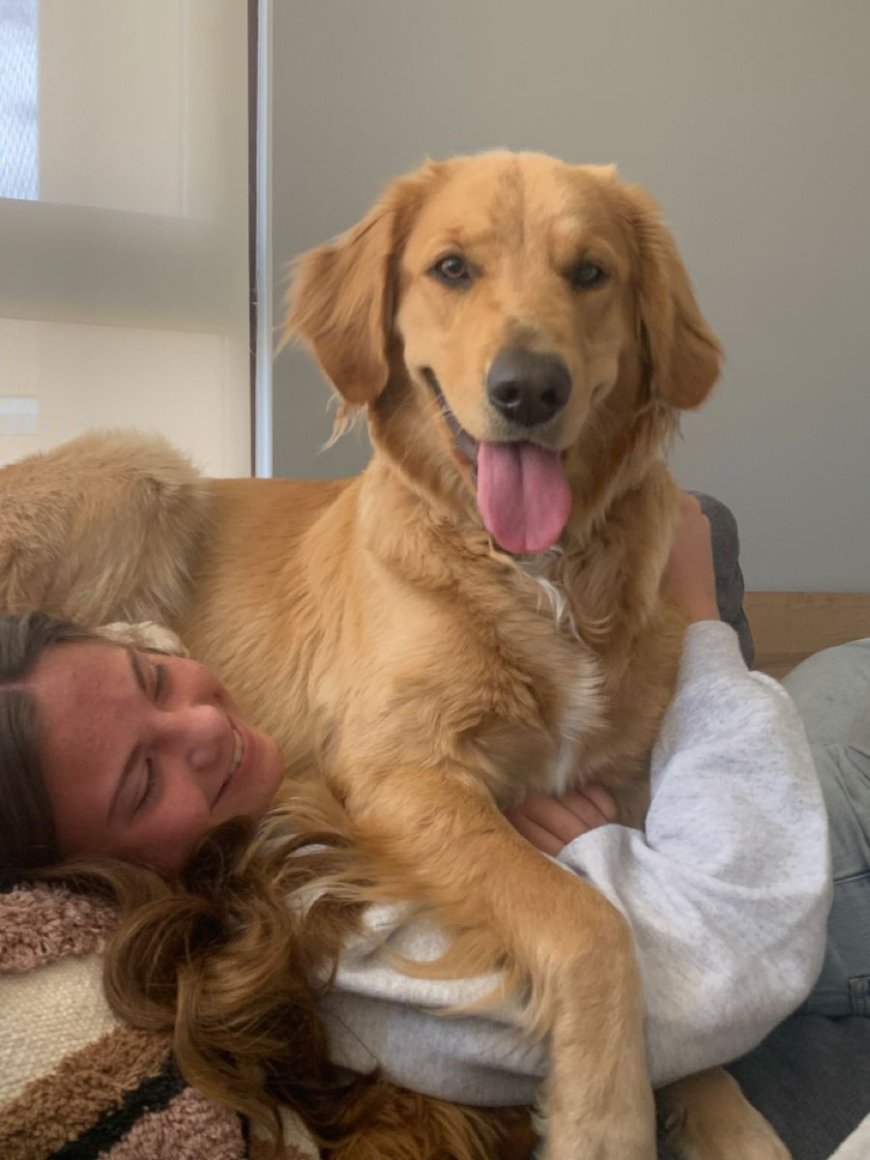
Dogs live in their bodies, and the body responds to uncertainty with activation. The answer isn't a better distraction. It's a clearer structure around the thing causing the anxiety.
For dogs that pull relentlessly on the leash, that pulling is often partly anxiety-driven rather than pure excitement. Goldens who don't feel clear direction on a walk carry the cognitive load of figuring out what's happening next, and that's significant for a dog in an unfamiliar environment. The Golden Retriever Info guide on what actually works for leash pulling gets into the mechanics of this. A lot of the improvement comes down to the same principle: clarity reduces anxiety, and anxiety drives behavior problems.
If you're also finding that piling on more commands isn't helping and might even be making your dog more uncertain, the article on why more commands make Golden training harder explains what's actually happening in those situations.
5. A Practical Read on Where Your Dog Actually Stands

Before getting into this, I want to be clear: this is a starting point for observation, not a diagnostic tool. A vet or a certified applied animal behaviorist is the right resource for a dog showing significant or persistent anxiety. What follows is a plain-text checklist for the kind of honest self-assessment that's easy to skip when you're in the middle of daily life with your dog.
Signs of a Golden who feels genuinely secure:
- Settles within a few minutes in familiar environments without needing physical contact
- Greets strangers enthusiastically but returns to baseline calmly afterward
- Eats consistently across different environments and situations
- Can stay alone for reasonable stretches without destructive behavior
- Recovers from a startle or surprise within seconds, not minutes
- Sleeps deeply and calmly in most home spaces
Signs worth paying closer attention to:
- Takes 20+ minutes to settle after a relatively ordinary event
- Appetite changes that don't correlate with illness or a dietary shift
- Seeks constant physical contact, or goes unusually still when you leave the room
- Startles easily and takes a long time to return to normal
- Repetitive behaviors like pacing, licking, or circling without an obvious cause
- Destructive behavior that appears specifically when left alone
A dog checking several boxes in that second column isn't necessarily in crisis. But she's communicating something about her internal state as clearly as she knows how. The question is whether we're listening.
If your dog is a puppy and compulsive chewing is part of what you're seeing, it's worth reading about why Golden puppies chew everything in sight. Teething and anxiety-driven chewing overlap in young Goldens, and they're not the same problem, so distinguishing between them actually changes what you should do.
FAQs
Can a Golden Retriever actually develop anxiety, or is it just normal stress? Yes, Goldens can develop generalized anxiety, separation anxiety, and specific phobias in ways that are comparable to what veterinary behavioral medicine describes clinically. These aren't the same as normal situational stress. Persistent anxiety that interferes with eating, sleeping, or routine function is worth a conversation with your vet, who can refer you to a behavioral specialist if needed.
My Golden has been with me since puppyhood. Isn't anxiety just her personality at this point? Temperament is real, and some dogs are genuinely more sensitive or reactive than others from birth. But environment and experience shape a large portion of how that temperament expresses itself across a dog's life. A sensitive dog raised in a consistent, predictable environment often looks very different from the same dog raised in a chaotic or unpredictably managed one. This doesn't mean it's anyone's fault. It does mean there's usually still room for improvement, regardless of age.
My Golden follows me everywhere. Is that attachment or anxiety? Sometimes both. Goldens are bred to work in close proximity to a person, so following is partly breed-typical. But there's a real difference between a dog who follows you and settles when you sit down, and one who follows you, cannot settle, pants, and remains restless even with you right there. The latter is worth monitoring as a possible sign of anxious attachment rather than comfortable closeness.
Does reassuring an anxious Golden actually make things worse? The honest answer is that it depends on how you deliver it. Calm physical contact from a relaxed person can be genuinely grounding for an anxious dog. High-pitched, frantic reassurance that mirrors the dog's own agitation can amplify it rather than reduce it. Your own emotional state in those moments is at least as important as anything you do or say.
How do I know when to stop managing it myself and get professional help? If anxiety is affecting your dog's quality of life, meaning she's not eating well, not sleeping, not engaging in normal play or social behavior, or if she's becoming destructive or injuring herself, that's the point to bring in professional support. Exercise, enrichment, and consistent routines are valuable tools, but they have limits. A vet can rule out physical causes and connect you with behavioral resources if the anxiety is more than lifestyle management can address.
Ellie is eleven now. I can read her well enough that I usually know within a few minutes of being home whether something is off. She taught me that, not through any formal process, but through all the times I missed it and had to look more carefully afterward.
Goldens are remarkably honest communicators when you're paying attention. The anxiety, when it's there, is real. And the trust, once it's built on something solid, holds.
What's Your Reaction?
 Like
0
Like
0
 Dislike
0
Dislike
0
 Love
0
Love
0
 Funny
0
Funny
0
 Angry
0
Angry
0
 Sad
0
Sad
0
 Wow
0
Wow
0