











Golden Retriever Paw Licking: What It Really Means
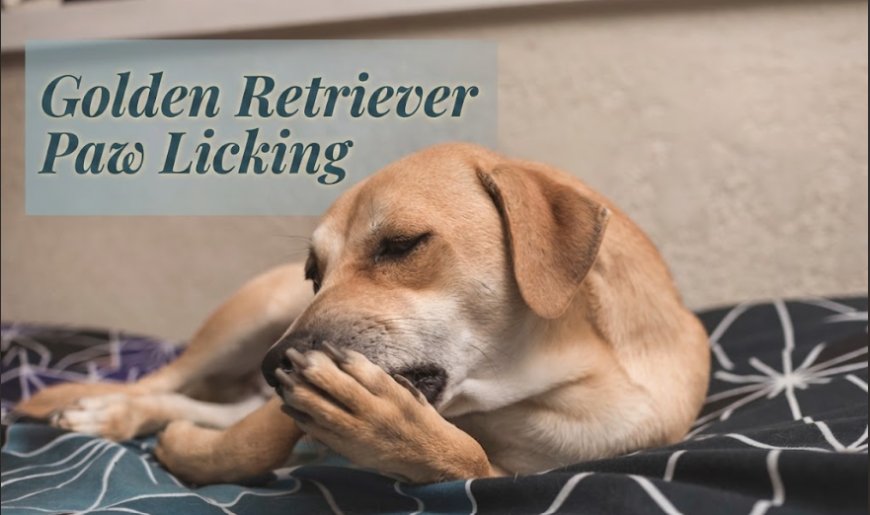
There's a pattern I kept noticing in Golden Retriever owner groups, on forums, in conversations with other dog moms. Someone would mention that their Golden licks their paws a lot, and the response was almost always the same: "Oh, that's just what dogs do." And yes, technically it is. But that's like saying coughing is just what humans do, and ignoring it when it happens three hundred times a day.
I made this mistake with Ellie. For almost an entire spring, she'd come in from the yard and immediately start licking her front paws. I watched it happen daily and told myself it was grooming. By the time I noticed the rust-colored staining between her toes and a faint, musty smell coming from her feet, a secondary yeast infection had already taken hold. A couple of weeks of treatment later, I had a much better appreciation for what paw licking actually communicates.
It's not "just what dogs do." It's one of the clearest ways your Golden tells you something is off.
1. What Normal Paw Licking Actually Looks Like
This is where a lot of owners get tripped up, because normal paw licking does exist. The line between "this is fine" and "something's going on" isn't always obvious at first.
Normal licking is brief and infrequent. Your Golden finishes a walk, licks a paw for thirty seconds, maybe works at a piece of debris between the pads, and moves on. They're not fixated. They're not returning to it every ten minutes. Both front paws look healthy, the fur isn't discolored, and there's no redness between the toes.

The moment it shifts from a quick clean-up into something repetitive and focused, that's when to pay attention. A few signs that the behavior has crossed into "worth looking at":
- Licking that lasts several minutes at a time and happens multiple times a day
- Focus on one specific paw or one area between the toes (rather than both paws casually)
- A reddish-brown or rust-colored stain in the fur around the paw or toes
- Visible redness, swelling, or dampness between the toe pads
- A musty or corn-chip-like smell coming from the paws
That rust-colored staining, by the way, gets missed constantly. It's caused by porphyrin, a compound found in dog saliva, which oxidizes and turns brownish-red when it dries on fur. It's not harmful in itself, but it functions like a timer. The darker and more widespread the staining, the longer the licking has been going on.
If you're in the early stages of getting to know your Golden and finding these kinds of behavioral patterns a little hard to read, the article on Golden Retriever Puppy Week One Surprises covers a lot of the behaviors that new owners don't anticipate and helps build that foundation of knowing what's normal versus what isn't.
2. The Real Reasons Your Golden Is Licking Their Paws
The reason matters because the fix is completely different depending on what's driving the behavior. There are five main causes, and they can look nearly identical at first glance.
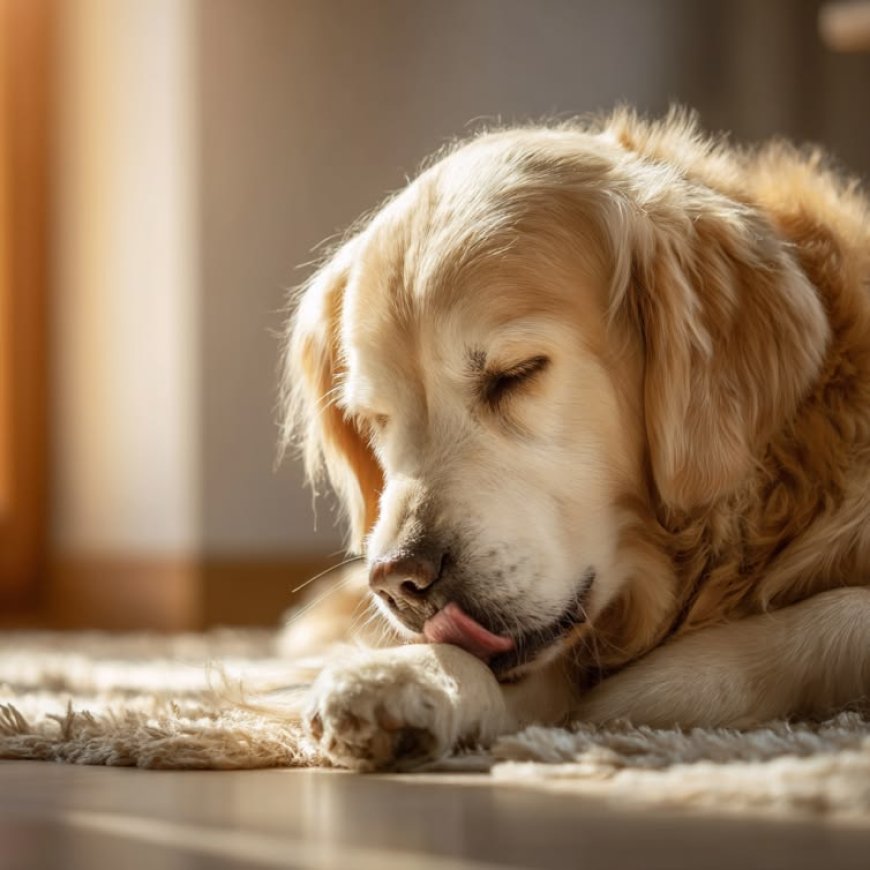
Allergies are the most common cause in Goldens specifically, and worth understanding in some depth. Environmental allergens, including grass pollen, mold, dust mites, and certain plants, get absorbed through the skin. The paws have high allergen exposure because they make direct contact with everything your dog walks on. Food allergies are also a factor, though they tend to produce a more generalized body-wide itch rather than being concentrated at the paws. One key distinguishing factor: environmental allergies often follow a seasonal pattern and ease in cold months, while food allergy reactions stay consistent year-round.
Anxiety and boredom cause more paw licking than most people realize. For a Golden, a breed that genuinely needs mental engagement and social contact, licking becomes a self-soothing mechanism when those needs aren't met. The behavior releases a small amount of endorphins, so it becomes a habit that reinforces itself. There's nothing wrong with the paws themselves in these cases. The trigger is internal. This type tends to appear more in the evenings, or during stretches when the dog has been alone or under-stimulated for extended periods.
Younger Goldens especially can fall into repetitive behaviors like this when they're under-exercised or bored. The piece on Why Golden Puppies Bite Absolutely Everything over at Golden Retriever Info explores how boredom and energy drive a lot of those early habits, and the same principle applies to paw licking in adolescent dogs.
Injury or irritation is sudden and usually localized. A thorn, bee sting, cracked pad, splinter, or small cut will send a dog straight to the affected paw. The licking starts immediately after the injury rather than building gradually, and it's almost always isolated to one paw. This one is easy to investigate: spread the toes apart, check between the pads, look for swelling, debris, or broken skin.
Yeast or bacterial infection is often secondary, meaning it develops because of the chronic moisture from licking, not as the original cause. Warm, damp conditions between the toes are ideal for yeast to grow, and it can escalate quickly. The smell is a reliable indicator: a warm, yeasty or fermented odor from the paw area that isn't explained by anything external. The skin between the toes will often look pink, red, or swollen.
Parasites, including fleas and mites, can concentrate itching in specific areas including the paws. If your Golden is also scratching along the base of the tail, shaking their head frequently, or rubbing their face on the carpet, it's worth checking for flea evidence before assuming the cause is purely environmental or dietary.
Here's a quick-reference chart to help narrow down what you might be looking at:
| Possible Cause | Timing Pattern | Key Signs |
|---|---|---|
| Environmental allergies | Seasonal or tied to outdoor exposure | Both paws affected, belly rubbing, eye discharge |
| Food allergy | Year-round, constant | Generalized itch, recurring ear infections |
| Injury / physical irritation | Sudden onset | One paw only, limping, visible wound or swelling |
| Yeast or bacterial infection | Builds gradually | Odor, redness, moist-looking skin between toes |
| Anxiety / boredom | Evening or when alone | No skin changes, behavioral pattern |
| Parasites | Variable | Itching elsewhere on body, flea dirt |
For more on why Goldens are particularly prone to skin and allergy-driven behaviors compared to other breeds, the Golden Retriever Breed Knowledge section on Golden Retriever Info gives useful breed-specific context.
3. Where Most Owners Go Wrong
The biggest mistake is treating the surface without finding the underlying cause. Epsom salt soaks, coconut oil, paw balm, diluted apple cider vinegar. These show up constantly in advice threads, and they do provide temporary comfort for mild irritation. But if there's an untreated allergy, infection, or behavioral cause behind the licking, nothing topical fixes it. The paws are the symptom. You're treating the messenger.
The second thing I see a lot is assuming it's one cause when it's actually another. Injury and allergies look similar in the early days. A single paw focus makes you think injury, and sometimes that's right. But sometimes a Golden will favor one side with an allergy response too. A physical paw inspection should be the first step every time, before assumptions are made either way.
Stopping treatment early is another one. If your vet prescribes a course of medication for a secondary infection and the paw looks better after five days, it can be tempting to ease off. Finishing the full course matters. Infections that aren't fully cleared often come back worse.
And then there's this: some owners normalize low-level chronic licking because it isn't dramatic. The dog isn't whimpering or limping. They just lick their paws a bit, every day. But if that rust staining is showing up regularly, something has been irritating them for a while. A dog's tolerance for ongoing discomfort is higher than most people expect, and that tolerance can mask the fact that something has needed attention for weeks.
4. What You Can Actually Do
Start simple. Wipe your Golden's paws after every outdoor walk with a damp cloth or fragrance-free pet wipe. This removes the bulk of environmental allergens, pollen, and surface irritants before they can be absorbed through the skin. For a dog with mild seasonal allergies, this one habit alone can reduce licking noticeably. It's not a cure, but it significantly cuts down the exposure.
Keep the fur between the toes trimmed short. Longer fur traps moisture and debris and creates warm, enclosed spaces where yeast and bacteria thrive. You don't need a professional groomer for this. A pair of small blunt-nosed scissors or a quiet pet trimmer handles it well. If trimming around toes feels stressful, add it to your regular grooming appointment and ask them to include paw pad fur.
When the licking is persistent, red, smelly, or paired with limping, those are veterinary signs. A vet can distinguish between a bacterial infection and a yeast infection, prescribe appropriate treatment, and help identify the root cause. For suspected allergies, they may recommend an 8 to 12 week elimination diet trial on a novel protein source, blood allergy testing, or prescription medications like Apoquel or Cytopoint, which reduce the itch response significantly.
For anxiety-driven licking, more physical exercise and structured mental stimulation usually do more than any topical product. Longer daily walks, puzzle feeders at mealtime, short training sessions, and regular play break the cycle that's feeding the habit.
For a broader view of the health challenges Goldens face, the Golden Retriever Health section covers a range of topics that connect directly to what's happening with skin and paw health in this breed.
The earlier you catch what's driving the licking, the simpler the fix tends to be. A secondary infection that's been building for three months takes longer to clear than one you caught in the first week. Knowing what to look for, and actually looking, makes more difference than any specific treatment.
Ellie still licks her paws during allergy season. The difference now is that I know immediately what I'm seeing, what stage it's at, and what to do about it. That shift from wondering to knowing is genuinely what makes owning a senior dog with allergies manageable instead of constantly stressful.
FAQs
My Golden is only licking one paw. Does that mean it's definitely an injury?
A single-paw focus does make injury more likely than allergies, which tend to affect both front paws. Start with a hands-on inspection: spread the toes, check between the pads, look for swelling, redness, a foreign object, or broken skin. If you don't find anything and the licking continues past 24 to 48 hours, a vet check is worth it. Occasionally one paw gets more allergen exposure than the other, especially if your dog has a habit of stepping on something specific, but injury should be ruled out first.
Is it safe to put anything on my Golden's paws at home?
A dog-safe paw balm or plain, unrefined coconut oil can soothe minor dryness or surface irritation. What to avoid: anything containing essential oils, tea tree oil, or alcohol. These can worsen irritation or be toxic when a dog licks them off. For anything beyond mild dryness, it helps to know the cause first, because applying a soothing product to skin that has a yeast or bacterial infection can actually make the environment worse for treatment.
What causes that brownish-orange staining between my Golden's toes?
That's porphyrin staining. Porphyrin is a compound present in dog saliva and tears, and it oxidizes into a reddish-brown color when it dries on light fur. The staining itself isn't a health problem, but it's a clear indicator that licking has been sustained over a period of time. Think of it as your dog's version of a running tally. The more staining, the longer the underlying issue has been present. If you're seeing it regularly, something needs to be addressed.
How do I tell the difference between a food allergy and an environmental allergy?
Environmental allergies tend to be seasonal and often ease during cold winter months when pollen and outdoor allergens drop. Food allergy reactions are year-round and consistent regardless of weather. Food allergies also commonly come paired with recurring ear infections alongside the paw licking. The most accurate way to test for a food allergy is a strict elimination diet trial, done under veterinary guidance, typically 8 to 12 weeks on a novel protein your dog has never eaten. Allergy blood panels exist but are less reliable for food sensitivities specifically.
When does paw licking need a vet visit rather than a wait-and-see approach?
Wait-and-see works for a day or two if the licking is mild and there are no other signs. Call your vet sooner if: the licking has been going on for more than two or three days without improving, there's visible redness or swelling between the toes, there's an odor coming from the paws, there's any discharge, or your dog is limping or favoring the paw. Skin infections in particular can escalate quickly in warm conditions, so it's better to call earlier than later.
What's Your Reaction?
 Like
0
Like
0
 Dislike
0
Dislike
0
 Love
0
Love
0
 Funny
0
Funny
0
 Angry
0
Angry
0
 Sad
0
Sad
0
 Wow
0
Wow
0