


















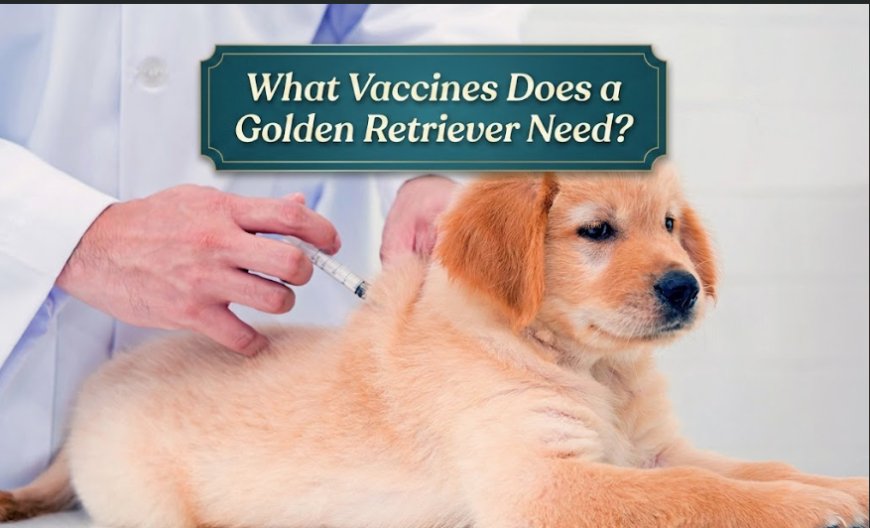
What Vaccines Does a Golden Retriever Need?
Something I kept hearing from new Golden owners, especially when I was newer to all of this with Ellie, was some version of: "She got her puppy shots, so we're all set now."
It's a reasonable assumption. The puppy vaccine schedule is packed, the vet visits feel nonstop for a few months, and by the time your Golden has made it through all of that, you feel like you've handled the major health hurdles. But vaccines aren't a finish line. They're more like an ongoing maintenance schedule, and what your dog needs shifts depending on their age, where you live, and how they spend their days.
So let me walk through this properly: the core vaccines, the timing, what changes as your Golden gets older, and which of the optional shots actually matter.
1. Core Vaccines vs. Lifestyle Vaccines
Not every vaccine your vet mentions is mandatory for every dog. They fall into two categories: core vaccines, which every Golden Retriever should have regardless of lifestyle, and non-core vaccines, which are based on individual risk factors.
The core vaccines are:
DHPP (also called DA2PP or just "distemper combo"): This combination shot covers Distemper, Adenovirus (which causes infectious hepatitis), Parvovirus, and Parainfluenza. It's the foundation of your dog's vaccine schedule and the one that shows up at every puppy visit.
Rabies: Required by law in most U.S. states and many countries. Given around 16 weeks, then boosted at the one-year mark. After that, it follows either an annual or three-year cycle depending on the vaccine type used and your local regulations.
Those two are non-negotiable. Everything else, Bordetella, Leptospirosis, Lyme, and Canine Influenza, falls into the non-core category. Whether your Golden needs any of those depends on real factors in their real life, not a one-size-fits-all recommendation.
2. The Puppy Vaccination Schedule
The puppy phase involves the most vet visits you'll probably have in one stretch. That's not excessive. It's intentional. Puppies are born with some immunity passed from their mother through milk, but that maternal protection fades over the first few months. Because the timing of that fadeoff varies from puppy to puppy, vaccines are given in a series to make sure at least one of them hits when the immune system is fully ready to respond.
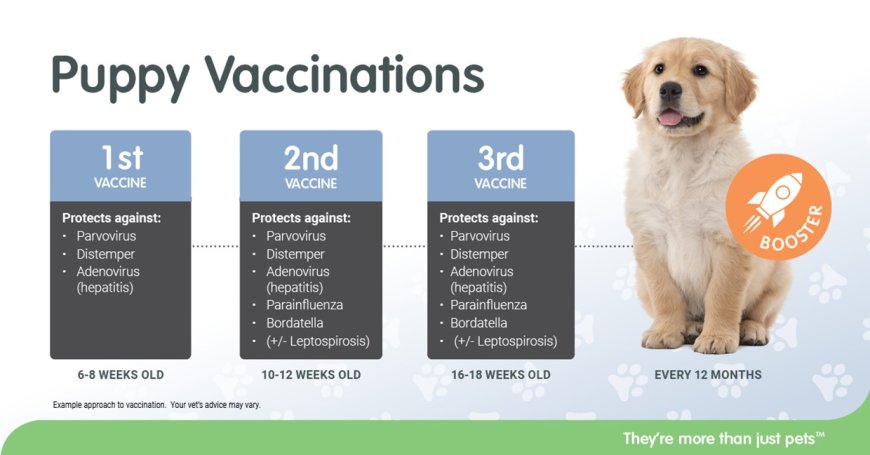
Here's a standard puppy vaccine schedule:
| Age | Vaccine |
|---|---|
| 6–8 weeks | DHPP (first dose) |
| 10–12 weeks | DHPP (second dose), Bordetella if lifestyle warrants it |
| 16–18 weeks | DHPP (third dose), Rabies |
| 12–16 months | DHPP booster, Rabies booster |
| Every 1–3 years | Ongoing boosters per vet guidance |
One thing worth knowing before you assume the slate is clean: if you adopted from a rescue or shelter, always request vaccination records. Some rescues give the first DHPP dose before placement and some don't, and guessing is not a strategy when Parvovirus is involved.
Your vet visit schedule in those early weeks tends to be busier than people expect. If you're navigating what those first appointments actually look like, the piece on Golden Retriever puppy week one surprises covers that early period well and gives a good sense of what to expect.
The one-year booster is also more important than it sounds. I've seen owners skip it because their dog "just had vaccines a few months ago," but that first adult booster is doing different work than the puppy series. It confirms and consolidates the immunity that was being established. Missing it creates a gap that isn't always obvious until something goes wrong.
3. Adult and Senior Goldens: What the Schedule Looks Like Long-Term
Once your Golden is past the puppy phase and has that first-year booster on record, the pace slows down considerably. Most adult dogs are on a DHPP booster every one to three years and a Rabies booster on whatever cycle your state or country requires.
For healthy adult Goldens in their prime, this becomes a fairly low-key part of the annual wellness visit rather than its own separate production.
Where things get more complicated is with senior dogs. And this is where I see two different mistakes.
The first is owners who get inconsistent with boosters once their dog hits seven or eight years old. The thinking tends to be that immunity built up over years should carry the dog through. That might be true for some vaccines, but it's not something to assume, and it's not something you can confirm without testing.

The second mistake goes the other direction: over-vaccinating a senior dog without considering whether their immune system is still responding the same way it did at two years old. Older dogs can sometimes have stronger reactions, and the calculus of risk versus benefit does shift slightly with age.
This is where titer testing comes in. A titer test is a blood draw that measures actual antibody levels for a specific disease. It tells you whether your dog's immunity is still strong enough to be protective, rather than just assuming the schedule is working. It doesn't replace the Rabies vaccine, which is legally required regardless of titer results, but for the DHPP components, it can give you a much more informed conversation with your vet.
When Ellie had her titer test, her Parvovirus and Distemper levels came back strong. Her vet still recommended staying on the booster schedule given her age and the low risk involved, but having that data made the decision feel a lot less like guesswork. That kind of ongoing, informed vet relationship is something Golden Retriever Info emphasizes throughout the health content on this site, and it really does make a difference over the long run.
4. Lifestyle Vaccines: Which Ones Does Your Golden Actually Need?
This section requires some honest self-assessment about how your dog actually lives.
Bordetella (Kennel Cough)
If your Golden visits a groomer, boards at a kennel, or spends time at doggy daycare, this one is practically mandatory, as many facilities require proof of it before they'll accept your dog. It protects against a highly contagious respiratory infection that spreads fast in high-contact environments. Available as a nasal spray or injection, and most vets recommend it as early as the 10–12 week visit if your lifestyle warrants it.
Leptospirosis
This is the one that consistently gets underestimated, and that's a real problem. Leptospirosis is a bacterial infection spread through contaminated water, soil, or the urine of wildlife like deer, raccoons, and rodents. If your Golden swims in lakes, plays near rivers or ponds, or even just lives in an area with significant wildlife activity, the exposure risk is real. It's also zoonotic, meaning it can pass to humans, which is another reason not to dismiss it.
Lyme Disease
Only relevant if you're in a tick-heavy area, but if you are, this matters. The Lyme vaccine works alongside, not instead of, regular tick prevention. Think of it as adding a backup layer. If you and your Golden hike wooded trails or live near tall grass and brushy terrain, talk to your vet about whether your area has high Lyme prevalence. The answer varies a lot by region.
Canine Influenza
Less commonly discussed, but the risk goes up considerably for dogs who frequent boarding facilities or attend dog shows. The vaccine covers two strains, H3N2 and H3N8, and requires an initial two-shot series given two to four weeks apart. If your dog's social calendar is light, this one may not be necessary, but check with your vet based on your local situation.
A quick note on reactions: Leptospirosis tends to have a slightly higher rate of mild post-vaccine responses compared to most others. Lethargy and soreness at the injection site for 12–24 hours are common. Knowing that in advance means you won't be googling frantically when your Golden sleeps the rest of the afternoon off after her appointment.
Where People Usually Go Wrong
Three patterns come up often, and they're all worth flagging directly.
The first is assuming indoor or low-social dogs don't need core vaccines. Even a dog who rarely leaves the house can be exposed to Parvovirus on your shoes, clothing, or from brief outdoor contact. Parvo survives in soil for months and is resistant to most standard cleaning products. Core vaccines apply regardless of lifestyle.
The second is letting boosters lapse. Missing by a few weeks isn't a crisis. Missing by six months or more can compromise immunity in ways that aren't visible until your dog gets sick. Most vets can bring a lapsed dog back on schedule without restarting the entire series, but it depends on how long it's been and which vaccines are involved.
The third one is the most common with brand-new owners. They assume whatever vaccine the breeder gave at six weeks is enough to cover the puppy through to adulthood. That first dose is doing one job: overcoming potential interference from maternal antibodies. It does not establish full protection. The full series has to be completed. This is the kind of thing that comes up in the 7 things nobody tells new Golden owners article, and it's genuinely one of the more consequential knowledge gaps a new owner can have.
Building good habits around vet visits from the start helps avoid all three of these. The Golden Retriever Info new puppy checklist is worth bookmarking for exactly this reason. It lays out the full early care picture, not just the vaccine piece, in a way that keeps you organized before something slips through the cracks.
Putting It All Together
Your vet knows your dog's specific history, local disease patterns, and individual health profile in a way no article can. Use this breakdown as a foundation so you can walk into those appointments asking real questions instead of nodding along to whatever gets recommended.
A well-vaccinated Golden is a protected one, and a protected one sticks around longer. That's the whole point of the schedule.
And if you're thinking about overall health holistically, vaccines are one piece of it, but nutrition, parasite prevention, and dental care all feed into the same goal. The best food for Golden Retrievers overview on this site is a good companion read for anyone building out a complete care routine from scratch.
Frequently Asked Questions
When does a Golden Retriever puppy get their first vaccine? The first DHPP dose is typically given at 6–8 weeks of age. Most breeders administer this before the puppy goes home. If you adopted and have no records, your vet will start the series from scratch. Repeating a dose carries no harm, and it's far safer than assuming coverage that may not exist.
Is the Rabies vaccine legally required for Golden Retrievers? Yes, in most U.S. states and many countries, Rabies vaccination is a legal requirement for all domestic dogs. The first dose is given around 16 weeks, boosted at 12–16 months, and then maintained on either an annual or three-year cycle depending on the vaccine type and local law. Your vet will know the specific requirements for your area.
Can you vaccinate a Golden Retriever puppy too early? Yes, technically. Puppies vaccinated before 6 weeks may still have circulating maternal antibodies that interfere with the vaccine's effectiveness. This is why the schedule starts at 6–8 weeks, not earlier. Timing on both ends matters. Starting too early reduces effectiveness, and starting too late leaves a gap in protection during a vulnerable window.
What is titer testing and should I ask about it for my Golden? A titer test is a blood test that measures your dog's existing antibody levels for specific diseases. It can tell you whether immunity is still strong enough to be protective without automatically re-vaccinating. It's a useful option for senior dogs or owners who want to avoid over-vaccination, though it doesn't replace legally mandated vaccines like Rabies. Ask your vet whether it's appropriate for your dog's age and health status.
Does a Golden Retriever really need the Leptospirosis vaccine? It depends on their environment. Goldens who swim in lakes, play near ponds or rivers, or live in areas with high wildlife activity are at real risk of exposure. Lepto is also transmissible to humans, which makes it worth taking seriously. If your dog's outdoor life is mostly limited to a backyard in a low-wildlife suburban area, the risk profile is lower, but still worth discussing with your vet rather than dismissing outright.
What's Your Reaction?
 Like
0
Like
0
 Dislike
0
Dislike
0
 Love
0
Love
0
 Funny
0
Funny
0
 Angry
0
Angry
0
 Sad
0
Sad
0
 Wow
0
Wow
0