










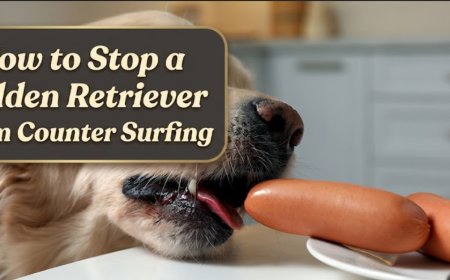









Why Golden Puppies Bite Absolutely Everything

The question I see most from new Golden Retriever owners isn't about crate training or feeding schedules. It's some version of: "My puppy won't stop biting me, is something wrong with her?"
Nothing is wrong with her. But the reason she's biting, and the reason most people's training approach stalls on this, are two different things. Getting clear on both makes the next few months a lot less frustrating.
1. The Biology Behind Why Goldens Are Especially Mouthy
All puppies bite. But Golden Retriever puppies have a specific, breed-level reason to use their mouths constantly, and it starts with what they were selectively bred to do.
Goldens were developed as retrievers, dogs chosen over generations to pick up shot waterfowl and carry it back to a hunter without damaging it. That required a controlled, sensitive, extraordinarily active mouth. The trait is called "soft mouth" and it's one of the breed's most distinctive characteristics. But soft mouth doesn't mean a puppy won't bite everything. It means their mouth is one of their most developed sensory tools, and they use it like one.
An 8-week-old Golden puppy explores everything through biting and mouthing. Your hands, the corner of the couch, the bottom of your jeans, the water bowl, each other's ears if there's another dog around. This isn't destructive intent. Their mouths are how they gather information, initiate play, communicate discomfort, and test limits.
Then teething starts, and things usually get worse before they get better.
Between 3 and 4 months, the baby teeth begin loosening. By 5 to 6 months, all 42 adult teeth are typically through. During that stretch, the gums are uncomfortable and chewing brings relief, so everything becomes a target. This is the phase where owners who felt like they had biting mostly handled find themselves back at the beginning. It's not that training failed. It's that there's now a biological driver running parallel to behavior.
A plain-text progression of what's physically happening during those early months:
AGE            WHAT'S HAPPENING             WHAT YOU'LL SEE
----------------------------------------------------------------------
8–10 weeks     All baby teeth present       Frequent nipping; hands
               Mouthing is exploratory      and feet are top targets
               and social

10–12 weeks    Bite inhibition window       Responds to "ouch" cues;
               fully open                   redirects reasonably well

3–4 months     Baby incisors loosening      More chewing, may find
               First adult teeth forming    loose teeth on the floor

4–5 months     Canines and premolars        Biting intensity peaks;
               breaking through gums        harder objects targeted

5–6 months     Most adult teeth through     Deliberate, sustained
               Final molars arriving        chewing on anything firm

6–7 months     Full adult dentition         Biting reduces sharply
               nearly complete              if training was consistent
(Add internal link here to your Golden Retriever puppy development or teething article.)
2. The Myths That Keep People Stuck
The most consistent mistake new owners make is misreading what the biting means. And because they've read it wrong, they respond in ways that either drag the phase out or add a new problem on top of the old one.
Myth: The puppy is being aggressive or dominant.
This is the one I hear most often. It's worth being direct: an 8 to 12-week-old Golden biting your hand is not aggression. True aggression has a specific look. Stiff body, low sustained growl, hard unbroken eye contact, a bite that arrives without any play context. What you're seeing in a young puppy is play behavior and sensory exploration. Not dominance, not a temperament problem, not a sign that you got a "bad one."
This matters because owners who believe it's aggression tend to overreact with corrections that frighten the puppy. A frightened puppy either shuts down or escalates, and both outcomes are worse than the biting you started with.
Myth: Physical corrections stop the biting fastest.
Grabbing the muzzle, holding the mouth closed, pressing a thumb under the tongue. These methods get passed around in online forums constantly. Some puppies go still when you do this, which looks like it worked. What actually happened is the puppy became uncomfortable enough to freeze, not because they learned anything about biting but because something physically unpleasant occurred. The behavior isn't changed, it's interrupted. And repeated physical corrections in a young puppy can erode trust during a window when trust is everything.
Myth: They'll just grow out of it.
Some of the biting does reduce naturally as teething finishes. But "growing out of it" without any training input is not what happens in most cases. A Golden that never learned bite inhibition as a puppy becomes a dog that mouths guests during greetings, grabs the leash during walks, chews furniture when left alone. The puppy window between 8 and 16 weeks is when bite pressure is easiest to teach because the social feedback loop is still strongly in place. Missing that window doesn't make training impossible, but it does mean more time and more consistency required later.
For more on what the training window looks like at each stage, the team at Golden Retriever Info has a good overview of the puppy development timeline. (Add internal link here to your puppy training or behavior timeline article.)
3. What Bite Inhibition Actually Means
Bite inhibition is not teaching your puppy not to bite. That's a critical distinction that gets lost almost every time this topic comes up.
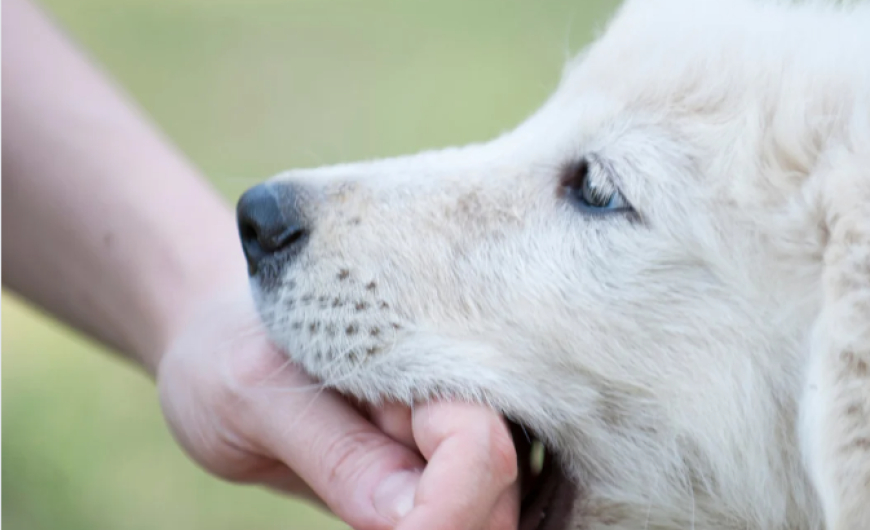
It's teaching them to control the pressure of their bite. The goal is a dog that, if they ever did make mouth contact with a person, whether startled, excited, or in pain, does not break skin or cause serious injury. This is a safety outcome, not just a manners one.
In a healthy litter, puppies learn this from each other continuously. One puppy bites too hard, the other yelps and removes themselves from play. The feedback is immediate and social. When puppies leave their litters at 8 weeks, which is the standard window in most places, they also lose a few critical weeks of that peer-to-peer feedback. You become the teacher by default.
The method is straightforward, and it works through consistency rather than through any particular technique. Every time the puppy makes skin contact with any real pressure, make a short high-pitched sound like "ouch" or "ow," let your hand go limp rather than pulling away sharply, and withdraw all attention for about 15 seconds. Don't yell, don't lecture, don't keep playing. Just pause.
After the pause, re-engage calmly. If the biting happens again immediately, pause again. Three times in a row, end the session and give them something appropriate to chew on.
What the puppy is learning is that tooth pressure on skin ends all the good things. That's a signal they understand, because it's the same signal their littermates would have given them.
A few details that people skip:
- Apply this every time, including soft mouthing. Selectively responding only when it hurts means the puppy has no consistent signal to learn from.
- Keep play sessions short. An overtired puppy bites more, not less. Five to ten minutes, then a break.
- Make sure everyone in the household runs the same response. One person using "ouch and pause" and another playing tug of war with their fingers creates contradictory information for the puppy.
(Add internal link here to your positive reinforcement training guide for Golden Retriever puppies.)
4. Managing the Environment So Biting Has Less Room to Run
Training response handles one half of this. The other half is not giving the puppy constant opportunity to rehearse the wrong behavior.
Puppies bite significantly more when they're overtired, overstimulated, or under-exercised mentally. If your Golden has been awake and running for two hours straight and is now biting your ankles and jumping at your face, that's not a training problem. That's a puppy who needed to be put down for a nap 20 minutes ago, and the environment let it run past that point.
A workable structure for most Golden puppies: short active play, ten minutes maximum, followed by an outside trip, followed by calm downtime or a nap. Repeat through the day. Keep new visitors and new experiences spaced out during the weeks when biting is at its peak. Overstimulation reliably shows up as biting in puppies who wouldn't otherwise be doing it.
And chew options. This is consistently the thing that gets skipped when families are in the middle of the biting phase and feeling worn down by it. A puppy with appropriate chew outlets available at all times doesn't redirect to hands and furniture at the same rate. Frozen Kongs, bully sticks, rubber chew toys, a damp washcloth frozen solid during peak teething, all of these help. The chewing urge in a teething puppy is real and physical. It needs somewhere to go.
Golden Retriever Info has more detail on which chew types are appropriate at which teething stage. (Add internal link here to your article on safe puppy chews or teething toys.)
5. When the Biting Pattern Deserves a Second Look
Everything above applies to standard puppy biting. Mouthing, nipping, teething-driven chewing, ankle-grabbing during play. All normal.
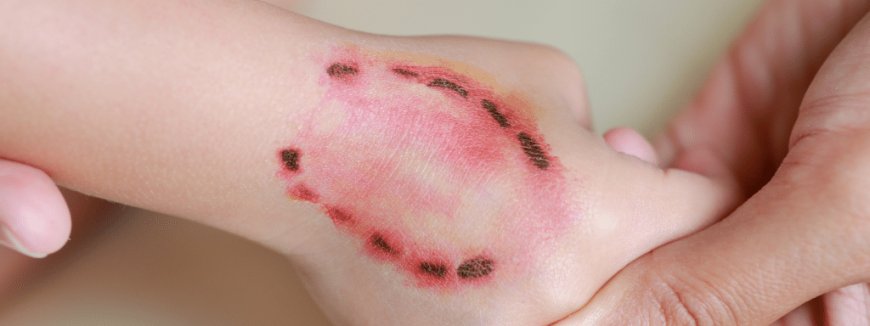
But there is a pattern worth recognizing. If your puppy's biting is paired with a growl that doesn't sound like play-growling, stiff body posture before making contact, hard sustained eye contact during the bite, or biting that escalates rather than responds to any feedback over time, that warrants a different level of attention.
Not panic. Just a conversation with your vet or a qualified trainer who can observe the behavior directly. Fear-based biting and early resource guarding are both far simpler to address at 12 weeks than at 12 months. The vast majority of Golden puppies biting hard and frequently are doing normal, healthy puppy things. But knowing what falls outside that range is part of being a prepared owner, and acting early on the exceptions makes a real difference.
FAQs
At what age does Golden Retriever puppy biting typically peak?
Usually between 3 and 5 months, coinciding with the teething phase when baby teeth are being replaced by adult teeth. Gum discomfort drives increased chewing and biting during this window. Most puppies show significant reduction in biting between 6 and 7 months once adult teeth are fully in, assuming consistent training has been happening alongside the teething process.
Is it normal for a Golden puppy to bite harder than other breed puppies I've had?
Golden puppies tend to be more mouthy than average, specifically because of their retriever genetics. Their mouths are highly developed sensory tools and they use them that way. The biting behavior is not more aggressive than other breeds, it's just more frequent and more purposeful. Bite inhibition training works the same way regardless of breed.
Should I yelp every time my puppy bites, or only when it really hurts?
Every time. If you only respond to the bites that break the skin, you're teaching the puppy that moderate pressure is acceptable. Bite inhibition only develops when the puppy gets consistent feedback across the full range of pressure, starting with light contact. The yelp method is most effective when applied without exception.
My puppy is 4 months old and biting more than when I first got her. Did I do something wrong?
No. The 3-to-5-month window is when teething is most active, and the discomfort of adult teeth breaking through often temporarily increases biting frequency even in puppies whose earlier training was going well. Frozen chew toys and continued consistent bite inhibition training are both appropriate responses. This temporary uptick is expected.
Do I need a professional trainer to get through the biting phase?
Most cases of normal puppy mouthing can be managed at home with consistent technique and appropriate outlets. A trainer becomes worth the investment if you're seeing signs outside typical mouthing, if the whole household can't get consistent enough to train effectively, or if biting is still significant past 6 months despite genuine training effort.
The biting phase has an end. Every Golden puppy who went through it and came out the other side with good bite inhibition was once the puppy who left marks on every hand in the house. The training works. It just requires doing the same thing, calmly, every single time, for longer than feels reasonable.
What's Your Reaction?
 Like
0
Like
0
 Dislike
0
Dislike
0
 Love
0
Love
0
 Funny
0
Funny
0
 Angry
0
Angry
0
 Sad
0
Sad
0
 Wow
0
Wow
0