














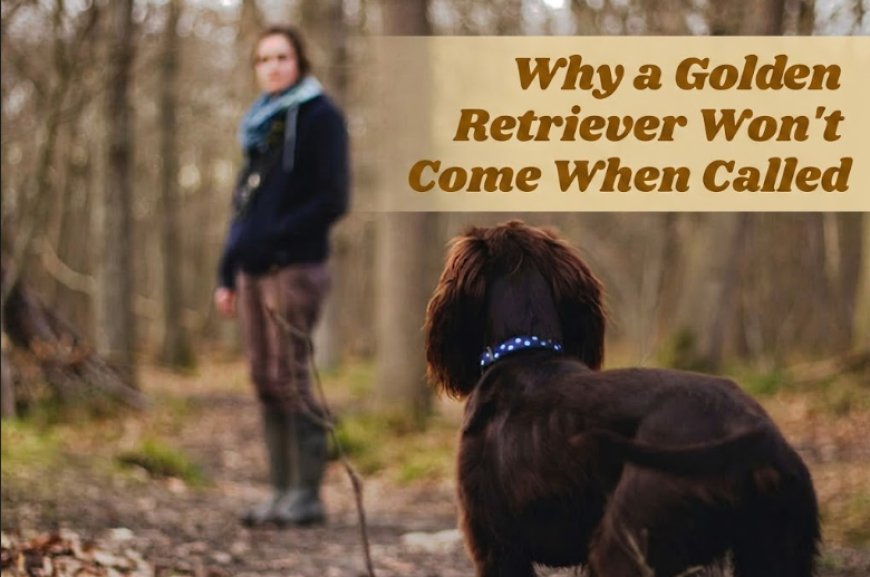
Why a Golden Retriever Won't Come When Called
A lot of people assume the recall problem is a Golden Retriever problem. It's not. It's almost always a training problem, and sometimes a relationship problem, and understanding the difference changes everything about how you try to fix it.
People see how friendly and people-obsessed Goldens are and assume that coming when called will just... happen. That their love for humans will override whatever is distracting them at any given moment. And then they call their dog's name across a park and watch them trot off in exactly the opposite direction, tail wagging, not a single glance back, and suddenly the reputation of "most trainable breed" feels like a personal insult.
Ellie, my senior Golden, has a solid recall now. But I made almost every mistake in the book during those first few months of trying to teach it, including a few I didn't even realize I was making until the pattern was already set. I want to save you from the same frustration, because this is genuinely fixable once you know what you're actually dealing with.
1. The Myth That Makes This Harder Than It Needs To Be
Here's the belief that causes the most trouble: Golden Retrievers are eager to please, therefore they should want to come when called.
This is partly true. And partly why so many owners are completely blindsided when it fails.
Goldens are absolutely people-focused dogs. But "focused on people" doesn't automatically equal "has reliable impulse control," especially as puppies and adolescents. Between roughly six and eighteen months, a Golden's brain is still developing the systems that manage self-regulation. The part that would allow them to choose you over a fascinating smell or an enthusiastic stranger dog is genuinely not fully online yet. That's not an excuse for skipping training. It's context that explains why training has to fill a gap that personality alone won't close.
Their friendliness is also working against them in a very specific way. A Golden who spots another dog across the field doesn't feel conflict about ignoring you. They feel pure, uncomplicated joy about the other thing. There's no guilt, no hesitation. They're not being defiant. The pull toward the exciting thing is just stronger than any pull toward you, and that gap has to be built up over time through training, not assumed to exist because your dog loves you.
That's the myth. Moving past it is step one.
2. What's Actually Going On When Your Golden Won't Come
Most recall failures fall into a handful of predictable patterns. Knowing which one you're dealing with matters, because the fix is different for each.
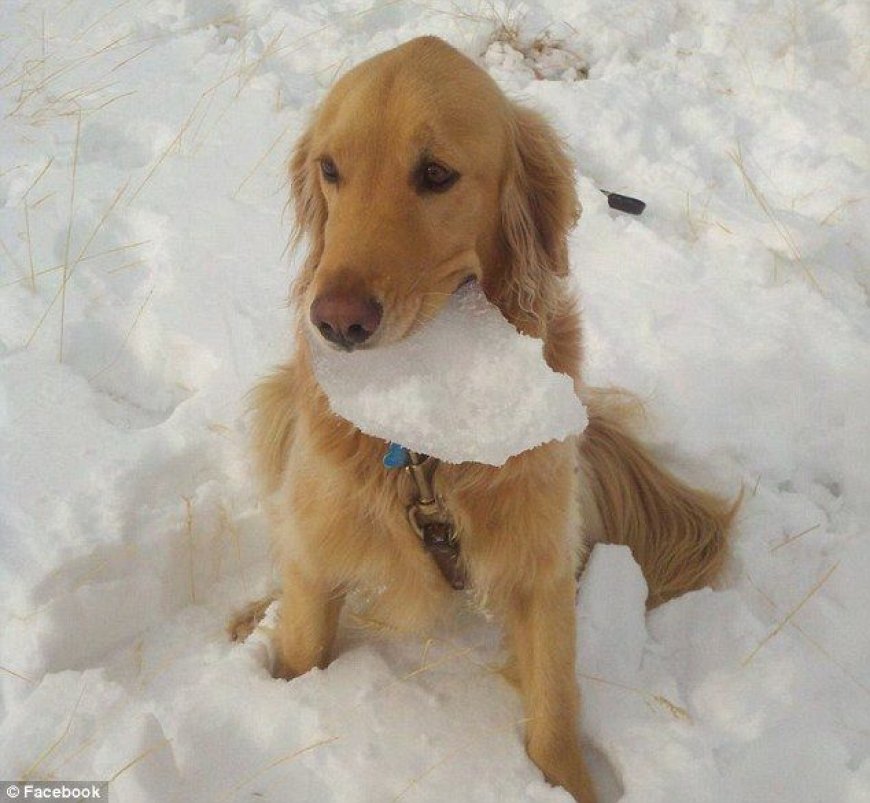
The distraction is simply more rewarding than you are.
This is the most common one. A Golden at a park with other dogs, kids running, and a thousand new smells is surrounded by things that are, in that moment, genuinely more exciting than standing next to you and getting a pat on the head. Recall training has to bridge that gap, and it takes real time and consistent reward history to get there. It doesn't happen in a week.
The word "come" has been quietly poisoned.
This happens faster than people expect, and it's one of the sneakier reasons recall breaks down. If "come" has ever predicted the end of a walk, the start of a bath, going into the crate, or having the collar grabbed before leaving somewhere fun, your dog has already started connecting that word to things they don't want. Not consciously. But dogs are extraordinary pattern learners, and they pick up quickly on what a cue tends to predict. Once the word stops reliably predicting good things, the behavior starts to unravel.
The command is being repeated too many times.
Every time you say "come" and your dog doesn't respond, you're teaching them that the word can be safely ignored. The cue loses its meaning, repetition by repetition. Saying it once, then figuring out how to set your dog up to actually succeed next time, is far more useful than calling across a field six times while your dog ignores you completely.
The dog was "punished" when they finally arrived.
This one's subtle and it matters a lot. If your Golden eventually came back after a long runoff and you said anything other than "good dog" in a genuinely warm voice, whether that was expressing frustration, a sharp word, or immediately clipping a tight leash on before heading home, you just punished the recall. The dog experienced arriving as leading to something unpleasant. That breaks the behavior fast.
You can find a broader look at patterns like these in this piece on Golden Retriever behavior mistakes owners keep repeating, which covers a few more scenarios that quietly undermine training without owners realizing it.
3. The Place Where Most People Go Wrong When Trying to Fix It
Once owners notice the recall is broken, the instinct is to practice more. More repetitions, more calling, more persistence. This, unfortunately, tends to make things worse before it makes them better.

The biggest issue: practicing failure.
If you call your dog in a situation where they're too distracted to respond, and they don't come, you've just completed a successful repetition of "ignoring the recall cue." You're reinforcing the wrong behavior without meaning to. The solution is to set your dog up to actually succeed by starting in low-distraction environments and building gradually. Inside the house. Then the backyard. The long line at the park comes much later, not on day two.
There's a whole separate layer of this happening when other dogs are involved. The distraction level jumps dramatically, and expecting a reliable recall in that context before the behavior is truly solid is setting everyone up to fail. The article on why Golden Retrievers ignore commands around other dogs explains the underlying mechanics clearly, and it makes a lot more sense once you see what's happening neurologically in those high-arousal moments.
Only calling the dog when something inconvenient is about to happen.
A lot of dogs only hear "come" when the walk is about to end, when bath time is starting, when they're being called away from something they love. That's not a recall. That's a warning signal. You want to call your Golden to you twenty or thirty or fifty times per day for no reason at all, give them something great, and release them immediately to go do whatever they were doing. Build the pattern that coming to you is always worth it, even when nothing immediately requires them to come.
Here's a quick-reference breakdown of the most common scenarios and what's behind each one:
| What's Happening | What's Actually Going On | What To Do |
|---|---|---|
| Ignores recall around other dogs | Distraction level too high for current training stage | Drop back to low-distraction practice; rebuild before adding other dogs |
| Runs the other direction | "Come" predicts end of fun or something unpleasant | Start fresh with a new cue word; make every return a celebration |
| Works at home, fails outside | Recall hasn't generalized to new environments | Practice in 10-15 different locations before expecting outdoor reliability |
| Comes slowly, not with urgency | Not enough reward history for fast returns | Use higher-value food (real chicken, cheese) and celebrate speed specifically |
| Responds to their name but not "come" | Name recognition is working; the cue word itself isn't | Pair the word "come" specifically with outstanding outcomes until it carries weight |
| Comes but dodges leash | Being "caught" has predicted end of fun too often | Practice collar touches with treats dozens of times a day, then release |
4. What Actually Works for Building a Real Recall
This is where the practical part starts, and I'm going to be honest that it's less exciting than it sounds. It's mostly repetition, done right, in the right order.
Start fresh with a clean cue word if you need to.
If "come" is already compromised, just pick something else. "Here" works. So does a specific whistle, which has the added advantage of sounding identical every single time regardless of how frustrated or stressed you are in the moment. Whatever word or signal you choose, protect it. It should only ever predict something good. Never use it to summon your dog for anything unpleasant until the behavior is rock solid.
Practice it constantly in situations where success is almost guaranteed.
In your hallway. Across the kitchen. In your fenced yard with no other dogs present. Call your dog, produce a piece of real chicken when they arrive, let them go again. Repeat it until it's reflexive. You are building a conditioned response, not just teaching a behavior, and conditioning takes volume. Aim for dozens of short successful repetitions before you add any complexity.
Use a long line before you use freedom.
A 20-to-30-foot long line is one of the most useful tools for recall training and one of the most underused. It lets your dog experience the sensation of being off-leash while still giving you the ability to prevent them from completing a successful ignore. If they don't come when called, you can gently reel them in, give a treat when they arrive, and try again. This is so much more effective than watching them blow off the recall repeatedly in an open field, and it connects directly to building better leash habits overall. Golden Retriever Info has a useful piece on leash pulling and what actually builds better results that covers some of the same principles.
Never punish a dog who came back late.
I'll say this as plainly as I can. If your Golden runs off, ignores you for three full minutes, and then eventually trots back, you give them a treat and tell them they're a good dog. Every single time. No matter how frustrated you are. You are rewarding the behavior of returning, not the behavior of taking their time. The punishment can't reach back in time to the moment they ran off. It only touches the moment they arrived. And if arriving starts feeling risky, they'll stop doing it.
Make it a genuine event when they come.
When Ellie was young and learning this, I would drop to my knees, use my most enthusiastic voice, and act like she had just done something extraordinary. Was it a little embarrassing in the park? Yes, a bit. Did it build the kind of recall where she would actually stop mid-run and sprint back to me? Also yes, and that's what matters. Your energy is part of the reward. A flat, distracted "good girl" after a recall doesn't carry the same weight as a full-on celebration.
One thing worth noting here: if your Golden is showing any signs of generalized anxiety or clinginess that might be affecting their behavior, separation anxiety is its own topic and can sometimes complicate training in ways that aren't immediately obvious.
Building a reliable recall takes most dogs several months of consistent, thoughtful practice. Not one training class. Not two weeks of effort. Months. Set that expectation honestly so you're not discouraged when the first few weeks feel slow, because they usually are, and that's normal.
FAQs
My Golden comes perfectly in the backyard but ignores me completely at the park. What's happening?
This is a generalization problem, not a training failure. A behavior that works at home hasn't yet been taught to work in a new environment. Dogs don't automatically transfer what they've learned from one place to another, especially when the distraction level changes dramatically. The fix is to practice in progressively more stimulating locations, very gradually, before expecting park-level reliability.
Is it too late to fix a broken recall in an adult Golden?
Not at all. Adult dogs can absolutely rebuild this behavior, and their impulse control is often better than it was during the adolescent months, which actually makes it easier in some ways. Start fresh with a clean cue word, reward heavily, and be consistent. It may take a bit longer to undo existing patterns, but it's fully possible.
Should I use an e-collar to enforce recall?
I'd steer away from it as a starting point, especially with Goldens. Recall should be a behavior your dog actively wants to perform, not one they do to avoid discomfort. Aversive tools can produce a dog who comes when called because something bad might otherwise happen, and that's a much more fragile response than one built on genuine positive associations. It can also affect the trust you've worked to build.
My Golden comes when I have treats visible but not when I don't. How do I fix this?
This is a sign that your reinforcement schedule has been too predictable. Once the behavior is solid, shift from rewarding every recall to rewarding on a variable schedule, meaning sometimes, unpredictably. A random jackpot of several high-value treats on certain recalls is actually more motivating over time than a small biscuit every single time, because the unpredictability keeps the behavior sharp.
What if my Golden runs up to me but then darts away before I can grab their collar?
This is collar avoidance, and it tells you that being "caught" has too often predicted something they'd rather avoid. Practice touching your dog's collar dozens of times per day in low-stakes moments, follow each touch with a treat, then immediately release them. Over time, your hand near their collar stops signaling that something inconvenient is coming, and the whole interaction gets easier.
The recall, when it finally clicks, is one of the most satisfying things to watch. That moment when your Golden actually turns mid-run and comes charging back like it was their idea, ears flying, like they genuinely chose you over everything else happening around them. That's worth every repetition it took to build.
What's Your Reaction?
 Like
0
Like
0
 Dislike
0
Dislike
0
 Love
0
Love
0
 Funny
0
Funny
0
 Angry
0
Angry
0
 Sad
0
Sad
0
 Wow
0
Wow
0