


















Golden Retriever Hip Dysplasia: Early Warning Signs
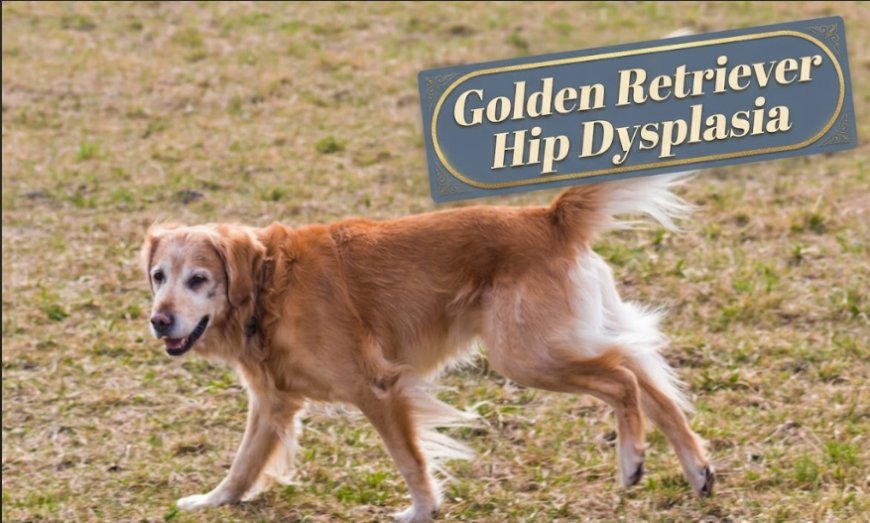
A woman in one of the Golden Retriever groups I follow posted a question last year that I haven't been able to stop thinking about since. Her 14-month-old Golden had started running with both back legs moving together instead of alternating, a gait she described as "almost like hopping." Her vet had seen the dog twice and called it a quirky habit. She asked the group whether it was normal.
It isn't. That specific pattern, called bunny hopping, is one of the clearest early behavioral signs of hip dysplasia in Golden Retrievers. And the fact that her vet had seen it twice without ordering imaging is exactly the kind of thing that costs dogs months of management time they didn't have to lose.
I'm not writing this to alarm anyone. Most early hip dysplasia cases are manageable, and dogs live comfortable, active lives with the right interventions. But the window for those interventions is not unlimited, which means knowing what to look for before your Golden starts limping matters a great deal.
1. What's Actually Happening in the Hip Joint
Hip dysplasia is a developmental condition. A puppy isn't born with it in a fully formed sense; the hip joint develops abnormally during growth. In a healthy hip, the ball of the femur, called the femoral head, fits snugly into a cup-shaped socket in the pelvis called the acetabulum. In a dog with hip dysplasia, that fit is loose, shallow, or otherwise imprecise.
That looseness causes the femoral head to shift and move during activity when it shouldn't. The friction wears down cartilage, creates chronic inflammation, and eventually leads to osteoarthritis in the joint. This is why older dogs described as having "bad hips" are almost always dealing with accumulated joint damage from years of abnormal mechanics, not just a single structural problem.
Golden Retrievers are one of the genetically higher-risk large breeds. The Orthopedic Foundation for Animals, which tracks hip health certifications for breeding dogs, consistently finds notable rates of hip dysplasia across the breed. But genetics aren't the whole story. Rapid growth during the puppy months, excess body weight, and high-impact exercise on joints that are still developing all influence how severely the condition expresses itself, even in a genetically predisposed dog.
For more on the breed-specific health predispositions worth knowing as a Golden owner, the breed knowledge section on Golden Retriever Info has useful context.
And Goldens don't make this easier on themselves. A puppy who wants to sprint full speed, leap from furniture, and wrestle enthusiastically is doing a lot of work on developing joints, and that's just worth knowing early.
2. The Signs That Are Easy to Dismiss
The earliest signs of hip dysplasia are behavioral, not visible. That's exactly why they get explained away for months before anyone takes them seriously.
Bunny hopping. This is the one I'd put at the top of any list. When a dog has hip discomfort, they compensate while running by pushing off with both hind legs simultaneously rather than alternating. From behind, the gait looks like a rabbit's. It shows up most commonly between 5 months and 2 years, before significant arthritis has developed, which is precisely when catching it matters most.
Hesitation before jumping or climbing. A Golden who suddenly pauses before jumping into the car, who stands at the bottom of the stairs for a moment before going up, this is worth paying attention to. Young Goldens are not normally hesitant about anything physical. If a dog who used to leap freely is now thinking twice, pain is usually the explanation.
Difficulty rising from rest. Watch your dog get up from a nap sometime, just actually watch. A healthy dog rises fluidly. A dog with hip discomfort tends to shift their weight to the front legs first, push up with their forequarters, and bring the hindquarters up stiffly after. They might groan softly. They might take a moment to steady themselves before walking.
Lameness after exercise that resolves with rest. This pattern is particularly characteristic of early hip dysplasia in young dogs. A 10-month-old Golden who comes home from the park slightly lame in the back legs but seems fine the next morning is showing a textbook early presentation. The inflammation eases with rest. The underlying problem does not.
Sitting with hips off to one side. Some dogs develop a consistent preference for sitting with their hindquarters displaced to the left or right rather than squarely underneath them. It reduces the angle at the hip joint and is a comfort-seeking behavior. It looks like a personality quirk. Often it isn't.
Here's a plain-text checklist you can save or print:
Early Warning Signs: Hip Dysplasia in Golden Retrievers
[ ] Bunny hopping gait when running (both back legs pushing off together) [ ] Hesitation before jumping onto furniture, into the car, or up stairs [ ] Swaying or wobbling in the hindquarters during normal walking [ ] Morning stiffness that takes a few minutes to walk off [ ] Lameness in the back legs after exercise, improving with rest [ ] Sitting with hips displaced to one side rather than squarely underneath [ ] Flinching, shifting, or pulling away when the hip area is touched or pressed [ ] Narrowed rear stance when standing still (back legs closer together than normal) [ ] Muscle loss in the hindquarters compared to the front end [ ] Shorter exercise tolerance or general reluctance to run and play
One or two items present occasionally is not necessarily a signal. Several items present consistently is a conversation with your vet, and likely an X-ray.
3. What Owners Tend to Explain Away

This could also be titled "the things I've heard people say while describing their dog's early hip dysplasia to each other online," because the pattern is consistent across years of reading these groups.
"She's probably just tired from the walk."
"He's always been a weird sitter, it's just his thing."
"The vet felt her hips and said everything seemed okay."
That last one is worth addressing directly because it comes up a lot. Physical examination alone is not sufficient to diagnose or rule out hip dysplasia. A vet can assess gait, feel for crepitus in the joint, and test range of motion, but those findings are subjective and can appear normal in the early stages. The only way to actually evaluate the hip joint structure is with X-rays, ideally taken with the dog in a standardized position under sedation to ensure accurate images.
If your dog is showing signs and your vet has done a physical exam without imaging, asking specifically for hip X-rays is completely appropriate. That's not being difficult. That's being thorough, which is something any good vet will respect.
The Golden Retriever health section on Golden Retriever Info covers what to discuss with your vet at different life stages, including what screening makes sense at which ages for this breed.
4. What to Do While You're Waiting for Answers
If you're in the period between "I've noticed something" and "I have X-ray results and a diagnosis," there are things that clearly help and things that make matters worse.
Keep exercise moderate and low-impact. Swimming is excellent because it builds and maintains muscle mass without joint impact stress. Short, controlled leash walks are better than unstructured off-leash running. Activities that involve a lot of explosive hind leg work, jumping, hard stops and turns, stairs taken at speed, are worth limiting until you have a clearer picture.
Weight management is probably the single most impactful thing an owner can do. Every pound of excess body weight places disproportionate stress on the hip joint. A Golden who is kept lean during growth and young adulthood, not thin, but lean with a visible waist and palpable ribs, has a meaningfully better trajectory if hip dysplasia is present compared to one who has been running heavy.
Building the habit of appropriate exercise amounts during the puppy phase has long-term implications that go beyond hip health. The training section on Golden Retriever Info covers age-appropriate activity guidelines that apply directly to joint development in growing Goldens.
A side note on supplements: there's a substantial amount of discussion online and among dog owners about glucosamine and chondroitin as a preventive measure for joint health in puppies. The evidence for their effectiveness in the pre-arthritic stage is genuinely mixed, and while they're generally safe, they're not a substitute for diagnosis and management. I mention this only because I've seen owners start a joint supplement, feel like they've addressed the issue, and then not follow up further. The supplement may be a fine adjunct. It's not a solution on its own.
5. What Diagnosis and Management Actually Look Like
The standard diagnostic path starts with hip-extended X-rays. From those images, a vet or veterinary orthopedic specialist assesses the fit between the femoral head and the acetabulum, checks for any looseness or shallowness in the socket, and looks for early arthritic changes. The OFA grades hips from Excellent down through Good, Fair, and into Borderline, Mild, Moderate, and Severe dysplasia. PennHIP is a different radiographic method that uses distraction to measure joint laxity more precisely and is considered more sensitive for catching early joint looseness in young dogs.
For a young dog with a confirmed diagnosis, management options depend heavily on age, severity, and how much arthritic change is already present. Conservative management, meaning weight control, anti-inflammatory medication when needed, appropriate controlled exercise, and sometimes physical rehabilitation therapy, keeps many dogs comfortable for years. Surgical options include the triple pelvic osteotomy (TPO), which works best in dogs under 10 months before significant arthritis develops; the femoral head and neck ostectomy (FHO); and total hip replacement, which is the most invasive but also the most complete correction.
Surgery is not automatically the next step after a diagnosis, and many dogs do well long-term without it. The decision depends on the individual dog's age, the severity of the structural problem, the degree of arthritic change already present, and what the owner can realistically manage. A veterinary orthopedic specialist is the right person to walk through those specifics.
What I'd say is this: early diagnosis gives you options. A late diagnosis, after significant arthritis has developed and the pain is obvious, narrows them considerably.
FAQs
At what age do Golden Retrievers typically start showing hip dysplasia symptoms?
Signs can appear as early as 4 to 6 months in severe cases, but the most common window for first noticing symptoms in Goldens is between 12 and 24 months. Some dogs don't show obvious signs until middle age or older, when accumulated joint wear finally crosses the pain threshold. This is one reason early screening is valuable even in dogs who seem comfortable and are moving normally.
My 8-month-old bunny hops occasionally but seems otherwise fine. Is that something to investigate?
Occasional bunny hopping in an otherwise active puppy can be normal during rapid growth phases, particularly around 4 to 6 months. Frequent or consistent bunny hopping, especially alongside anything else on the warning signs list, is worth X-rays. I'd lean toward checking it rather than waiting. The cost of a hip radiograph is small compared to the cost of catching it late, and if the images come back clean, you've lost very little.
Can you actually prevent hip dysplasia in Goldens?
You can't override genetics, but environmental factors contribute significantly to how severely the condition develops. Keeping puppies lean during growth, avoiding repetitive high-impact exercise before 12 to 18 months, and feeding a large-breed puppy formula that supports a controlled growth rate all reduce the risk of severe expression in a genetically predisposed dog. Selecting from OFA or PennHIP-certified parents is the most meaningful preventive measure at the breeding level.
My vet said my dog's hips "felt fine" during a checkup. Should I still pursue X-rays if I'm seeing signs?
Yes, if you're seeing consistent signs from the checklist above. Physical palpation and range-of-motion testing are subjective and can miss early-stage hip dysplasia entirely. Hip X-rays are the diagnostic standard, and you're within your rights to request them specifically. A vet who resists that conversation when you're describing clinical signs worth investigating is a conversation worth having clearly and directly.
Does what a Golden puppy eats during the first year actually affect hip health?
Yes, in a meaningful way. Large-breed puppy formulas are specifically formulated to support controlled growth rates rather than rapid growth, which matters because fast skeletal development places excess stress on joints still forming. Overfeeding standard puppy food can accelerate growth beyond what the joints are ready to support. The Golden Retriever puppy guide on Golden Retriever Info covers nutrition and growth management in the early months in more detail.
Ellie is a senior now, and watching her move is something I do with a different kind of attention than I did when she was young. She has stiffness that comes with age and a life well-lived, and I'm glad I knew what to watch for long before it became obvious. Not because knowing prevented everything, but because it meant I wasn't surprised by things I could have been watching all along.
What's Your Reaction?
 Like
0
Like
0
 Dislike
0
Dislike
0
 Love
0
Love
0
 Funny
0
Funny
0
 Angry
0
Angry
0
 Sad
0
Sad
0
 Wow
0
Wow
0