

















Golden Retriever Shedding Seasons: What to Expect
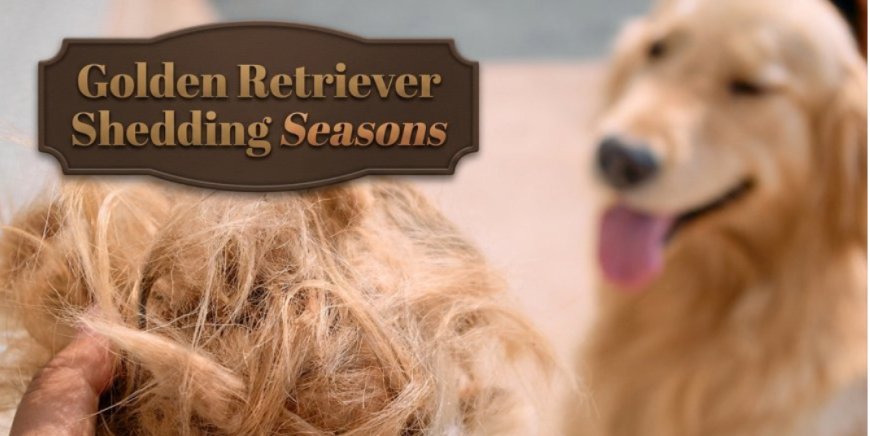
Ellie sheds. Not a polite amount, not in the charming seasonal way I imagined before I actually owned a Golden. She sheds with a commitment that I have come to genuinely respect. There is Golden Retriever hair on my couch, on my car seat, on a cardigan I swear I haven't worn near her in three weeks. There is probably Golden Retriever hair on this article.
If you have a Golden, you are nodding along right now.
The thing is, once you understand how shedding actually works for this breed, specifically what's driving it and when, most of the chaos starts making sense. And when it makes sense, you can get ahead of it instead of just chasing it around your house with a lint roller.
1. Why the Shedding Is So Heavy in the First Place
Golden Retrievers have two coats, not one. Most people know this in a general way, but it's worth actually understanding because it explains everything about what you're dealing with.
The outer coat is the long, flowing layer you see. It's semi-water-resistant, and it's what gives Goldens their signature look. Underneath that is the undercoat, a dense, soft insulating layer that thickens up in colder months and lightens out in warmer ones. And when the season shifts, that undercoat comes out.
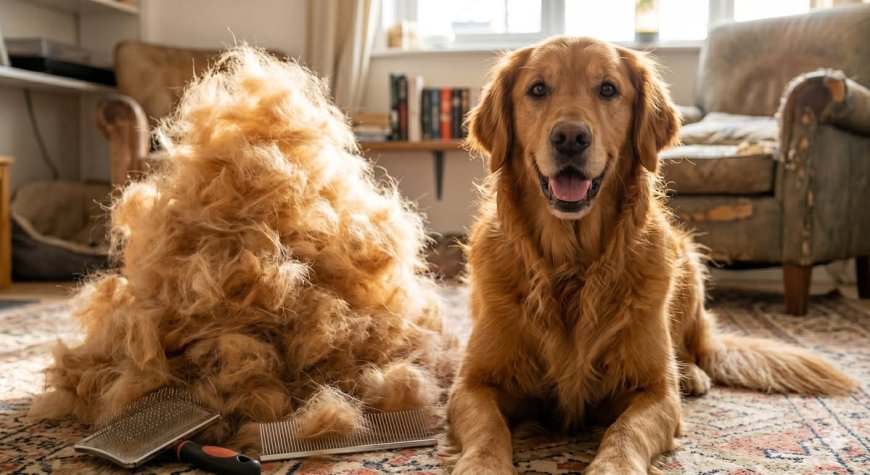
All of it.
This is called "blowing the coat," and it's a full structural replacement of your dog's insulation system. You're not seeing a little extra shedding during these periods. You are watching the entire undercoat exit the building, sometimes in chunks, sometimes in clouds, always in a volume that feels deeply personal.
Single-coated breeds shed too, but they do it more quietly and consistently throughout the year. Double-coated breeds like Goldens go through concentrated shedding events twice annually, and the difference in scale is dramatic. Once you know this, you stop being surprised by what March looks like in your house.
2. How the Shedding Changes Through the Year
Year-round shedding is the baseline for Goldens. That doesn't go away. What shifts is the intensity, and it follows a seasonal rhythm that's pretty consistent once you've lived through it a couple of times.
Here's how a typical year breaks down:
GOLDEN RETRIEVER SEASONAL SHEDDING GUIDE

Season    | Intensity     | What's Happening                   | Brushing Need
----------|---------------|------------------------------------|------------------
Spring    | Very High     | Heavy winter undercoat releasing   | Daily, 4-6 weeks
Summer    | Moderate      | Lighter summer coat settled in     | 2-3x per week
Fall      | High          | Summer coat releasing, winter grows| Daily, 3-5 weeks
Winter    | Low-Moderate  | Thicker winter coat building in    | 2-3x per week
Spring is the bigger of the two seasonal blowouts. The winter undercoat is at its thickest, and when it lets go, it lets go all at once. If you have a Golden who has never had a proper deshedding session going into spring, the first week or two can feel genuinely alarming, it's that much hair.
Fall is a bit lighter because the dog is shedding the summer coat, which isn't as dense, but it's still a significant event and it still warrants daily brushing for several weeks.
Each blowout usually lasts between three and six weeks. Climate matters here. Goldens in consistently warm regions have less defined seasonal cues, so the coat changes can be more gradual and spread out rather than concentrated. And individual dogs vary, some blow their coat fast and dramatically, others take their time.
New Golden owners going through their first spring blowout sometimes wonder if something is medically wrong. It looks extreme enough to raise that question. The article on Golden Retriever Puppy Week One Surprises at Golden Retriever Info touches on some of those early moments when completely normal things look alarming, and excessive shedding is very much in that category.
3. The Tools Worth Buying (and the One to Skip)
Using the wrong brush during a coat blowout is its own special kind of frustration. You put in the time, you think you're making progress, and two hours later the couch looks exactly the same.
Here's what I've found actually works on Ellie, after a lot of trial and a lot of error:
Slicker brush. This is the wide, flat brush with rows of short bent metal pins, it's the starting point for almost every grooming session. Good for working through the outer coat and catching surface tangles. But during a blowout, it mostly stays on top of the coat. Necessary, but not sufficient.
Undercoat rake. This is the tool that gets to the actual problem. The long, widely-spaced teeth reach through the outer coat and pull out loose undercoat that a slicker brush can't touch. If you buy one grooming tool specifically for blowout season, this is the one. There are rotating-tine versions that are gentler on dogs with thicker coats, worth looking for.
Deshedding tool. The kind with a fine-tooth comb blade on a handle. Very effective for removing a high volume of undercoat quickly, better than most other options for shortening the peak of a blowout. Use it once or twice during the heavy weeks, not every day. Overuse strips the outer coat along with the undercoat, which you don't want.
Pin brush. Good for the finish work after everything else. Smooths the coat down and catches any remaining tangles in the feathering on the legs and belly.
A slicker plus an undercoat rake is the minimum effective kit. The deshedding tool is worth adding if your dog's blowouts are particularly intense or if you're short on time.
Building the grooming routine early, before your dog sees the brush as optional, is also worth thinking about. Regular handling and calm brushing sessions are part of how you establish cooperative behavior around grooming. The Golden Retriever Training section at Golden Retriever Info has more on building those foundational habits that make everything from grooming to vet visits go more smoothly.
4. The Two Mistakes That Make Shedding Worse
The most common one I see, and the one with the most consequences, is shaving.
It seems like it should work. Less hair, less shedding. The logic makes sense until you understand what a double coat actually does. The outer coat and undercoat grow at different rates and serve separate functions. When you shave through both layers, they often grow back unevenly, with the softer undercoat outpacing the outer coat and causing a texture change that can become permanent. It's called coat funk or post-clipping alopecia, and some dogs never fully recover their original coat after it happens.
Shaving a double-coated dog does not reduce shedding. You end up with shorter hairs instead of longer ones, and the blowouts continue on schedule.
The other mistake, one I made myself in Ellie's first year, is brushing after bathing instead of before. Tangles tighten when wet. A mat that would come out easily with ten minutes of dry brushing can become a dense, painful knot after a bath if you didn't address it first. Always brush before you get the dog in the tub, especially going into a blowout when the coat is already loosening and tangling.
And while we're on the subject of bathing: a warm bath with a good blow dry actually helps accelerate a blowout. The water loosens the undercoat and the heat and airflow from drying pull a lot of it out at once. Many Golden owners schedule a bath in the first or second week of a seasonal blowout specifically to shorten the whole process. After I started doing this with Ellie, the worst weeks of shedding got noticeably shorter.
5. When Shedding Is Telling You Something Else
Normal shedding follows the seasonal rhythm described above, with some manageable year-round baseline. But there are situations where the volume, pattern, or quality of shedding signals something worth looking into.
Hypothyroidism is one of the more common health conditions in Golden Retrievers, and it often shows up first in the coat. The hair becomes dry and brittle, sheds more than the seasonal baseline, and sometimes comes out in patches. If your Golden's coat quality has changed without an obvious environmental explanation, thyroid function is worth checking with your vet.
Stress also triggers shedding. A dog going through a significant change, a move, a new household member, a loss, will sometimes shed more heavily for a period. This usually resolves when the stressor does.
Nutritional deficiencies affect coat quality in ways that make shedding feel less manageable. Omega-3 fatty acids, typically supplemented through fish oil, are one of the most well-supported additions you can make for coat health. A well-conditioned coat sheds more cleanly and tangles less during blowouts than a dry, brittle one. Ask your vet about appropriate dosing based on your dog's weight.
Patchy or asymmetrical shedding, shedding accompanied by visible skin irritation, or shedding that doesn't follow any seasonal pattern at all, those are vet conversations. The Golden Retriever Health section at Golden Retriever Info has more depth on the coat and skin conditions that sometimes sit underneath what looks like a shedding issue.
FAQs
How long does a Golden Retriever coat blowout last? Most blowouts run three to six weeks, with the heaviest volume in the first two weeks. Spring blowouts tend to be longer and more intense than fall because the winter undercoat is denser. Climate and individual variation both affect the timeline.
My Golden is shedding a lot and it's not spring or fall. Should I be worried? Some baseline shedding continues year-round for this breed, so elevated shedding outside of blowout season isn't automatically a problem. What to pay attention to is whether there's patchiness, skin involvement, or a noticeable change in coat quality alongside the shedding. Those warrant a vet visit. Normal-looking hair in higher-than-usual volume, without any skin changes, is likely just your dog's individual baseline.
Does bathing more often reduce shedding? It reduces the amount of loose hair that ends up on your furniture, yes. Bathing during a blowout specifically helps speed the process along. But more frequent bathing doesn't reduce the total amount of shedding that happens over the season, it just changes where it ends up.
What's the best brush for shedding season? An undercoat rake combined with a slicker brush handles most of what a blowout requires. The undercoat rake is the one doing the real work during heavy shedding periods. If you want to add a deshedding tool for the first heavy weeks, that's a useful addition, just don't rely on it daily.
My Golden puppy barely sheds. Does that change? Yes, significantly. Puppies have a single, soft puppy coat that transitions to the adult double coat somewhere between six months and fourteen months of age, and the timeline varies by dog. Once the adult coat comes in, the full seasonal blowouts begin. Many owners are genuinely caught off guard by the difference in volume.
After a few years of navigating blowout seasons with Ellie, I've accepted that some Golden Retriever hair will always be somewhere in my house. But the seasons that used to feel chaotic now feel manageable because the routine is just part of life. A good undercoat rake, a consistent brushing schedule starting two to three weeks before peak season, and one bath during the worst of it. That's mostly what it takes. The vacuum still gets a workout, but at least I know why.
What's Your Reaction?
 Like
0
Like
0
 Dislike
0
Dislike
0
 Love
0
Love
0
 Funny
0
Funny
0
 Angry
0
Angry
0
 Sad
0
Sad
0
 Wow
0
Wow
0