














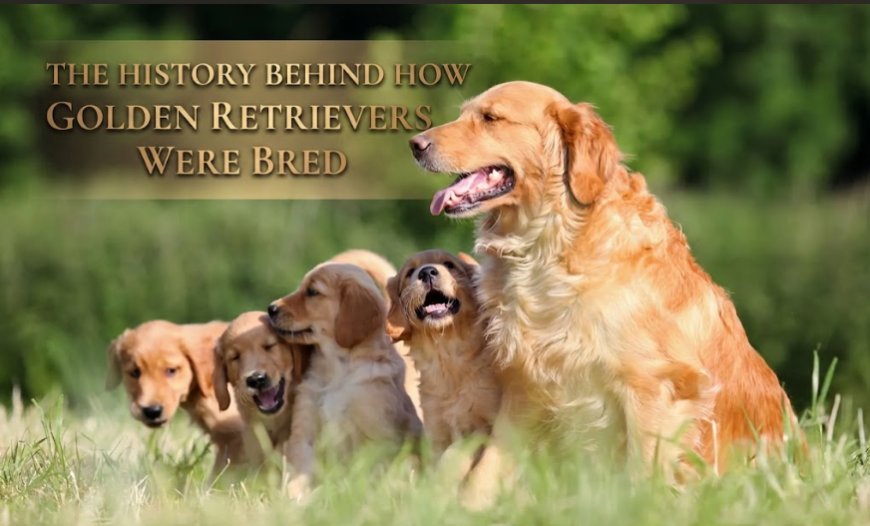
The History Behind How Golden Retrievers Were Bred
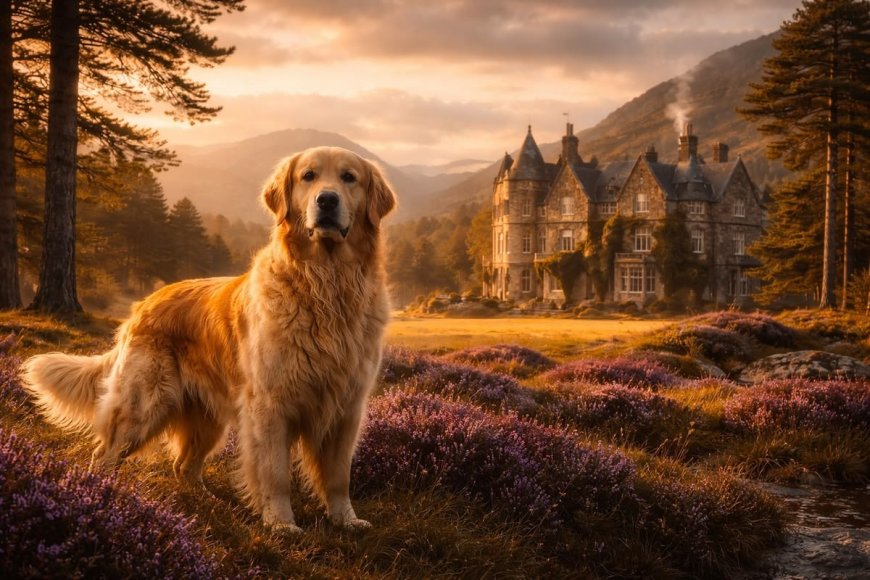
For years, a story circulated among Golden Retriever owners that the breed descended from a troupe of Russian circus dogs. The claim was specific enough to feel credible: Lord Tweedmouth, a Scottish nobleman, supposedly saw these performing dogs in Brighton in the 1860s, was captivated by their intelligence and golden coloring, bought the entire troupe, and bred them on his Highland estate to create what we now call the Golden Retriever.
I believed this for a while. It's a good story. Circus dogs in Victorian England, a Scottish lord charmed enough to purchase the whole act, a breed born from a moment of spectacle. It has a shape to it that feels like history should feel.
The problem is that it's completely made up.
And the actual history, which only became clear after a set of handwritten breeding records was discovered in the 1950s, is genuinely more interesting than the circus version. It just takes a little longer to tell.
1. The Myth, and Why It Lasted So Long
The Russian circus dog story appeared in print sources as early as the late 19th century. It circulated through breed clubs and kennel literature for decades, and because it had no obvious origin point and sounded plausible to people who didn't think too hard about it, it kept getting repeated. By the time Golden Retrievers became genuinely popular outside of Scotland, the story was already treated as settled fact in some corners.
What nobody had, for most of that period, was the primary source. Lord Tweedmouth, a man named Sir Dudley Marjoribanks who was later elevated to the first Baron Tweedmouth, kept detailed stud books recording every breeding decision made on his Guisachan estate from 1835 onward. These records existed. They were just in family hands and not publicly available.
In the 1950s, his great-nephew, the sixth Earl of Ilchester, accessed those records and shared what they contained with the Kennel Club. The circus story fell apart immediately, because the actual first cross was documented in detail, with names, dates, and descriptions of both dogs. No circus. No Russian performers. Just a specific yellow dog and a specific water spaniel, in Scotland, in 1868.
2. What the Records Actually Show
The first documented Golden Retriever cross happened between a yellow Flat-Coated Retriever named Nous and a Tweed Water Spaniel named Belle. Nous had been purchased by Lord Tweedmouth from a cobbler in Brighton, which is possibly where the Brighton detail in the circus myth came from, the location survived even as the story around it was completely invented.
The Tweed Water Spaniel is now extinct, which makes this particular piece of history a little poignant to think about. It was a liver-colored retriever native to the border region between Scotland and England, described in contemporary accounts as calm, eager to work near water, and relatively easy to train. It no longer exists as a breed, but it lives in the genetic history of every Golden Retriever.
The puppies from that first cross, Nous and Belle's litter in 1868, were the foundation stock. From there, Lord Tweedmouth introduced additional breeds over the following decades to sharpen specific traits. An Irish Setter came in for nose and hunting drive. A Bloodhound contributed scenting ability and tracking instinct. Another Tweed Water Spaniel was added to reinforce the water retrieval qualities he was working toward.
The goal he was working toward, and this is clear from the records, was a dog specifically suited to the Scottish Highlands. The terrain there demands something from a gun dog that many of the retrievers of the era couldn't consistently deliver: a dog that could work both on land and in water, handle rough ground and cold conditions, carry game without damaging it, and do all of this alongside a hunter rather than independently. The Golden Retriever was, from the start, purpose-built for a specific environment and a specific kind of working relationship.
3. The Breeds That Built the Golden

It's worth looking at the contributing breeds as their own piece of this, because they explain things about the modern Golden that don't always have obvious explanations.
| Breed | What It Contributed | Still Visible Today |
|---|---|---|
| Yellow Flat-Coated Retriever | Golden coat color, retrieving instinct, people-focused temperament | Yes, core of the breed |
| Tweed Water Spaniel (extinct) | Water affinity, calm working temperament, trainability | Yes, in behavior and water drive |
| Irish Setter | Scenting ability, hunting energy, some coat quality | Partially, especially in field lines |
| Bloodhound | Tracking instinct, nose sensitivity | Subtly, particularly in scenting tasks |
The coat deserves its own moment here. The specific golden coloring that defines the breed comes from that original Flat-Coated Retriever cross, and the variation in shades, from cream to dark gold, reflects the complexity of those early breeding decisions rather than any single intended color. Lord Tweedmouth favored the yellow, but the range that developed across generations reflects the natural spread of pigmentation across a mixed gene pool. The piece on Golden Retriever coat types and colors gets into the specifics of how those variations work and what they mean for today's dogs, if you want the deeper cut on that topic.
4. From Scotland to Everywhere Else
The Golden Retriever didn't leave Scotland quickly. For the first several decades after that 1868 cross, the breeding program stayed largely within Lord Tweedmouth's estate and his social circle. The breed was shown publicly for the first time at a British dog show in 1908, and the Kennel Club in England granted official recognition three years later, in 1911, under the name "Yellow or Golden Retrievers."
The name was simplified to Golden Retriever in 1920. The American Kennel Club followed with recognition in 1925. By then, the breed had started moving into North America through field trial competition, and its reputation as an exceptional working dog spread faster than its numbers.
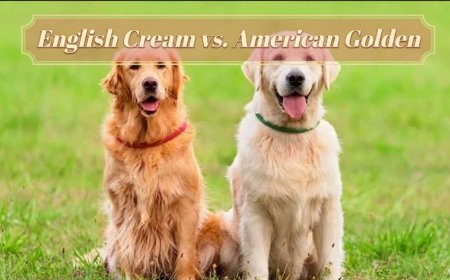
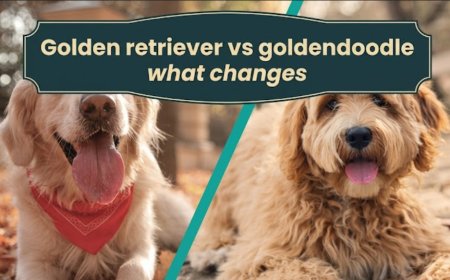
What's interesting, if you think about it, is how different the American and British lines became over the twentieth century, not through any dramatic decision but through decades of selecting for slightly different traits in different contexts. British breeders continued to emphasize working qualities alongside conformation. American breeders increasingly selected for the look and temperament that made Goldens excellent family dogs and show dogs. The result is two populations that are visually and temperamentally distinct enough that people sometimes assume they're separate breeds. They're not, but they do have genuine differences worth understanding, and the breakdown at American vs. English Golden Retriever differences covers those in useful detail.
The breed that started as a working solution to a very specific Highland environment is now one of the most popular dogs in the United States, the United Kingdom, Canada, and Australia. That's a strange journey for a dog that was bred to retrieve waterfowl in cold Scottish lochs.
5. What This History Actually Explains About Your Golden
I find myself thinking about this history whenever Ellie does something that doesn't seem to have an obvious explanation. Her obsession with water, any water, a puddle, a kiddie pool, the edge of a lake, makes complete sense when you trace it back to the Tweed Water Spaniel in her ancestry. Her intense need to carry things in her mouth, the way she'll pick up a toy or a shoe or a stick the moment she gets excited, reflects a retriever's instinct that was deliberately bred in and reinforced across generations.
The soft mouth that Goldens are famous for, the ability to hold something without damaging it, isn't an accident either. Hunters who want retrievable, undamaged birds need a dog with exactly that quality, and the people who developed this breed selected for it systematically over decades.
The temperament that makes Golden Retrievers so unusually oriented toward people, so willing to work alongside humans rather than independently, comes from that same deliberate selection. A dog that would work alone and come back when called wasn't what Lord Tweedmouth needed. He needed a dog that wanted to stay close, watch for signals, and respond to a working partnership. That's what we have today, and it didn't happen by accident.
There's a reason the breed standard, the formal description of what a Golden Retriever should be, still emphasizes qualities like friendliness, reliability, and willingness to work. At Golden Retriever Info, we think the history behind a breed matters for understanding why your actual dog behaves the way it does, not just as trivia. The Golden Retriever breed standard and what it means for temperament gets into how those historical decisions show up in the dogs people own today.
FAQs
Is the Russian circus dog story completely false?
Yes. When Lord Tweedmouth's actual breeding records were examined by the Kennel Club in the 1950s, they documented the breed's origin clearly as a cross between a yellow Flat-Coated Retriever and a Tweed Water Spaniel in 1868. No circus dogs, no Russian performers. The myth circulated for decades before the primary source material was available to correct it.
Why do Golden Retrievers love water so much?
The Tweed Water Spaniel, one of the founding breeds, was specifically a water retriever with a strong affinity for working in rivers and lochs. That trait was intentionally preserved in the early breeding program because Lord Tweedmouth needed a dog that could retrieve waterfowl from cold Highland water. The water drive is genuinely in the genetics.
Are American and English Golden Retrievers the same breed?
Officially yes, but in practice they've diverged significantly over the past century. English lines tend to be stockier with a lighter, creamier coat and a slightly calmer disposition. American lines are generally leaner, with a deeper golden coat and somewhat higher energy. They share the same ancestry but have been selectively bred in different directions for long enough that the differences are meaningful.
Does the Golden Retriever's history affect their lifespan or health?
The breeding decisions made in the 19th century do have downstream effects on health, particularly through the relatively narrow gene pool of the foundation stock. Golden Retrievers have a higher incidence of certain cancers than most breeds, and researchers continue to study the genetic factors involved. What affects a Golden Retriever's lifespan gets into the specifics of what current research actually shows.
Did Lord Tweedmouth intend to create a new breed, or was he just breeding working dogs?
Probably both, though the records don't say explicitly. His stud books show consistent intentionality about which dogs were crossed and why, which suggests he had a specific type in mind. Whether he thought of it as "creating a breed" in the formal sense is harder to say. What's clear is that he was selective, methodical, and working toward something defined, and what he produced was distinct enough that it eventually warranted its own name.
Knowing that Ellie's love of water comes from an extinct Scottish spaniel, that her soft mouth was engineered over decades of careful selection, that her need to be close to me was literally bred into the line, does something to how I think about her. She is not random. She is the result of someone with a very specific idea about what a dog should be, and a lot of patience to get there.
What's Your Reaction?
 Like
0
Like
0
 Dislike
0
Dislike
0
 Love
0
Love
0
 Funny
0
Funny
0
 Angry
0
Angry
0
 Sad
0
Sad
0
 Wow
0
Wow
0