













Why Golden Retrievers Trust Every Stranger They Meet

I ran a small experiment with Ellie once, mostly out of idle curiosity. I asked a neighbor she'd never formally met to come to the front door unannounced, someone whose scent and voice were completely unfamiliar to her. I stood out of sight in the hallway and watched.
She had a tennis ball in her mouth before he'd finished stepping through the doorway.
No barking. No period of cautious sniffing. Not even a low rumble. Just immediate, wholehearted acceptance of a brand new human in her home. And I laughed, but I also found myself genuinely curious in a way I hadn't expected. Because "Goldens are just friendly" didn't feel like a complete answer anymore. I wanted to know what was actually driving it, and whether understanding it would change how I thought about her.
It did, actually.
1. It Goes Back Further Than You'd Think
The reason Golden Retrievers trust strangers isn't a coincidence of personality, and it's not something that happened by accident over a few years of popularity as family pets. It traces back to very intentional breeding decisions made in the Scottish Highlands in the second half of the 19th century.
Sir Dudley Marjoribanks, later Lord Tweedmouth, spent several decades developing a dog purpose-built for retrieving shot waterfowl across difficult Highland terrain. His breeding program, recorded across his personal stud books over several decades, involved yellow-coated flat-coated retrievers crossed with Tweed Water Spaniels, and later with other working breeds including the Irish Setter. The goal was a dog that was athletic, soft-mouthed, highly trainable, and crucially, easy to work with in a social context that involved many different people.
That last part is the piece most people skip over. A hunting dog in the 1870s didn't work in isolation. It worked alongside its owner, gamekeepers, seasonal hunting guests who changed from year to year, loaders and beaters who were often complete strangers. A dog that turned suspicious around unfamiliar people, or that went stiff and territorial when a new handler reached for it, was a liability. It broke focus at the wrong moments, created friction in the field, made the whole operation harder. So that wariness, the thing that makes other breeds good guards, was consistently selected against across generations of careful breeding.
What you're seeing when your Golden presents a tennis ball to your electrician isn't a personality quirk. It's the cumulative result of that long selection process. The friendliness toward strangers isn't on the surface of the breed. It's woven into the foundation. The Golden Retriever Breed Knowledge section on Golden Retriever Info covers the breed's full history and the traits that came out of that original breeding program, and it's worth reading alongside this.
2. What the Tennis Ball Is Actually Telling You
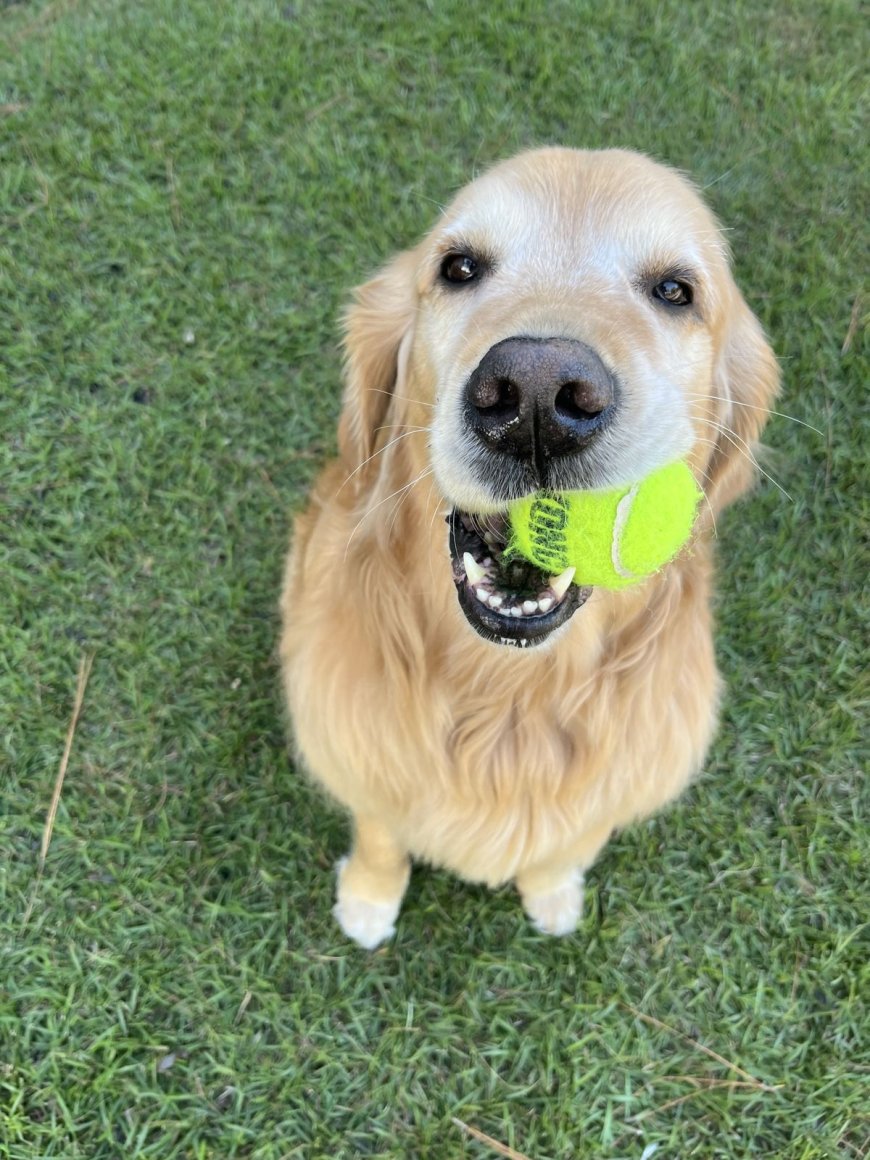
The toy-greeting behavior specifically. I spent a long time thinking it was just Ellie being Ellie, but it turns out it has a real behavioral explanation, and once I understood it I noticed it in almost every Golden I met after that.
Object-carrying upon greeting is a displacement behavior. When a dog experiences intense positive arousal, an arriving visitor triggers a lot of it, that emotional energy has to go somewhere. In a dog with lower impulse regulation, it goes straight into jumping. In a dog like Ellie, the excitement gets routed into grabbing something, which provides a physical outlet for the arousal while also serving a social function. The object becomes a focal point that lets the dog manage its own excitement rather than just firing it outward. At a signaling level, presenting an object also communicates harmlessness and an invitation to interact. It's a remarkably self-aware behavior wrapped in what looks, from the outside, like pure silliness.
The deeper thing happening is neurological. Guardian breeds like German Shepherds or Rottweilers were selected for a heightened threat-assessment response to unfamiliar people. When a stranger arrives, those dogs run a genuine evaluation: is this person safe? The process involves a visible pause, a shift in posture, a brief period of processing before any social engagement begins. Golden Retrievers, through generations of selection for working alongside strangers, show a markedly lower activation of that same response. The stranger arrives and the default register is simply: friend. There's no meaningful period of suspicion to work through, because the breed was built without the strong instinct that would trigger it.
This is also why Goldens are consistently overrepresented among therapy dogs, hospital visitors, and emotional support animals. The trait that makes them a poor choice for guard work is the exact trait that makes them extraordinary in settings where immediate, calm warmth toward all people is the entire job. The foundational qualities are the same, it's just the application that differs. If you're thinking about how to channel that natural sociability, the Golden Retriever Training resources have good material on building on what Goldens naturally bring rather than working around it.
3. The Part Owners Keep Getting Wrong
Two distinct mistakes, and they move in opposite directions.
The first is the owner who watches their Golden greet every delivery driver and house guest with identical enthusiasm and concludes something must be wrong with their socialization, or that training was inadequate. So they add more structured stranger exposure, more obedience drills, more controlled greetings. And the dog just keeps meeting the new neighbor like a close friend returning from a long trip. The problem with this thinking is that the behavior isn't the result of missing anything. The dog is doing exactly what its genetics prepared it to do. There's no gap to close, because the gap isn't there.
The second mistake goes further and is, honestly, harder to talk about because it involves people actively working against the breed's temperament. The idea that you can train protective or territorial responses into a Golden. That with the right training program you can have both a warm family dog and a reliable deterrent. I've heard this from more people than I'd expect, and the short answer is that it doesn't hold up. You can teach a Golden to bark on a specific cue. You can teach a "place" command that keeps them back from the door during greetings. But the underlying orientation toward strangers, that baseline registration of new humans as safe and welcome, isn't a behavior layered on top of trainable responses. It's the core architecture. Trying to work against it using aversive methods tends to produce anxiety and confusion rather than protectiveness.
Goldens that do show genuine, consistent wariness toward people usually have a reason behind it: a significant negative experience, very limited positive human contact in early puppyhood, or an underlying health issue causing discomfort that makes them reactive. If that sounds like it might apply to your dog, the Golden Retriever Health section is worth checking through before assuming the cause is purely behavioral.
4. What It's Like to Actually Live With This
Living with a dog who trusts every stranger they meet has a practical dimension, and it's worth being honest about both sides of it.
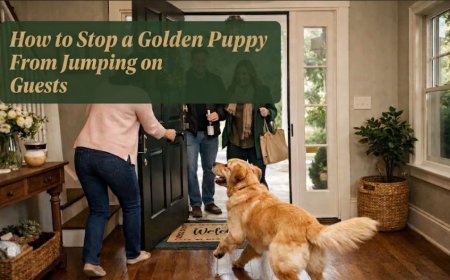
The greeting enthusiasm needs management even when the underlying warmth doesn't. A Golden who loves every human is still fully capable of knocking over a small child or a fragile elderly visitor in the process of expressing that love. Teaching door manners, a reliable sit or a down-stay, and a controlled greeting protocol is completely achievable and makes a real difference in how the behavior shows up day to day. None of that work changes the fundamental warmth. It just gives it shape and direction.
Here's an honest look at both sides of what this temperament actually means for everyday life:
| The Upside | The Reality Check |
|---|---|
| Handles guests, children, and other pets naturally well | Won't deter intruders or alert bark reliably |
| Calm in public: markets, parks, vet offices, cafes | Will try to greet every person on every walk |
| Suited for therapy, service, or emotional support work | May overwhelm elderly or unsteady visitors |
| Adapts quickly to new people and environments | Separation from familiar people affects them more than other breeds |
| Grooming and vet visits are less stressful on average | Will befriend your plumber and your locksmith with equal enthusiasm |
The column on the right used to frustrate me more than it does now. Ellie took Ellie to a farmers market on a busy Saturday once when she was about two, and she greeted somewhere close to forty strangers over an hour and a half with zero stress, zero reactivity, and zero incidents. Not one moment where I held my breath. That's the other side of the thing that makes her a non-starter as a guard dog. The same brain that registers every stranger as a friend also registers every new situation as safe.
For new owners navigating that first month with a Golden puppy and noticing how strong the social drive already is, Golden Retriever Puppy Week One Surprises on Golden Retriever Info covers some of the early behaviors that catch people off guard, and the friendliness-toward-strangers pattern shows up very early.
A lot of Golden owners go through a period of wishing their dog were more discerning. I did. Ellie would welcome the person breaking in with the same enthusiasm as the person invited in. It felt like something was missing, some instinct that hadn't switched on.
But the more I understood the history behind it, the more that framing dissolved. The trust isn't a gap in her nature. It's the whole point of her.
FAQs
Can I train my Golden to bark reliably when strangers come to the door?
You can teach a bark on a specific cue, yes, but training a Golden to reliably alert-bark at strangers as an instinctive behavior runs against how the breed is wired. Some Goldens will bark occasionally at sounds or movement, but the consistent territorial alerting that people associate with guard dogs comes from breeds with a fundamentally different baseline wariness response. A Golden who barks at every visitor is more likely showing anxiety than protectiveness.
Why does my Golden bring a toy to every single person who walks in?
This is an object-carrying displacement behavior, a way of channeling intense social excitement into something directed. The dog's arousal at a new arrival has to go somewhere, and grabbing an object provides an outlet while also functioning as a social offering. It's self-regulating behavior. Most Goldens who do this weren't specifically taught it; it developed naturally as a way to manage their own greeting excitement.
Are Goldens genuinely bad at home security?
As deterrents, they're limited. An intruder who knows the breed won't be put off by a Golden. That said, some Goldens will bark when something feels genuinely off, even if they'd greet the person warmly afterward. And a large, visibly enthusiastic dog has some mild deterrent effect simply by being present and visible. But if home security is a real priority, a Golden shouldn't be the centerpiece of that plan.
Are some Goldens less trusting of strangers than others?
Yes. There's real individual variation within the breed. Working line Goldens bred for field trials sometimes carry a slightly more focused, less overtly social temperament than conformation or companion lines. Early life experience matters too: a puppy with very limited positive exposure to different people during the critical socialization window (roughly 3 to 14 weeks) may be more reserved than the breed average. But even the more reserved end of the Golden spectrum tends to warm up quickly once initial contact is made.
My Golden is fine with strangers generally, but reacted strongly to one specific person. Does that mean anything?
Dogs pick up on signals that humans filter out entirely: micro-expressions, changes in breathing and heart rate, body language patterns, and other physiological cues. A Golden who's relaxed with hundreds of strangers but shows clear discomfort around one specific person picked up something. It doesn't necessarily mean that person is a threat, but it's a signal worth paying attention to. Dogs read the world through senses we can't fully access.
What's Your Reaction?
 Like
0
Like
0
 Dislike
0
Dislike
0
 Love
0
Love
0
 Funny
0
Funny
0
 Angry
0
Angry
0
 Sad
0
Sad
0
 Wow
0
Wow
0