



















Golden Puppy Potty Training: Real Timeline

The thing I heard most often before Ellie came home was some version of "Goldens are so smart, they basically train themselves." And I believed it. Fully. Golden Retrievers are intelligent, eager to please, catch on to commands quickly. So potty training should follow the same pattern, right?
Six weeks in, scrubbing yet another corner of my living room rug, I can tell you that expectation and I had a real disagreement.
Golden Retriever puppies are smart, yes. But bladder control has nothing to do with intelligence. It's a physical maturity issue, and it develops on its own biological schedule regardless of how consistent you are, how many times a day you take them outside, or how perfectly you follow every training tip you've read. Understanding that helped me stop feeling like I was failing, and start doing the actual work.
Here's what potty training a Golden puppy actually looks like, stage by stage, with no softening of the timeline.
1. The First Two Weeks Home (8-10 Weeks)
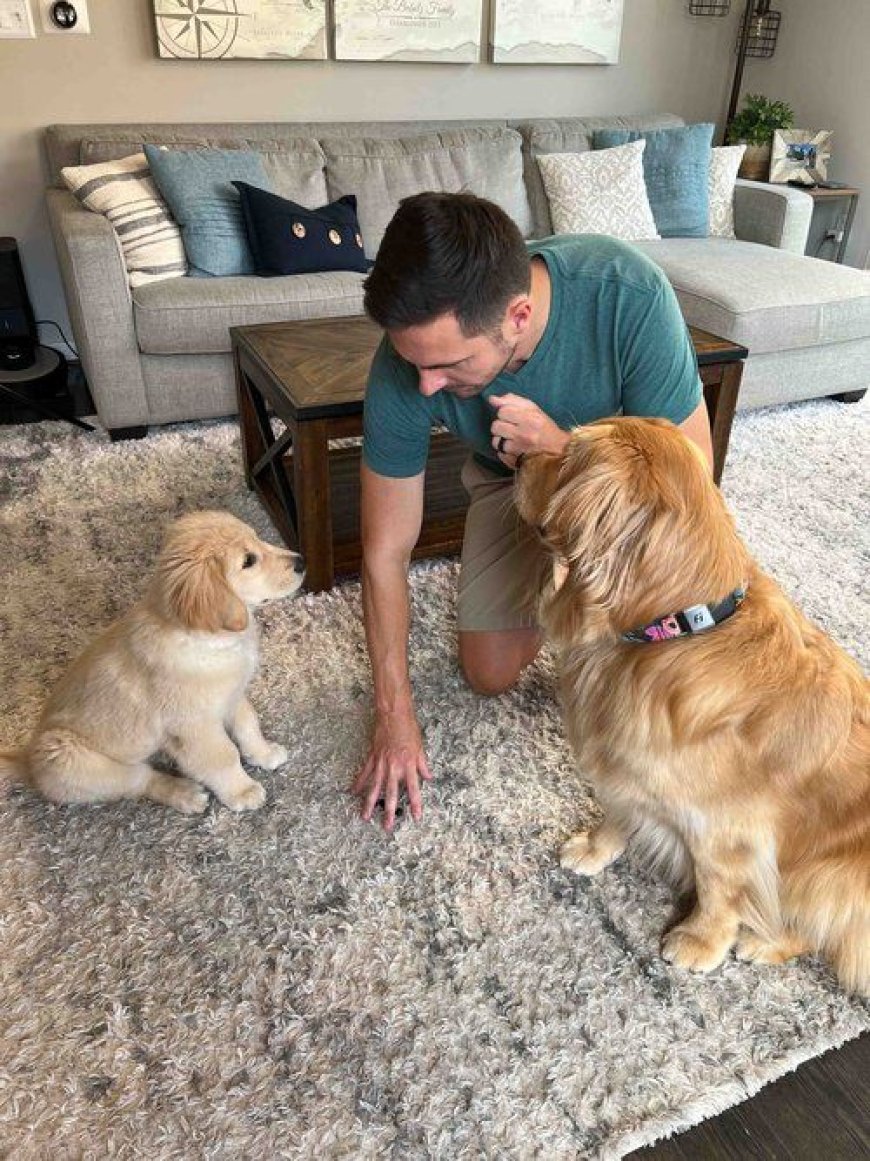
At eight weeks, your puppy's bladder is small and mostly uncontrolled. The muscles that allow them to hold it haven't fully developed yet. You're not fighting bad habits at this stage. You're just managing biology.
What this means practically: expect accidents every single day. Multiple times a day. That is not a sign that something is wrong. It's a puppy.
The schedule during this window needs to be tight. Take them outside every 45 to 60 minutes, every time after eating, every time after waking up, and every time after a play session winds down. Those "after" windows are when the bladder tends to release. Pick a consistent spot in the yard and use the same verbal cue every single time, something simple like "go potty." Keep it the same phrase across everyone in the household.
Praise matters here, and timing matters even more. The reward needs to come the second they finish going outside, not after you've walked back inside, dried their paws, and thought about it. They've already moved on mentally. Immediate praise makes the connection. Delayed praise makes nothing.
Clean every indoor accident with an enzymatic cleaner. Regular household cleaners mask the smell to your nose but not theirs, and puppies return to spots that still carry their scent. The enzymatic formula breaks down the odor at the source.
2. The Confusing Middle (10-16 Weeks)
This is the stretch where most owners start losing confidence. It's also where the most mistakes tend to happen.
Around weeks ten through twelve, puppies develop just enough awareness to begin signaling when they need to go. Sniffing the floor in tight circles, suddenly stopping mid-play, hovering near a door. These signals are real, but the window between "I need to go" and "I already went" can be ten seconds or less at this age.
You'll have a few great days. Barely any accidents, solid outdoor trips, real progress building. Then you'll wake up to two messes before eight in the morning and feel like you're back at the beginning. You're not. This inconsistency is developmentally normal. Their bladder capacity is genuinely variable right now, and the habit hasn't fully locked in yet.
A crate helps enormously during this phase. Dogs instinctively avoid soiling where they sleep, so a properly sized crate keeps them clean during unsupervised windows. If the crate is too large, they can use one corner as a bathroom and still sleep comfortably on the other side. You'll find more on building a structured routine for a young Golden on the Golden Retriever Puppy Guide page at Golden Retriever Info.
A consistent feeding schedule makes a real difference too. If meals happen at random times, bathroom needs follow in the same scattered pattern. Lock in regular meal times and the post-meal potty trip becomes something you can actually plan around. Most puppies need to go within fifteen to twenty minutes of eating. Get outside before that window closes.
3. Progress Without Perfection (4-5 Months)
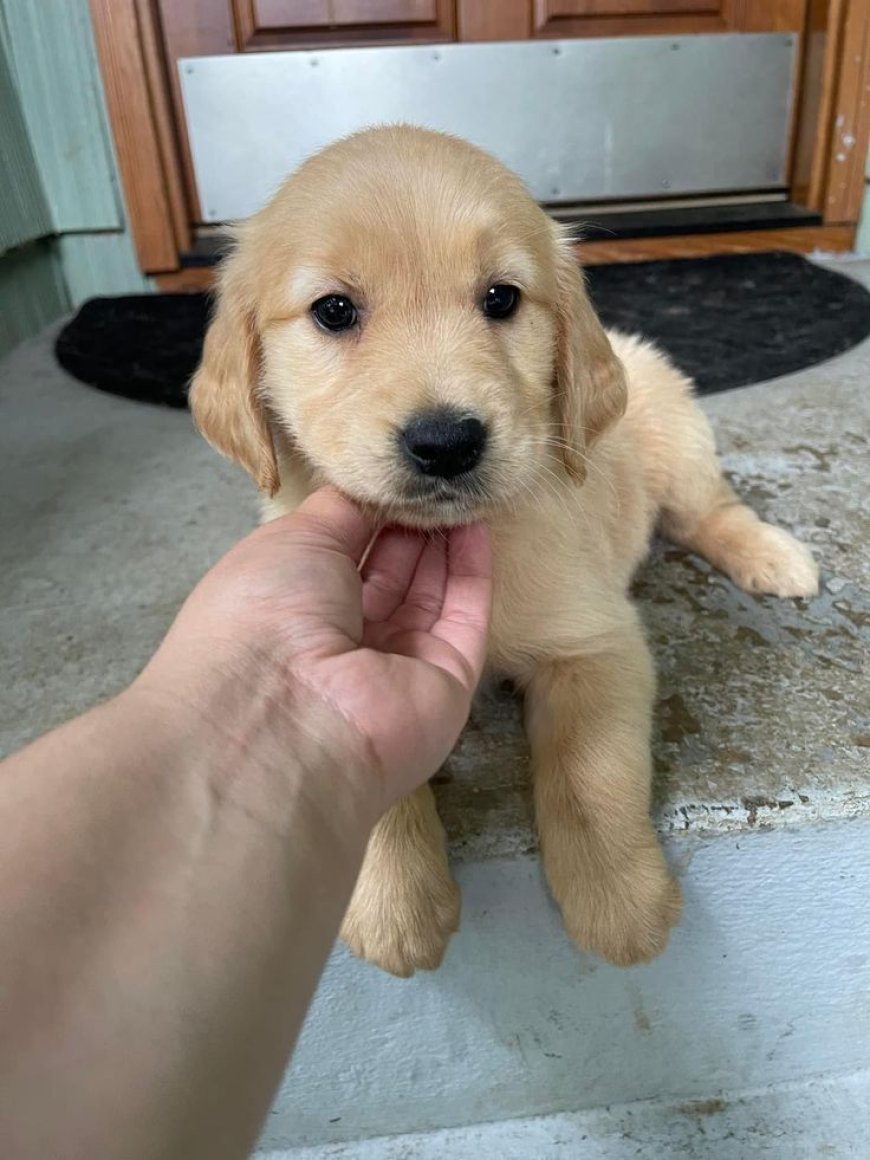
Somewhere around four months, the routine starts to actually stick.
Bladder capacity increases, the verbal cue you've been using consistently finally means something reliable, and outdoor trips stretch from every hour to every two or three hours during the day. Accidents drop from a daily occurrence to a few times a week to occasional. That momentum is real.
But this is also when owners most commonly ease off supervision too quickly. Everything seems to be working, the puppy gets more freedom, and then there's a puddle in the bedroom because nobody was watching.
Keep limiting access. Baby gates, closed doors, keeping the puppy in the same room as you. The habit isn't automatic yet, even when it really feels like it is. Unsupervised puppies find corners and closets and the far end of the hallway, and once a spot gets used once, the scent makes it likely to get used again.
One thing that catches people off guard at this phase is outdoor distraction. Ellie went through a stretch around four months where she'd go outside and spend ten minutes sniffing the fence, investigating a leaf, watching something fly past, and then come back inside and promptly go on the kitchen floor. Classic. The fix is staying outside until they've actually gone, not until you've been standing in the yard for a minute and a half and assumed the trip counted.
4. What Full Reliability Actually Looks Like (5-12 Months)
Most Golden Retrievers reach consistent daytime housetraining somewhere around five to six months old. Nighttime reliability typically follows later, often landing between seven and nine months, depending on the individual dog and how consistently training happened from the start.
This plain-text timeline gives you a realistic benchmark:
AGE               WHAT TO REALISTICALLY EXPECT
---------------------------------------------------------------
8-10 weeks        Almost no bladder control; daily accidents are normal
10-12 weeks       Signals appear but are brief; inconsistency persists
12-16 weeks       Can hold it slightly longer; some good days, some rough ones
4-5 months        Routine starts clicking; accidents drop noticeably
5-6 months        Reliable daytime continence for most Goldens
6-9 months        Nighttime reliability builds; overnight trips still needed
9-12 months       Fully house-trained for most Goldens
12+ months        Mature bladder; accidents rare unless illness or stress
---------------------------------------------------------------
One phase this timeline doesn't always capture is the four-to-six-month regression.
Some puppies, after weeks of solid progress, start having accidents again. Hormonal shifts, increased curiosity about the environment, a general period of testing limits. If your five-month-old suddenly has three accidents in a week after two clean months, pull supervision back in, add more outdoor trips temporarily, and don't read it as failure. It passes. The Golden Retriever Training section at Golden Retriever Info covers the adolescent behavioral patterns that tend to emerge around this period, which is worth reading alongside the potty training process.
And the physical development side of what's happening in a young Golden, including bladder maturity and how health factors into training readiness, is covered on the Golden Retriever Health page if you want the fuller picture.
5. Where People Usually Go Wrong
A few patterns come up again and again with Golden puppy potty training.
Punishing accidents. This genuinely backfires. Puppies don't connect after-the-fact scolding to what they did three minutes ago. What they do learn is that going to the bathroom in your presence is risky. Some puppies start hiding to go, which makes outdoor training significantly harder to reinforce. Clean it up and move on without drama.
Too much freedom too soon. Once things seem to be going well, the natural impulse is to let the puppy roam more freely. But unsupervised puppies explore, and they find corners and closets and spots you won't discover for a while. Limit access until reliability is actually established, not just hoped for.
Inconsistent cue words. This one shows up constantly in multi-person households. One person says "outside," someone else says "do your business," another just opens the door silently. Pick one phrase, put it on a sticky note by the back door if you need a reminder, and make sure everyone uses it.
Expecting it to be done by two months. This is probably the biggest driver of unnecessary stress. There are forums full of posts from worried owners whose twelve-week-old is "still having accidents." A twelve-week-old Golden having accidents is just a twelve-week-old Golden. Nothing is wrong. The timeline is longer than most people realize going in, and accepting that early saves a lot of anxiety.
FAQs
How long does it really take to potty train a Golden Retriever puppy?
Most Goldens reach reliable daytime housetraining between five and six months old. Full nighttime reliability often follows a bit later, sometimes as late as eight or nine months. The exact timing depends on the individual puppy, how consistently training was handled from the beginning, and whether there were any stretches of inconsistency that slowed the habit-building.
Is it normal for my eight-week-old to have accidents every single day?
Yes, completely. A puppy this age has almost no bladder control. Multiple daily accidents at eight to ten weeks are not a training failure; they're a physiological fact. The goal at this stage is building the outdoor habit through consistent repetition. Reducing accidents is a later milestone.
How do I handle nighttime when they're young?
Most puppies can't make it through the night without a bathroom break until around three to four months old. Set an alarm once in the night, take them out quietly, skip any fuss or play, and put them straight back to bed. Gradually extend the overnight window as their bladder matures. Some puppies sleep through earlier than others, but pushing it too soon usually just means cleaning the crate in the dark.
My puppy seemed trained and then started having accidents again. Did I do something wrong?
Almost certainly not. Adolescent regression around four to six months is pretty common in Golden Retrievers. Hormonal shifts and increased environmental curiosity can temporarily disrupt a habit that seemed solid. Tighten supervision, go back to more frequent outdoor trips, stay consistent, and it usually passes within a few weeks. If accidents continue consistently past seven or eight months with no improvement, a vet check to rule out a urinary issue is a reasonable next step.
Does crate training actually speed up the process?
It makes a meaningful difference, yes. The crate leverages a dog's instinct to keep their sleeping area clean. A correctly sized crate means they'll hold it rather than go, which directly reinforces waiting for an outdoor trip. The crate needs to be the right size; if there's room to walk in circles and soil a corner while still sleeping comfortably, the instinct doesn't hold. A divider panel is useful for adjusting size as they grow.
Potty training a Golden Retriever puppy takes longer than most people expect going in. The middle weeks are genuinely messy, and some days feel like pure regression. But the process itself is straightforward: get them outside constantly while they're young, use a crate for unsupervised time, stick to a consistent feeding schedule, and clean accidents without making a scene.
By six months, most Goldens are reliably clean during the day. The nighttime piece follows. And the week you start feeling like you're finally done, keep the supervision consistent anyway. Those last few weeks of habit-building are what make the whole thing stick.
More resources for getting through the early puppy weeks are available on the Golden Retriever Puppy Guide section here at Golden Retriever Info.
Have you been through potty training with a Golden puppy? How long did it actually take before things clicked? Share in the comments. I'd love to hear how your experience compared to the timeline above.
What's Your Reaction?
 Like
0
Like
0
 Dislike
0
Dislike
0
 Love
0
Love
0
 Funny
0
Funny
0
 Angry
0
Angry
0
 Sad
0
Sad
0
 Wow
0
Wow
0